Eigashima White Oak distillery (江井ヶ嶋) holds one of the earliest whisky manufacturing licences in Japan, granted in 1919, four years before Suntory broke ground at Yamazaki. It has never grown into a household name. The company that owns it, Eigashima Shuzo, still brews sake, shochu and wine on the same premises in Akashi, Hyogo Prefecture, and has done since 1888. Japanese-language coverage of the company frames this not as a failure to scale but as a deliberate choice, one tied to a corporate motto — 誠実, sincerity — that the company has kept since its founding.
What is Eigashima White Oak distillery
White Oak is the whisky brand made by Eigashima Shuzo at its distillery in Akashi, a coastal city on the Seto Inland Sea in Hyogo Prefecture. The company is a general alcohol producer rather than a whisky specialist: it makes the sake brand Kamitaka (神鷹), shochu, mirin and wine alongside its whisky, with the same staff often moving between products by season. For readers comparing Eigashima with Japan’s larger single malt houses, our guide to how Japanese whisky differs from Scotch covers the production basics that apply across the industry.
A licence from 1919, and why the “oldest” claim is more complicated than it sounds
Eigashima Shuzo obtained a whisky manufacturing licence in 1919 and released a product called White Oak the same year, which does predate the 1923 construction of Suntory’s Yamazaki distillery. What Japanese-language research on the company’s history has established, though, is that Eigashima did not actually own a pot still in 1919, and it is not clear from surviving records what was being produced under that licence or how — it may have involved bottling or blending imported spirit rather than distilling whisky from scratch on site. Eigashima itself does not claim the title of Japan’s oldest whisky distillery, and the company’s real distilling history starts later: the facility was rebuilt in 1981, and a new distillery with the pot stills still in use today was completed in 1984. The first single malt release under the White Oak name, “Akashi” Single Malt 8 Years, did not appear until 2007. Readers who want the fuller picture of how Japan’s whisky rules define these claims should see our explainer on what counts as Japanese whisky.
Why Eigashima never became a single-product company
One team, four drinks
Eigashima Shuzo’s own materials describe a company built to hold onto older crafts while continuing to research and adapt to new demand, rather than shedding older product lines as whisky grew. Winter is sake season; whisky distilling happens in summer, run largely by the same brewing staff on the same site, using the same well water for both. Toji (sake brewmaster) Yuji Nakamura, who also serves as the whisky distillery’s manager, moved into the role after around 25 years working as a sake toji in Niigata and Nara before returning to his native Hyogo. His account of the job treats the ingredient switch as secondary to the continuity of people and water: whether the raw material is rice or barley, it is made by the same hands, with the same water supply.
What “no shortcuts” looks like in practice
One specific technique illustrates the crossover: Eigashima applies shubo (酒母), the yeast starter method used in sake brewing, to its whisky fermentation, rather than using a standard distiller’s yeast pitch. The company and outside coverage describe this as producing a house yeast character distinct from other Japanese whisky makers, a direct technical consequence of being a sake brewery first. It is a craft decision, not a marketing story: shubo fermentation takes more hands-on management than pitching commercial distiller’s yeast, and Eigashima has kept the practice specifically because the sake side of the business already had the skill in-house.
The Akashi coast: what the water and climate actually do
Eigashima draws its brewing and maturation water from a well roughly 100 metres deep, filtered through granite from the Rokko mountain range and a coastal shell layer before it reaches the distillery — enough of a natural filtration system that the company has relied on well water rather than municipal supply for both sake and whisky production. Distillery manager Nakamura has been candid that there is no single climate formula for good whisky: Akashi’s temperate, sea-influenced weather does not map neatly onto either the Scottish or American whisky-making tradition, and he has pointed out that both styles of whisky can, in practice, be made successfully in the same conditions. That is a more measured claim than the folklore that often surrounds “distillery by the sea” stories, and it is closer to what the distillery’s own staff actually say.
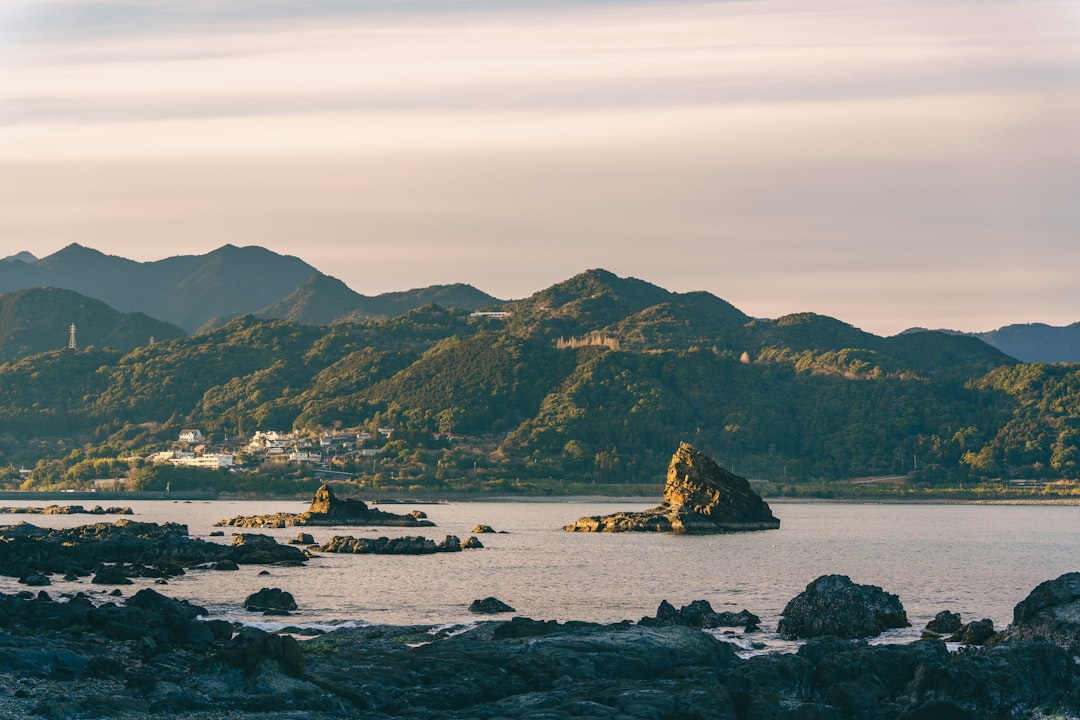
The site’s proximity to Osaka Bay and the Akashi Strait is unusually close for a Japanese producer — write-ups of the distillery frequently describe it as one of the closest whisky-making sites to the sea in Japan. Some tasting coverage has attributed a faint salinity to casks matured there, though that is a taste claim made by other reviewers rather than something this article can verify first-hand.
The White Oak name and what “Akashi” adds to it
White Oak takes its name from the American white oak used for maturation casks — a direct, functional reference to barrel wood rather than a place or a founder’s name, in contrast to distilleries named after their own site or town. The “Akashi” line, launched in 2007 as the company’s first single malt, layers the city’s name on top of the older White Oak brand, marking it out as the higher-end, single malt-led range built once Eigashima had the modern stills and warehouse stock to support one. The older White Oak blended and standard-strength bottlings remain in production alongside it, reflecting the company’s habit of keeping older lines running rather than replacing them outright.
A different bet than Yamazaki made
The contrast with Suntory is instructive. When Shinjiro Torii built Yamazaki starting in 1923, he raised capital specifically to build a purpose-made whisky distillery, imported Scottish-style stills, and hired Masataka Taketsuru, who had trained in Scotland, to run production — a single-minded bet on whisky as the company’s future. Eigashima made the opposite bet: it kept its 1919 licence active in the background of a business still centred on sake, added modern pot stills decades later almost as one more product line, and never raised the kind of capital or built the kind of dedicated infrastructure that would have let it compete with Suntory or, later, Nikka on volume. Neither approach is more “authentic” than the other, but they produced very different companies. Suntory built an industry. Eigashima kept a smaller, older business intact and let whisky become one part of it rather than the whole of it.
| Bottle | Style | What’s inside | Notable for |
|---|---|---|---|
| Akashi Single Malt | Single malt | Malt whisky matured in bourbon and sherry casks, vatted together | The brand’s flagship since the 2007 launch of “Akashi” Single Malt 8 Years |
| White Oak Akashi Blended | Blended | Malt and grain whisky | Scotch-style blend built from the same distillery’s own malt and sourced grain |
| White Oak (original line) | Blended | Malt and grain whisky | The brand’s oldest continuous name, tracing back to the 1919 licence |
What this adds up to for a drinker outside Japan is a whisky that was never built to compete with Suntory or Nikka on scale, and does not pretend otherwise. Eigashima kept its sake, shochu and wine businesses running through the decades whisky struggled in Japan, which is arguably why White Oak survived at all when other small prewar and early postwar licence-holders did not. If you are looking for a Japanese whisky maker whose story is grounded in a general-purpose brewery adapting rather than a purpose-built whisky house chasing global scale, White Oak is one of the clearer examples still operating today.
Frequently asked questions
Q: Is Eigashima White Oak really Japan’s oldest whisky distillery?
A: It holds one of the earliest whisky manufacturing licences in Japan, issued in 1919, which predates Suntory’s Yamazaki distillery. However, research into the company’s own history has found no pot still on site in 1919 and no clear record of what was actually being distilled, and Eigashima itself does not claim the “oldest distillery” title. Its modern distilling equipment dates to 1984, and its first single malt was not released until 2007.
Q: Why does Eigashima Shuzo make sake, shochu, wine and whisky at the same site?
A: The company was a sake brewery from 1888 and expanded into other categories, including a whisky licence in 1919, rather than specialising. Its own materials describe a philosophy of preserving older crafts while continuing to research new products, and the same staff, including toji Yuji Nakamura, move between sake and whisky production by season, sharing the same well water supply across all four categories.
Q: What makes Eigashima’s whisky-making process different from other Japanese distilleries?
A: The clearest technical difference is fermentation: Eigashima applies shubo, the yeast starter method developed for sake brewing, to its whisky mash rather than using a standard commercial distiller’s yeast. The company and outside coverage attribute this to producing a house yeast character distinct from whisky made using conventional pitching methods, a direct carryover of sake-brewing skill already present on site.
Q: Does being close to the sea change how White Oak whisky is made?
A: The distillery sits close to the Akashi Strait and Osaka Bay, among the closest whisky-making sites to the coast in Japan, and draws its water from a roughly 100-metre well filtered through granite and coastal shell deposits. Distillery manager Yuji Nakamura has said there is no single ideal climate for whisky-making and that both Scottish- and American-style whisky can be produced successfully in Akashi’s conditions, a more measured claim than the sea-air folklore that sometimes surrounds the brand.