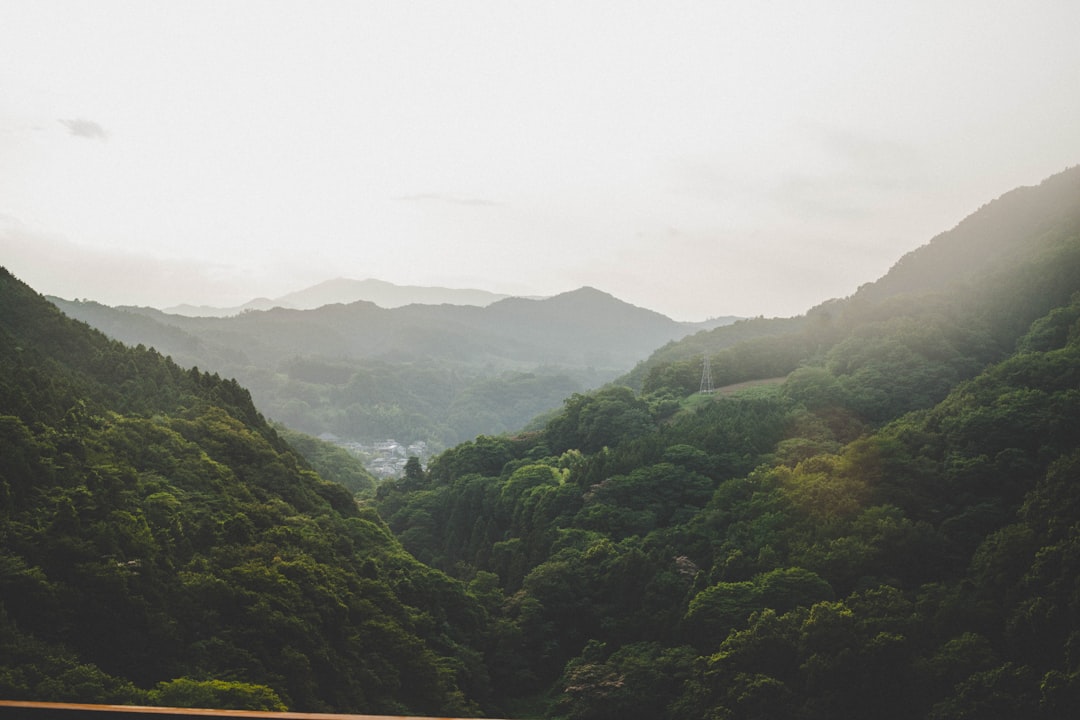
Fuji Gotemba distillery (富士御殿場蒸溜所) is the only place in Japan where a single company distills both malt and grain whisky, ferments, ages and bottles all of it on one campus. It sits on the northern slope of Mount Fuji in Shizuoka Prefecture, owned by Kirin Brewery through its Kirin Distillery subsidiary. Most Japanese whisky writing in English treats it as a footnote to Yamazaki or Yoichi. That is a mistake: Fuji Gotemba was built around a genuinely different idea of what a whisky distillery should be, and that idea is documented in detail on Kirin’s own Japanese-language pages, not in the English-language trade press.
What is Fuji Gotemba distillery
Fuji Gotemba began distilling in 1973 and today makes whisky under the Fuji (富士) name, alongside the older Robert Brown blend. It is not a single malt house in the way Yamazaki (山崎) or Chichibu (秩父) are. It is a combined operation: pot stills for malt whisky and column stills for grain whisky, standing on the same grounds, feeding the same warehouses. For readers still getting oriented in the category, our guide to what counts as Japanese whisky covers the labelling rules that apply to everything made here.
Why the distillery exists: a three-way bet on whisky
Kirin was, and still is, primarily a beer company. In 1972 it entered a joint venture with two very different partners: Joseph E. Seagram & Sons of Canada, then one of the largest distillers in North America, and Chivas Brothers, the Scotch whisky house Seagram owned in Scotland. The resulting company, Kirin-Seagram, broke ground at Gotemba the same year and began production in 1973. The first bottled product, Robert Brown, reached shelves in 1974.
The logic behind the tie-up was straightforward on paper and unusual in practice. Kirin needed distilling knowledge it did not have. Seagram brought decades of experience running large-scale grain whisky and continuous-still spirit production in North America. Chivas Brothers brought Scotch malt whisky craft. Rather than choosing one tradition, Kirin built a site that could absorb both at once — a decision that shaped everything that followed, including how the distillery talks about itself decades later. Readers comparing this approach with Scotland’s more specialised distilleries may find our explainer on how Japanese whisky differs from Scotch useful background.
One roof, two whiskies: why that was the point, not a convenience
Grain whisky as more than a supporting actor
In most whisky-producing countries, grain whisky is a background ingredient — the bulk filler in a blend, rarely bottled or marketed on its own. Kirin’s own account of the distillery describes the decision to build full malt and grain capability on one site as an expression of wanting to widen the possibilities available when blending, rather than treating grain as a cheaper, secondary stream. That philosophy became visible to consumers in 2020, when Kirin released Fuji Single Grain, a whisky built from three separately distilled grain whiskies with different characters — one closer to a bourbon-style fullness, one closer to the smoothness associated with Canadian whisky, and one closer to Scotch-style lightness — blended together rather than diluted. It is a direct, bottled argument that grain whisky deserves attention on its own terms, and it draws on the exact mix of North American and Scottish know-how the distillery was built to combine.
Two traditions, one campus
Practically, this means Fuji Gotemba’s malt and grain streams are not run as separate businesses that happen to share a postcode. New-make spirit from both sides matures in warehouses on the same site, under the same climate, managed by the same blending team. Kirin has described this proximity as producing an unusually high affinity between its malt and grain stocks when they are brought together — the reasoning behind Fuji Single Blended, a whisky built from both spirit types made at the same distillery rather than sourced from separate producers.
What Mount Fuji’s water and climate actually change in production
Kirin states plainly that the site was chosen because the water and climate available year-round were close to ideal for whisky-making, not for the view. The distillery draws its brewing and maturation water from a natural aquifer roughly 100 metres underground, fed by snowmelt that has filtered slowly through Mount Fuji’s volcanic soil for years before reaching the well. That filtration leaves the water low in mineral content, which Kirin ties directly to preserving the clean, fruit- and floral-leaning character it wants in the finished spirit — a production choice, not a marketing line, since harder, more mineral-heavy water elsewhere in Japan produces distinctly different new-make character.
The climate does separate work during maturation. Gotemba’s average annual temperature is around 13°C, noticeably cooler than the lowland sites used by some other Japanese distilleries, and humidity typically runs above 80 percent for much of the year, with fog rolling across the foothills through many months. Kirin’s own materials tie the cool temperature to a slower, more even maturation curve, and the high humidity to reduced evaporation loss from the casks during long-term aging — the angel’s share runs lower here than in a hotter, drier warehouse. Put together, the site does not just look right for a whisky distillery; it changes how quickly spirit matures and how much of it survives to be bottled.
The blender’s craft: Josta Tanaka and the idea of a single blended whisky
Fuji Gotemba’s whisky-making is closely associated with master blender Josta Tanaka (田中城太), who has led blending at the distillery for years and was named World’s Best Blender at the International Wine and Spirit Competition’s Icons of Whisky awards in 2017. Tanaka has spoken publicly about assessing the point at which a maturing cask reaches what Kirin describes as its “maturation peak” — the moment a given spirit’s character is most fully expressed — and building blends around casks selected at that stage rather than on a fixed age schedule alone. That approach depends on having a wide, well-understood library of both malt and grain stock to draw from, which is precisely what a combined distillery makes possible.
Tanaka has also spoken of wanting to build whisky that “moves” the person drinking it, framing his job as much in terms of emotional impact as technical consistency. Whether or not that framing lands with any individual drinker, it explains why Fuji Gotemba markets its blended and single-blended releases as the distillery’s signature statement rather than treating them as a lesser category next to single malt.
What the Fuji name and lineup actually tell you
The Fuji name is a direct, unambiguous reference to the mountain the distillery sits beneath, and Kirin frames the modern Fuji range — launched from 2020 onward — around the stated idea of “whisky-making for the world,” an explicit break from selling primarily to the domestic Japanese market. Fuji Single Grain and Fuji Single Blended sit alongside Robert Brown, the distillery’s original blended whisky, which has been in continuous production since 1974 and remains one of the longest-running blended whisky brands to come out of a Japanese distillery. Readers curious how blended styles are labelled outside Japan may want our guide to what “World Blended Whisky” actually means, since Kirin’s export-facing bottles sit in a similar labelling conversation.
| Bottle | Style | What’s inside | Notable for |
|---|---|---|---|
| Fuji Single Grain | Single grain | Three distinct grain whisky distillates blended together | First released 2020; built to argue grain deserves top billing |
| Fuji Single Blended | Single blended | Malt and grain whisky, both distilled on site | Built around the affinity between malt and grain matured together |
| Robert Brown | Blended | Malt and grain whisky blend | The distillery’s original product, on shelves since 1974 |
For a drinker outside Japan trying to decide whether any of this matters, the short version is this: choosing a Fuji bottle means choosing a whisky where the grain component was not an afterthought bought in to stretch a blend, but a spirit built and matured with the same attention as the malt sitting next to it. If you are used to Scotch, where single grain whisky is rare and often treated as a curiosity, Fuji Gotemba’s lineup is a useful place to hear a different argument about what grain whisky can be.
Frequently asked questions
Q: Is Fuji Gotemba the same as Yamazaki or Hakushu?
A: No. Yamazaki and Hakushu are Suntory distilleries. Fuji Gotemba is owned and operated by Kirin, a separate company, and is the only Japanese distillery that produces both malt and grain whisky on a single site from start to finish. The two companies compete directly but have entirely separate ownership, history, and production philosophies.
Q: What is Fuji Single Grain whisky exactly?
A: It is a single grain whisky released by Kirin in 2020, built from three separately distilled grain whisky distillates with different characters, blended together rather than diluted with neutral spirit. Kirin positions it as evidence that grain whisky can carry a release on its own rather than only functioning as a component in a larger blend.
Q: Why does Fuji Gotemba make both malt and grain whisky at one site?
A: The distillery was founded in 1972 as a joint venture between Kirin, the North American distiller Joseph E. Seagram & Sons, and the Scotch house Chivas Brothers, combining grain whisky expertise from the former with malt whisky expertise from the latter. Rather than specialising in one tradition, Kirin built capacity for both, which it says widens the range of whisky types available for blending.
Q: Does Mount Fuji’s water actually change how the whisky tastes?
A: Kirin states that the distillery draws water from a roughly 100-metre aquifer fed by filtered snowmelt from Mount Fuji, and that this water’s low mineral content is tied to preserving a cleaner, fruit-leaning new-make character. The site’s cool, humid climate is also credited with slowing maturation and reducing evaporation loss from casks during aging, which affects how the whisky develops over time rather than only how it tastes at any single point.