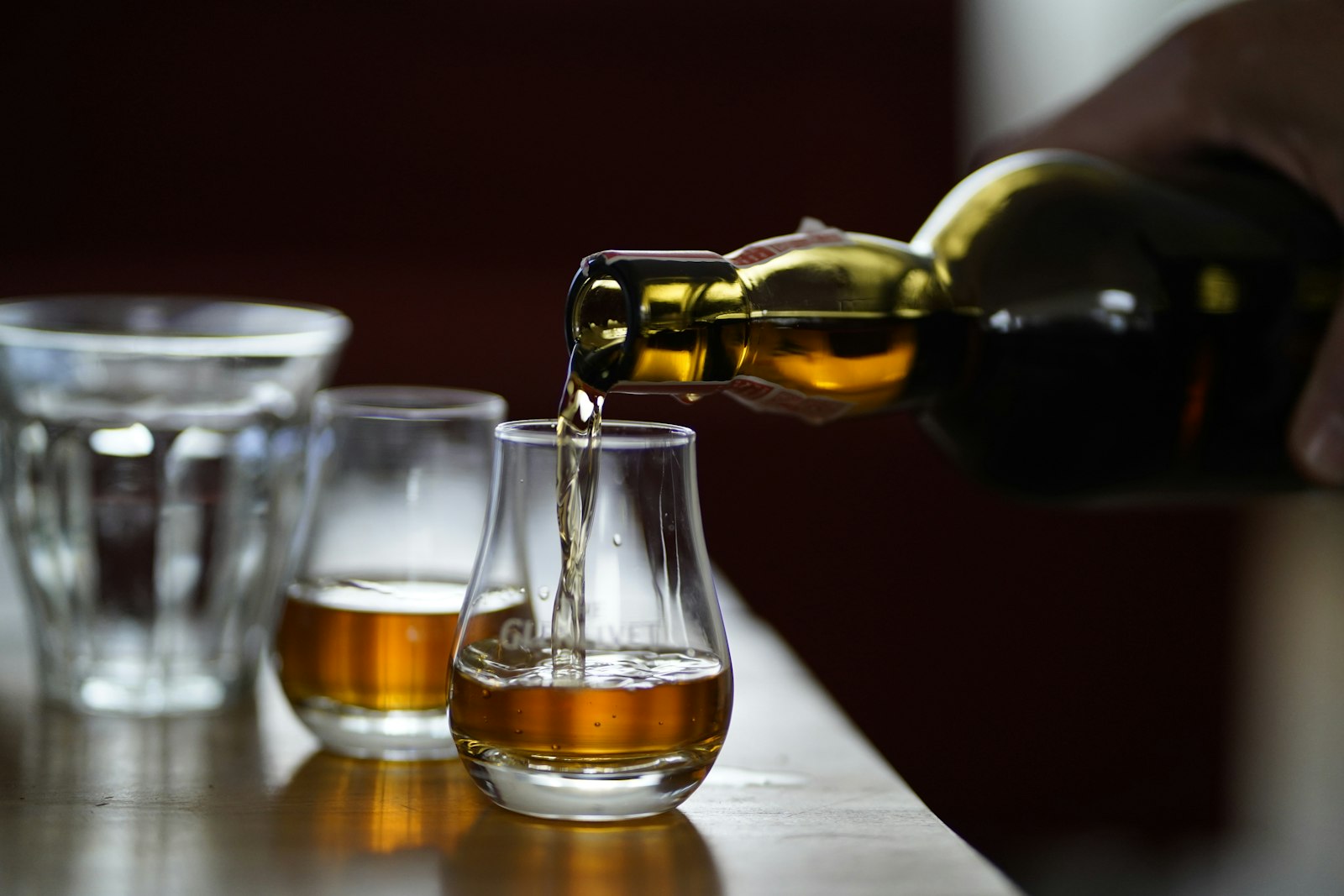
Good Japanese whisky under $100 is not hard to find, but it means shopping in the right category: blends, no-age-statement single malts, and grain whisky, rather than age-stated single malts from Yamazaki or Hakushu, most of which now sell well above that line. Suntory Toki, Nikka Coffey Grain, Nikka Coffey Malt, and Nikka Days are the four bottles that come up most consistently in this price band at US and UK retailers. Mars Shinshu’s Iwai range sits even lower, usually well under $50, if budget matters more than brand recognition.
This guide compares the realistic under-$100 options, what each one actually tastes like relative to the others, and what to check on price before you buy, since Japanese whisky pricing has been moving upward and a bottle that was under $100 last year is not guaranteed to still be there.
How the main under-$100 bottles compare
| Bottle | Style | Typical US price | Typical UK price |
|---|---|---|---|
| Suntory Toki | Blended whisky, light and mixable | $35–45 (checked August 2026) | £30–38 (checked August 2026) |
| Suntory Kakubin | Blended whisky, dry, built for highballs | $25–35 (checked August 2026) | £28–35 (checked August 2026) |
| Nikka Coffey Grain | Single grain, column-still, sweeter and rounder | $60–90 (checked August 2026) | £45–65 (checked August 2026) |
| Nikka Days | Blended whisky, floral, entry-level | $35–45 (checked August 2026) | £28–35 (checked August 2026) |
| Mars Shinshu Iwai (45% ABV) | Blended whisky, honeyed, bourbon-cask influenced | $30–40 (checked August 2026) | £35–45 (checked August 2026) |
Blended whisky: where most of the real value sits
Suntory Toki and Nikka Days are the two blends most likely to be recommended as a first bottle, and for similar reasons: both are built to be approachable, both mix well in a highball, and both are widely available rather than allocated. Toki leans slightly spicier and grain-forward, while Nikka Days is lighter and more floral, closer to the profile of Nikka’s Miyagikyo distillery. Neither is trying to compete with an age-stated single malt on complexity, and that is by design rather than a shortcoming; they are priced and blended for everyday drinking, not for a special-occasion pour.
Suntory Kakubin sits a step below Toki in most markets and is closer to Japan’s genuine everyday whisky, the bottle most commonly poured into a highball glass with soda in Japan itself rather than positioned as an export showcase bottle.
Grain whisky: an underrated route to more depth for the money
Nikka Coffey Grain is the clearest case of a bottle that punches above its price by category rather than by rarity. It is distilled on Nikka’s original Coffey column stills, which give it a rounder, sweeter, almost dessert-like character that is unusual for a grain whisky and genuinely distinct from the peatier, more traditionally malt-driven profile of Nikka’s single malts. At 45% ABV and typically under $90 in the US, it consistently comes up in independent reviews as one of the better value-for-money bottles in the whole category, not just among Japanese whiskies specifically.
The budget tier: Mars Shinshu’s Iwai range
Mars Shinshu, a smaller and less internationally famous distillery than Suntory or Nikka, makes the Iwai range specifically as an accessible, bourbon-cask-influenced blend. The standard Iwai and Iwai Tradition bottlings are usually the least expensive genuinely Japanese-made whiskies on this list, frequently under $40 in the US, while Iwai 45 is a higher-proof version aimed at drinkers who find the standard bottling too light. If your budget ceiling is closer to $50 than $100, this is the range to start with rather than stretching for a discounted single malt.
What single malts you can realistically still find under $100
Age-stated single malts from Yamazaki (山崎) and Hakushu (白州) have largely moved out of the sub-$100 range as demand and list prices have climbed. No-age-statement entries and smaller-distillery single malts are the more realistic single-malt option if you want to stay under budget, though availability and pricing shift often enough that a specific bottle in this tier is worth checking at the retailer rather than assuming it is still there. If your priority is a single malt specifically rather than a blend or grain whisky, treat $100 as a tight ceiling rather than a comfortable one.
One workaround worth knowing about is the sample and miniature market. Several UK specialists sell 30ml or 50ml samples of single malts that would otherwise cost well over $100 for a full 700ml bottle, which is a realistic way to actually taste Yamazaki or Hakushu without committing to the full price. This will not get you a bottle to keep on your shelf, but it answers the more practical question most beginners actually have, which is what the whisky tastes like before spending real money on a full-size bottle.
What to check before you buy
Where you are buying from changes the real price
The prices above are for bottles bought from a domestic retailer in your own country. Ordering the same bottle from overseas adds shipping, and in the US case a 10% tariff on UK orders, which can easily push an under-$100 bottle over that line once landed cost is included. Our guides to where to buy Japanese whisky in the US and where to buy Japanese whisky in the UK cover the specific routes and restrictions for each market in more detail.
Prices move, and they have mostly moved up
Suntory and Nikka have both raised list prices on core products multiple times in recent years, including another round of increases reported for 2026, so a price you saw quoted a year ago is not a reliable guide to today’s shelf price. Treat every figure in this guide as a checked snapshot rather than a fixed number, and confirm current pricing directly with the retailer before you buy.
Bottle size and ABV affect the real value comparison
Most of the bottles above are sold at 700ml (23.7 US fl oz) internationally, though US retailers sometimes carry a 750ml or 1L version at a different per-bottle price. Compare price per milliliter, not just the sticker price, when deciding between two bottles at a similar cost, since a larger bottle at a slightly higher price can be the better value once size is accounted for.
Do not assume Japanese retail prices apply to you
Prices in yen at retailers inside Japan are frequently lower than the same bottle’s US or UK retail price, but that gap does not translate into savings for most overseas buyers, since Japanese retailers are not set up to export alcohol internationally and workaround shipping options add cost that typically erases the difference.
Frequently asked questions
Q: Is Suntory Toki or Nikka Days the better first bottle under $100?
A: Both are reasonable starting points and the better choice mostly comes down to personal taste rather than one being objectively superior. Toki tends to read as slightly spicier and more grain-forward, with a character that holds up well in a highball, while Nikka Days is lighter and more floral, with a profile closer to Nikka’s Miyagikyo house style. Neither is meant to compete with an age-stated single malt on complexity, and buying one to decide which style you prefer before spending more on a pricier bottle is a reasonable way to use your first $40.
Q: Can I still find an age-stated Japanese single malt under $100?
A: It has become genuinely difficult. Age-stated releases from Yamazaki and Hakushu have moved well above $100 in most markets as global demand and list prices have both climbed over recent years, and older stock at the original lower price is largely gone from retail shelves. If an age-stated single malt is listed under $100, treat that as worth double-checking rather than assuming it is simply a good deal, particularly on a marketplace rather than a known specialist retailer.
Q: Is Nikka Coffey Grain actually good, or is it just cheap?
A: Independent reviewers and whisky writers consistently rate it as one of the better value bottles in the category, not merely an acceptable budget option. Its column-still production gives it a rounder, sweeter character that is distinct from both Nikka’s single malts and most Scotch grain whiskies, and that distinctiveness is a large part of why it gets recommended so often alongside bottles at higher price points. It is a legitimately different style rather than a scaled-down version of a pricier bottle.
Q: Why do Mars Shinshu’s Iwai bottles cost less than Suntory or Nikka equivalents?
A: Mars Shinshu is a smaller, less internationally established distillery than Suntory or Nikka, with less brand recognition outside Japan and a shorter export history, and pricing for the Iwai range reflects that market position rather than a difference in production cost or quality. For budget-focused buyers this works in your favor: the Iwai range is intentionally positioned as an accessible, everyday-priced blend, and its bourbon-cask-influenced style has earned a loyal following among drinkers who prioritize value over brand name.
For background on what actually qualifies as Japanese whisky under Japan’s labeling standard before you shop by name alone, see our guide to what is Japanese whisky.
Sources
- Punch, “The Best Japanese Whisky Under $75” — punchdrink.com
- The Japanese Bar, “Mars Iwai Tradition: Review and Price Comparison” — thejapanesebar.com
- VinePair, “The Difference Between Nikka and Suntory Whiskies, Explained” — vinepair.com
- Sip Japan, “Japanese Whisky Price Guide 2026: What Every Bottle Should Cost” — sipjapan.com