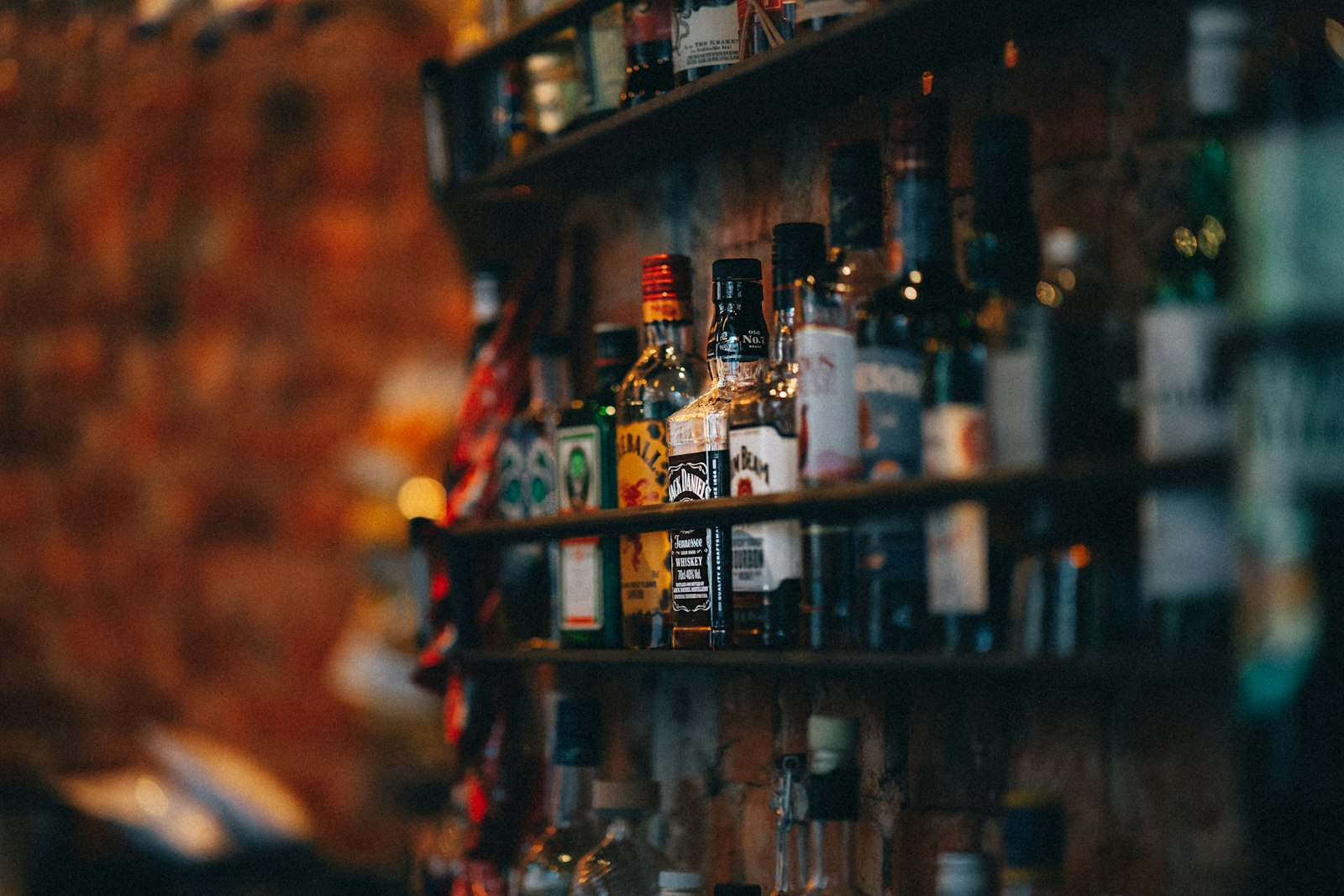
Short answer: Narita duty free is cheaper than Japanese city retail on a narrow set of bottles, roughly a wash on everything else, and the real reason to buy there is the travel-retail-exclusive whisky you cannot get anywhere else. The tax you save on a standard bottle is a few hundred yen, and airport pricing often eats most of it. What the airport gives you that a Tokyo shop cannot is a handful of Suntory, Nikka, and Mars bottles made only for airports, plus the convenience of not carrying glass around the city.
This guide covers what “duty free” actually removes, how airport prices compare with shops in Tokyo, what is realistically on the shelf at Narita (成田) in 2026, the bottles that are genuinely airport-only, and how much whisky you are allowed to carry home.
What duty free actually removes at Narita
A duty-free shop past airport security sells liquor free of two Japanese taxes: the 10% consumption tax (消費税) and the liquor tax (酒税) built into the shelf price. That sounds like a large discount. It is not.
Japan’s liquor tax on whisky is modest. It is calculated on alcohol content, and on a single 700ml bottle at 40 to 43% ABV it adds only a few hundred yen. The consumption tax is the bigger number, but tourists can already avoid that in the city: licensed tax-free shops (免税, look for the “Japan. Tax-free Shop” sign) refund the 10% consumption tax on purchases over 5,000 yen when you show a passport. So the airport’s advantage over a city tax-free counter is really just the liquor tax, minus whatever margin the airport operator adds back.
City tax-free and airport duty free are different systems
City tax-free shopping removes consumption tax at the register; the goods are sealed and meant to leave Japan unopened. Airport duty free removes both taxes because you buy airside, already past immigration. The two do not stack. If you bought a bottle tax-free at a shop in Tokyo, you are not owed a second discount at the airport.
Is it cheaper than buying in Tokyo?
For standard bottles, no meaningful difference, and sometimes the city wins. Discount chains such as Bic Camera, Don Quijote, and Yamaya price core Japanese whisky aggressively, and with the tourist tax refund applied their out-the-door price on something like Suntory Toki, Chita, or Hibiki Japanese Harmony tends to sit at or below the airport. Narita’s operators are not competing on price; they are competing on being the last shop before your gate.
Duty free pulls ahead in three specific cases. First, bottles the city does not sell at all, covered below. Second, when a shop runs a pre-order discount: JAL Duty Free, one of the operators at Narita and Haneda, takes online orders for pickup at the departure gate and applies an extra discount on many items, which can push a duty-free price below the city. Third, convenience has a value: you are not hauling breakable glass through train stations and hotel check-outs, and you are not risking a bottle over your carry-on liquid limit because you buy it airside.
If your plan is to bring home a case of well-known bottles at a discount, the honest read is that buying in the city and checking a padded bag usually beats the airport. Narita is where you pick up one or two bottles you could not find, not where you stock up.
What is actually on the shelf at Narita
The famous names in their entry-level form are the hardest to find. Yamazaki 12, Hakushu 12, and even Hibiki Japanese Harmony are frequently out of stock at airport shops or simply not carried, because allocation is tight and airport demand is enormous. Older age statements are handled by lottery, not open sale: Yamazaki 25, Hakushu 25, and Hibiki 30 are sold at duty free through application draws, with entry forms on each operator’s website.
What you can reliably buy without a lottery is the no-age-statement range and the grain whiskies. As of 2026, JAL Duty Free’s online catalog lists bottles including Suntory World Whisky Ao at about 5,640 yen, Suntory Toki 1000ml at about 6,200 yen, Suntory Chita at about 5,700 yen, Kirin Fuji single grain at about 6,210 yen, The Nikka at about 8,070 yen, and Mars Kosumi wine cask finish at about 8,000 yen. Higher up, it lists Ichiro’s Malt Chichibu Travel Exclusive 2026 at about 40,000 yen, Suntory Yamazaki Smoky Batch and a Hakushu edition around 19,000 yen each, and Nikka Miyagikyo Grande at about 14,520 yen. Prices move with stock and the exchange rate, and other Narita operators price differently.
Arrivals duty free carries almost no Suntory
Japan reopened arrivals duty-free shops so travelers can buy on the way in rather than carrying bottles through a trip. Useful in principle, but the arrivals shops at Narita stock mostly imported spirits and a thin Japanese selection. Returning Japanese residents hoping to grab Yamazaki or Hibiki on landing generally report the domestic-maker shelves are bare. If a specific Japanese bottle is the goal, buy it on departure and carry it out and back, or buy it in the city.
Duty-free price comparison, standard bottles
| Bottle | Narita duty-free price (approx, 2026) | Sold in Tokyo shops? | Notes |
|---|---|---|---|
| Suntory Toki 700-1000ml | 6,200 yen (1000ml) | Yes, widely | City discounters often lower after tax refund |
| Suntory Chita | 5,700 yen | Yes | Similar either way |
| Suntory World Whisky Ao | 5,640 yen | Yes | Similar either way |
| The Nikka 700ml | 8,070 yen | Yes | Similar either way |
| Ichiro’s Malt Chichibu Travel Exclusive | 40,000 yen | No | Airport channel only |
| Yamazaki 12 / Hakushu 12 | Often unavailable | Lottery or gray market | Not reliably stocked at airport |
The bottles you can only get at duty free
This is the one clear reason to shop the airport. Japanese producers make specific expressions for global travel retail (GTR), the industry term for airport and cruise shops, and these are not sold through normal Japanese retail.
The clearest example is the House of Suntory Kogei Collection. Launched on 1 April 2024 at a Suntory boutique in Singapore Changi Terminal 3, it pairs a Yamazaki Peated Malt Spanish Oak and a Hakushu Peated Malt Spanish Oak, both no-age-statement, both 43% ABV, in bottles designed with Chiso (千總), a Kyoto kimono house working since 1555. Suntory describes it as a way to show Japanese craft (kogei, 工藝) through packaging by traditional artists, with a new edition every two years. The recommended travel-retail price was around US$205 for 700ml. It debuted in Singapore and Dubai; whether a given edition reaches Narita specifically varies by operator and year, so check before you count on it.
Nikka and Mars run smaller travel-retail lines in the same spirit: assortment boxes, cask-finish editions, and formats such as Suntory Royal Limited Edition that carry a “duty-free exclusive” label in the catalog. If you see one of these, that is a bottle you cannot replicate at a Tokyo shop, and the airport price is the only price.
Do not confuse airport-exclusive with domestic-limited
Resellers blur this line. Yamazaki Limited Edition, Story of the Distillery, and similar releases are Japanese domestic lottery bottles, sold to winners inside Japan, not airport exclusives. The names sometimes echo the travel-retail casks, but the release channel is different. If a listing calls a domestic-limited bottle “duty-free only,” treat the description with suspicion, because the scarcity story it implies is not the real one. Our guide on reading a Japanese whisky label covers the same trap.
Departures, arrivals, pre-order, and transfers
A few mechanics decide whether a duty-free purchase is smooth or a headache.
Pre-order. Narita’s operators let you reserve online days before travel and collect at a counter near your gate. This locks in stock on popular bottles and often adds a discount. It is the single best way to avoid a sold-out shelf.
Departures vs arrivals. Buy Japanese whisky on departure. The arrivals shops are weak on domestic makers, as covered above.
Connecting flights. A duty-free bottle is a liquid over 100ml, so it cannot go through a second security screening loose. If you change planes outside Japan, the shop must seal it in a tamper-evident bag (STEB) with the receipt visible, and you must keep it sealed until your final destination. Some countries still confiscate sealed bottles at transfer; a direct flight home avoids the risk entirely. Whisky bought in the city and checked in your hold luggage sidesteps all of this.
Payment and limits. You will need your boarding pass and passport. Duty-free purchases are tied to your outbound flight.
How much whisky you can take home
The airport shop will sell you as many bottles as you can carry. Your home country decides how many you can bring in without paying duty. Going over the limit is usually not illegal, but you declare it and pay tax on the excess.
| Destination | Duty-free alcohol allowance per adult | Over the allowance |
|---|---|---|
| United States | 1 liter of alcohol, age 21+, personal use | Allowed but subject to duty and federal excise tax; declare it |
| United Kingdom (Great Britain) | 4 liters of spirits over 22% ABV, age 17+ | Pay tax and duty on the whole spirits category, not just the excess |
| Canada | 1.14 liters of spirits after 48+ hours away | Allowed with duty and provincial markup |
| Australia | 2.25 liters of alcohol, age 18+ | Duty and GST on the full amount if over |
For a typical US traveler that means one 700ml bottle clears easily, a second is fine if you are willing to declare and pay a small amount, and a checked case will be taxed. UK and Australian allowances are more generous. Rules change, so confirm with your own customs service before you fly. If you are buying to resell or invest rather than to drink, read our take on Japanese whisky as an investment in 2026 first, because import duty and the current market both cut into the math.
So is it worth it?
Buy at Narita duty free if you want a travel-retail-exclusive bottle, if a pre-order discount beats the city price, or if you simply do not want to carry glass around Tokyo. Buy in the city if you want well-known bottles at the best price and are willing to check a bag. The airport is a convenience and an access point for airport-only whisky, not a discount warehouse. Set expectations accordingly and you will not be disappointed at the gate.
Q: Is Yamazaki 12 available at Narita duty free?
A: Not reliably. Entry-level Yamazaki and Hakushu are frequently out of stock at airport shops or not carried, because allocation is tight and airport demand is high. Older bottles like Yamazaki 25 and Hibiki 30 are sold by lottery through the operators’ websites, not over the counter. If a core bottle is your goal, try city retailers or plan around a lottery rather than assuming the airport will have it.
Q: Is duty-free whisky at Narita cheaper than in Tokyo shops?
A: For standard bottles, barely, and sometimes the city is cheaper. Japan’s liquor tax on whisky is only a few hundred yen per bottle, and tourists can already claim the 10% consumption tax refund at licensed tax-free shops in the city. Discount chains such as Bic Camera and Don Quijote often match or beat the airport once that refund is applied. Duty free wins mainly on airport-exclusive bottles and pre-order discounts.
Q: What Japanese whisky can I only buy at the airport?
A: Travel-retail-exclusive releases such as the House of Suntory Kogei Collection (Yamazaki and Hakushu Peated Malt Spanish Oak), plus various Nikka and Mars assortment boxes and cask-finish editions labeled duty-free exclusive. These are made for global travel retail and are not sold through normal Japanese shops. Domestic lottery bottles like Yamazaki Limited Edition are a separate category and are not airport exclusives.
Q: How many bottles of whisky can I bring back from Japan?
A: The shop will sell you as many as you can carry; your home country sets the duty-free limit. The United States allows 1 liter per adult 21 or older for personal use, the United Kingdom allows 4 liters of spirits, Canada 1.14 liters, and Australia 2.25 liters of alcohol. You can bring more, but you must declare it and pay duty and tax on the excess. Confirm current rules with your own customs service.
Sources
- JAL Duty Free official online shop, whisky and bourbon category, prices as of 2026 (Japanese) — jaldfs.co.jp
- “Aiming for Japanese whisky at Narita airport duty free,” Meitei Biyori, note.com, 2023, first-hand account of duty-free stock and sell-outs (Japanese)
- House of Suntory, “Kogei Collection Japanese Kimono Edition” official product page — house.suntory.com
- “House of Suntory creates GTR-exclusive whiskies,” The Spirits Business, April 2024 — launch date, 43% ABV, US$205 recommended travel-retail price
- U.S. Customs and Border Protection, “Customs Duty Information” and “Bringing alcohol into the United States for personal use” — cbp.gov
- GOV.UK, “Bringing goods into the UK for personal use: arriving in Great Britain” — gov.uk