Saburomaru (三郎丸) distillery, the whisky arm of Wakatsuru Shuzo (若鶴酒造) in Tonami, Toyama Prefecture, released SAB. Ocean Blue 2nd Batch on September 17, 2026. It is the second edition of the top expression in the distillery’s SAB. blended range, and the first Ocean Blue to include whisky matured in casks made from Toyama-grown mizunara (ミズナラ), the Japanese oak. The distillery announced the release on its official news page on September 3.
Wakatsuru launched SAB. in December 2024 as a set of blended whiskies built around Saburomaru’s smoky malt and aged grain whisky. The earlier releases — Sunset Red, Night Black and the Hokuriku-only Snow White — sit below Ocean Blue, which the company calls the line’s top expression. Wakatsuru sells the range under the motto “rooted in the region, standing on the world stage,” and a canned SAB. highball is also on sale in Japan.
What is new in the 2nd Batch
For this edition the blending team used whisky from “a wide range of casks,” and for the first time folded in spirit aged in casks made from Toyama-grown mizunara. Mizunara is the oak usually linked with sandalwood- and incense-like aromas, and our guide to mizunara oak whisky explains why the wood is so hard to work with. Saburomaru’s own description says the mizunara component adds an aroma reminiscent of fragrant wood and gives the blend more depth and layering, with a texture that is “powerful yet smooth.” These are the producer’s words; we have not tasted this batch.
The official specification is 46% ABV, 700ml, malt and grain, at a suggested retail price of 9,000 yen before tax (9,900 yen including tax). The release is limited, and the company says it will end when stock runs out, but it has not published a bottle count. The company’s online shop, “Watashi to, ALC.” (私と、ALC.), began selling it at 12:00 on September 17. Wakatsuru lists the sales area as “nationwide and overseas” — so, unlike Snow White, this is not a regional or Japan-only bottling.
For comparison, the first Ocean Blue was announced in December 2024 as a 10,000-bottle limited release for summer 2025 at the same 9,900 yen price. In June 2026 Wakatsuru said the 1st Batch had won a gold medal at the San Francisco World Spirits Competition 2026, listing it at 48% ABV in that release. The 2nd Batch is bottled at 46%.
Where the mizunara comes from
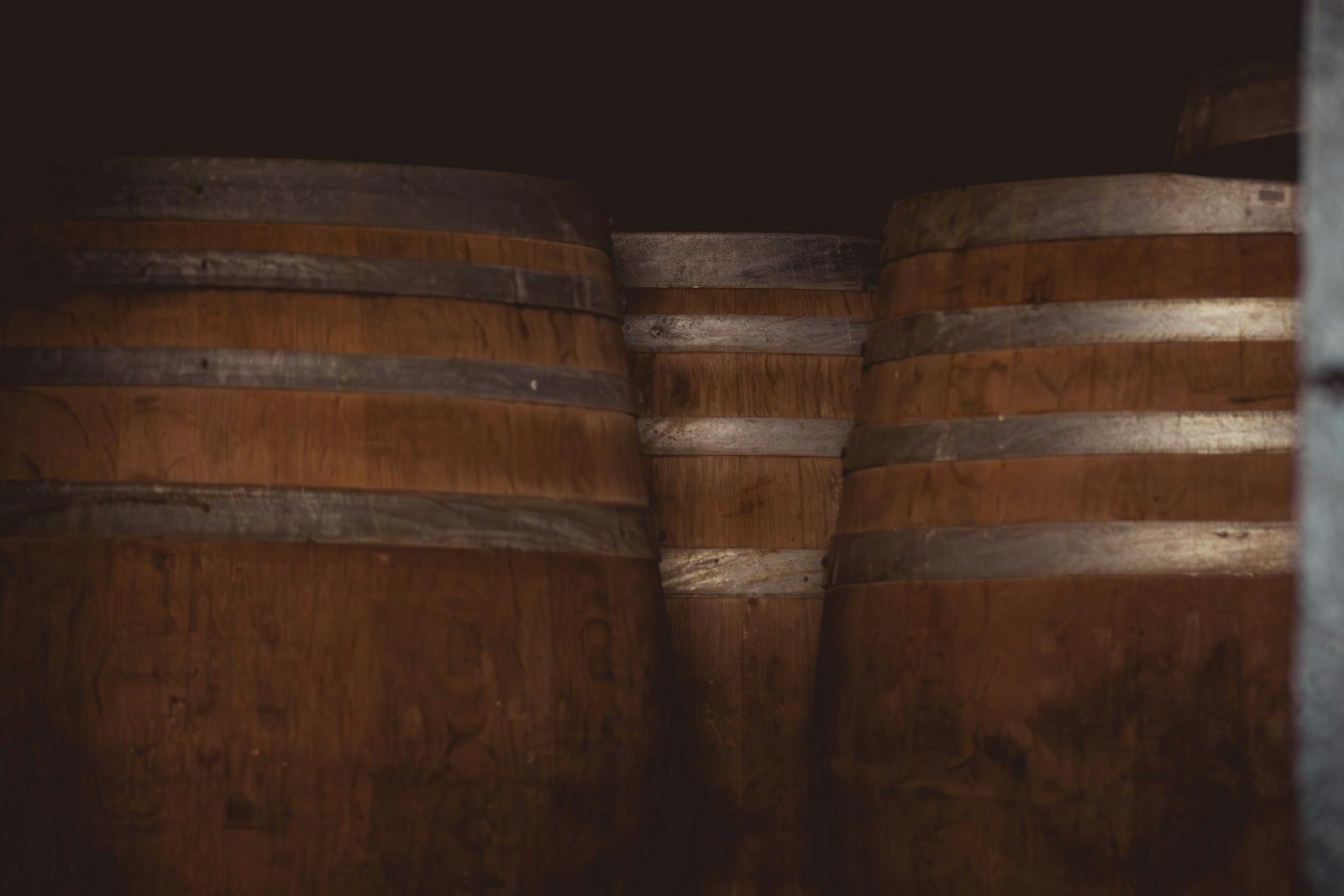
The mizunara casks are not imported. Around 2019, Saburomaru began making its own mizunara casks, called “Sanshiro” (三四郎樽), from Toyama-grown wood. It works with Shimada Mokuzai, a local timber company, and Yamazaki Komuten, a local builder, and draws on the woodworking tradition of Inami (井波) in Nanto, a town known for wood carving. Our overview of Japanese whisky cask types sets mizunara alongside the bourbon, sherry and wine casks more often used.
Saburomaru and Wakatsuru
Saburomaru describes itself as the oldest whisky distillery in Hokuriku, the region on Japan’s Sea of Japan coast. Wakatsuru, founded as a sake brewer in 1862, began researching distilled spirits in 1947, started making whisky in 1952 and launched its first in-house whisky, Sunshine Whisky, in 1953. After domestic demand collapsed, the operation shrank. Takahiko Inagaki, whose great-grandfather started the whisky business and who is now president and master blender, returned to Toyama in 2016. He ran a crowdfunding campaign that autumn to repair the ageing plant, and the rebuilt Saburomaru distillery opened in 2017.
In 2019 the distillery introduced ZEMON, which it calls the world’s first cast-metal pot still. It was developed with Oigo Seisakusho, a temple-bell foundry, and the Toyama Industrial Technology Center, using the bronze-casting tradition of Takaoka. The distillery’s concept is “The Ultimate Peat,” and its heavily peated malt is the backbone of every SAB. bottle. Saburomaru sits on a growing list of Japanese whisky distilleries that have moved from experiment to regular bottlings.
Why this matters
SAB. is Wakatsuru’s attempt to build a blended brand that can travel. At the December 2024 launch, Inagaki argued that single malt is prized in Japan but makes up only about 25% of the global market, and around 90% of whisky in Europe is blended. “Globally, we first need to build recognition with blends,” he said.
The 2nd Batch shows how that strategy is meant to work. Instead of releasing a new name, Wakatsuru keeps the top label and changes the recipe batch by batch. This time it added a local wood that ties the bottle to Toyama. Using its own Sanshiro casks rather than bought-in mizunara also matters commercially. Mizunara is scarce and expensive, and a distillery that can make its own casks can use the wood in a 9,900 yen blend rather than reserving it for high-priced single malts. Whether the mizunara share is large enough to stand out is not disclosed. Wakatsuru has not stated a proportion, a cask count or an age for any component.
For readers outside Japan
The main correction to our earlier report is that the 2nd Batch is officially for sale overseas as well as in Japan. Wakatsuru has not named importers or markets, so availability will depend on each country’s distributor. If no local shop lists it, specialist retailers that stock Saburomaru are the place to ask first. See our guides to buying Japanese whisky in the UK and in the US. Buying from Japan directly is possible through some retailers, but duties and shipping can add a lot to the bill. Our import guide walks through the costs. As a reference point, 9,900 yen is well below Saburomaru’s own single malts, which Wakatsuru listed at 15,400 to 16,500 yen in its June 2026 release.
One label detail matters. SAB. is sold as a blended whisky, not as “Japanese whisky.” Wakatsuru describes the grain as aged grain whisky but does not state where it was distilled. Japan’s 2021 industry standard reserves the “Japanese whisky” term for spirit distilled, matured and bottled in Japan, and our explainer on Japanese grain whisky covers why grain sourcing is so often left vague. Drinkers who want Saburomaru’s mizunara in a clearly single-origin bottle should look at its single malts instead.
Visitors can see the casks where they are made. The distillery runs a one-hour guided tour that covers ZEMON, the warehouse and the cooperage. It costs 5,000 yen and includes an original glass and 20ml samples of whisky and new make. An English booking page is available. Because the tour includes tasting, the distillery asks visitors to come by public transport; drivers skip the tasting.
Sources
- Saburomaru Distillery: SAB. OCEAN BLUE 2ND BATCH release notice (September 3, 2026) (Japanese)
- jpwhisky.net: SAB. OCEAN BLUE 2ND BATCH release information (Japanese)
- Gourmet Watch: Saburomaru launches the SAB. blended whisky brand (December 6, 2024) (Japanese)
- Wakatsuru Shuzo via PR Times: SFWSC 2026 results (June 15, 2026) (Japanese)
- Saburomaru Distillery official site: About and Philosophy (Japanese)
- Saburomaru Distillery: Factory tour and access (Japanese)