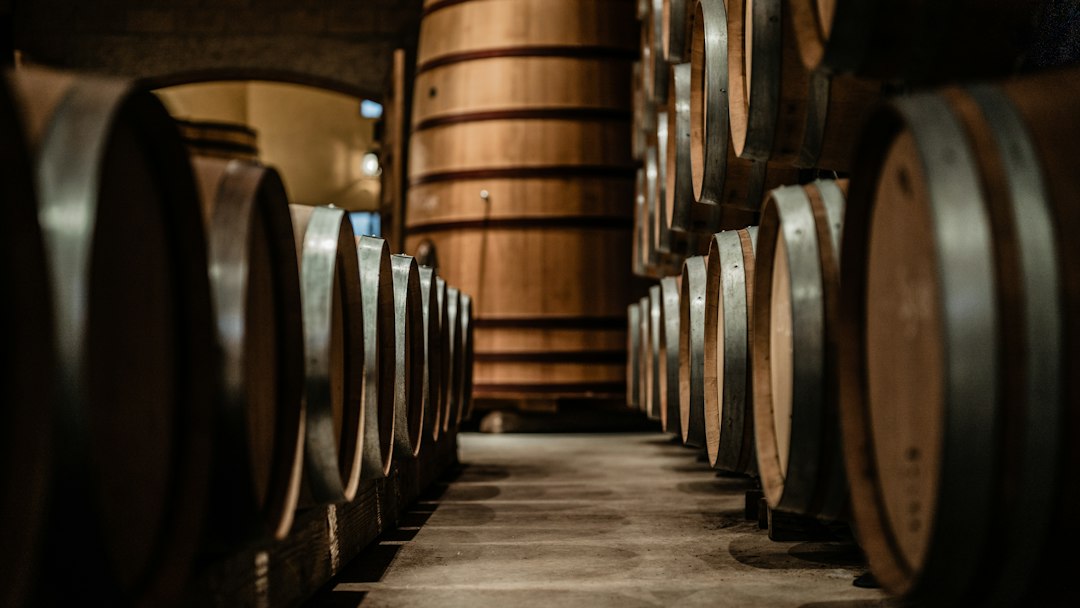
Most Japanese whisky labels name a cask: sherry, mizunara, bourbon barrel, puncheon, wine. Those words matter, but probably not in the way most cask guides suggest. The type of wood is only part of it. Cask size, how many times the cask has been filled before, and how a distillery gets hold of its casks shape the whisky just as much.
This guide covers the casks Japanese distilleries actually use, with figures taken from the producers’ own Japanese-language material. It also covers two things most English guides leave out: the Japanese words you will see on domestic labels, and why buying casks shapes a young distillery’s whisky as much as making spirit does.
The five casks Suntory says it uses
The clearest official breakdown comes from Suntory (サントリー) itself. In a customer FAQ, the company says it uses five main cask types. It also explains the two variables it treats as decisive. The first is size: the smaller the cask, the faster the whisky matures and the stronger the wood influence. The second is the char on the inside of the cask. A heavy char gives deeper color and more cask aroma, while a light char gives paler color and less cask aroma.
Those two rules are worth remembering, because they apply to every Japanese distillery, not just Suntory. Here is how the five types compare, using Suntory’s published dimensions.
| Cask | Capacity (Suntory figure) | Wood and origin | What it changes |
|---|---|---|---|
| Barrel | 180 liters | American white oak, heavily charred, used once for bourbon | Fastest wood contact of the five; vanilla-led cask character |
| Hogshead | 230 liters | Staves from dismantled barrels, rebuilt with larger heads | Slightly slower than a barrel; same oak, more liquid |
| Puncheon | 480 liters | Quarter-sawn North American white oak only | Slow, steady aging; less wood per liter |
| Sherry butt | 480 liters | Spanish oak, built and used in Spain for sherry | Darker color and fortified-wine influence |
| Mizunara | Not stated | Japanese oak (Quercus crispula) | Distinctive aroma that develops only with long aging |
Two details in that list are easy to miss. First, the hogshead is not a separate type of oak. Suntory describes it as a barrel that has been taken apart and rebuilt with bigger end pieces, so the same American oak holds more spirit. Second, the puncheon is made to Suntory’s own specification. On the Yamazaki (山崎) distillery blog, staff explain that it is built at the company’s own cooperage from quarter-sawn white oak bought in the United States. Using only quarter-sawn boards is a deliberate choice. It costs more timber, but it gives tighter staves that are less prone to leaking.
Why the puncheon matters more than its reputation suggests
English-language guides usually skip puncheons. The Yamazaki blog explains why they matter: in a large cask the whisky touches less wood relative to its volume, so maturation is slow and the result is calm and firm in flavor. A distillery making whisky for long-lived blends has good reason to want slow, steady casks.
The cask’s history is part of the recipe
The same Yamazaki post makes a point that labels rarely state. Each cask comes with a history. What did it hold before? Is this its first fill of whisky or its third? A former wine cask brings fruity, sweet-and-sour notes, according to the distillery. The same cask on its third fill gives far less. For a bigger picture of how Suntory uses these casks in one whisky, our Yamazaki distillery guide covers the site and what it makes today.
Bourbon barrels: the quiet majority
Ex-bourbon barrels get less attention than sherry or mizunara, but they are the backbone of most Japanese warehouses. US law requires bourbon to be aged in new charred oak, so used barrels are plentiful, and Japan buys them like everyone else.
Chichibu (秩父) shows how central they are. In a 2015 interview with WHISKY Magazine Japan, founder Ichiro Akuto (肥土伊知郎) said bourbon barrels made up roughly half of the distillery’s casks. The other half was split between sherry, wine, mizunara, port, madeira and cognac casks, with occasional rum, tequila and grappa casks when good ones became available.
Not every bourbon barrel is the same
One of the more useful things Akuto said in that interview was that “bourbon barrel” is not really one category. He described clear differences depending on which distillery the barrel came from. In his experience, Maker’s Mark barrels matured spirit very gently and Heaven Hill barrels gave strong vanilla sweetness. Jack Daniel’s barrels, he said, added a fresher fruitiness. He guessed this came down to differences in how the barrels were built, charred and aged. He also called these impressions his own.
So on a single-cask label, “bourbon barrel” names the family, not which bourbon or how heavy the char. For a closer look at how individual casks reach the bottle, see our guide to cask strength Japanese whisky.
The supply problem behind the barrels
The same interview shows why casks are a business problem as much as a flavor choice. Akuto said that bourbon barrels had become hard to get in the years before 2015. Earlier, a distiller could simply pay more. By 2014, he said, even paying more did not guarantee when the barrels would arrive. His answer was to travel himself, to Spain for sherry casks and to the United States for bourbon barrels, and negotiate in person. A small, unknown distillery asking through a Japanese trading company, he explained, could not get the casks it wanted.
Sherry casks: expensive, slow and used carefully
Sherry casks are the type most English-language readers already associate with Japanese whisky. Suntory’s version is specific: a 480-liter cask made from Spanish oak, built in Spain and used there to hold sherry before it comes to Japan. On a label, the word “sherry” alone does not tell you which kind of sherry cask you are getting.
Cost is the reason sherry casks are used carefully. Akuto estimated in 2015 that a sherry cask cost roughly five times as much as a bourbon barrel. He also said that Chichibu’s sherry-matured single casks were still few because he believed sherry character needed more time to develop. He described an early sherry release as still youthful. By his account, it had come on substantially after one more year in the cask.
Why this shapes what young distilleries release
High cost and slow development explain a common pattern: newer distilleries tend to release bourbon-cask whisky first, with sherry bottlings later and in smaller numbers. When a three-year-old craft release says “sherry cask,” ask whether it spent its whole life there or only a few months. Our guide to Japanese age statements explains what the numbers on the front can and cannot tell you.
Mizunara: born from a wartime shortage
Mizunara (ミズナラ) is the cask most closely tied to Japan, and its origin is often romanticized. Suntory’s own account is more practical. According to the Yamazaki distillery blog, imported casks became hard to get during the war in the 1940s. The company tested various Japanese oaks for maturation and settled on mizunara.
It was not an easy success. The same post says the wood leaked badly, making the casks hard to build. New mizunara casks also gave so much wood flavor that blenders did not rate them highly at first. The breakthrough came with time. With long aging, that harsh woodiness developed into an aroma Suntory compares to kyara (伽羅, aloeswood) and byakudan (白檀, sandalwood), the woods used in Japanese incense.
How rare mizunara really is
Suntory gives a useful figure here. In a 2018 post, the company said that only a few thousand of the roughly 1.2 million casks it holds are mizunara. It also said mizunara trees take a very long time to reach cask-making size. Suntory is working to protect and grow the trees, and its blenders go into the forest themselves to help choose them. For the full story of the wood, see our mizunara oak explainer.
The finishing question
Can mizunara work as a short finish, or does it need years? Akuto addressed this in 2015. He knew Suntory’s experience that mizunara only came good with long aging. Even so, his trials of six months to a few years showed real mizunara character. His view was that properly seasoned wood can bring out mizunara’s strengths in a shorter time. That is one maker’s view, not a settled answer. It also explains why short mizunara finishes now appear on the market.
Why a small distillery built its own cooperage
Chichibu’s cask story is unusual because the distillery makes casks as well as buying them. Around 2013, it set up a cooperage on site, in a building originally intended as a warehouse. In the second part of the 2015 interview, Akuto explained how it happened. He and his staff had trained under Mitsuo Saito (齋藤光雄), head of the cooperage Maruesu Yodaru (マルエス洋樽). When that workshop closed, Chichibu took over its still-working machinery rather than let it go to waste.
Buying mizunara like tuna
Since 2009, he has gone to Hokkaido timber auctions where numbered logs are laid out for days before bidding. He compared it to buying tuna at Tsukiji (築地). Buyers check the growth rings for even, concentric growth and look for rot. A tree that looks healthy standing can be diseased inside, so only the cut log tells you. The logs rest for months, then are cut along the grain and air-dried for about three more years before becoming cask staves.
He was also open about the cost. He estimated mizunara at a minimum of 10 to 20 times the price of a bourbon barrel. He also said Chichibu does not sell its used mizunara casks, despite requests from overseas. More on the distillery itself is in our Chichibu distillery guide.
Moving whisky between casks
The cooperage gives Chichibu control over more than wood type. In the same interview, Akuto described hybrid casks, such as hogsheads with mizunara heads, and red oak used only for the heads because red oak leaks. He also described moving whisky from a first-fill cask into a third-fill cask. His reasoning: fruity spirit should not sit in very active wood, so a gentler, well-used cask lets the fruit come through. He called the first good result a happy accident.
Reading cask terms on a Japanese label
Japan-only bottles often list the cask in Japanese. Most cask terms are written in katakana, the script for loanwords, and sound like the English.
- バーレル / バーボン樽 (bāreru / bābon-daru): barrel or ex-bourbon barrel. 樽 (taru) means cask.
- ホッグスヘッド (hoggusu-heddo): hogshead.
- パンチョン (panchon): puncheon.
- シェリー樽 (sherī-daru): sherry cask. スパニッシュオーク means Spanish oak.
- ミズナラ樽 (mizunara-daru): mizunara cask.
- ワイン樽 (wain-daru): wine cask.
- 新樽 (shin-daru): new, never-used cask.
- シングルカスク (shinguru kasuku): single cask. カスク番号 or Cask No. gives the cask number.
- 後熟 (kōjuku): secondary maturation, the term often used for a finish.
If 後熟 appears on a label, the named cask was a finish rather than the whole maturation. That single word can change how you judge the price. It is also worth reading alongside our guide to spotting bottles that are not really Japanese whisky. A grand cask story on the label does not tell you where the spirit was distilled.
What cask choices mean when you buy
All of this points to a few practical rules for choosing a bottle.
First, the cask on the label is a starting point, not a flavor guarantee. Size, char, fill number and time in the cask all change the result.
Second, cost explains a lot of pricing. On Akuto’s 2015 estimates, a sherry cask costs about five times a bourbon barrel and mizunara at least ten times more. Mizunara bottlings will rarely be cheap, and a cheap one is worth reading closely to see whether it was only a short finish.
Third, blends depend on cask variety. Nikka (ニッカ) describes From the Barrel as dozens of malt and grain whiskies blended and then put back into casks for several months of marrying before bottling. The cask is doing work even after the blend is made. Our Nikka From the Barrel guide covers that bottle in more detail.
Where to look outside Japan
In the US and UK, specialist retailers usually list cask type on product pages. In the EU, check whether a listing names the cask or just the brand. Our US buying guide and UK buying guide cover which shops carry the widest Japanese ranges.
Frequently asked questions
Q: What is the most common cask in Japanese whisky?
A: Ex-bourbon barrels are the workhorse. Chichibu’s founder said in 2015 that roughly half of the distillery’s casks were bourbon barrels. Suntory lists the 180-liter barrel first among its five main types, and its hogsheads are rebuilt from barrel staves, so American white oak dominates most warehouses.
Q: Why is mizunara whisky so expensive?
A: The wood is scarce, slow to grow and difficult to make into casks because it leaks. Suntory says only a few thousand of its roughly 1.2 million casks are mizunara. Chichibu’s founder estimated in 2015 that mizunara costs at least 10 to 20 times as much as a bourbon barrel.
Q: What is the difference between a hogshead and a puncheon?
A: Size and construction. Suntory’s hogshead holds 230 liters and is rebuilt from dismantled bourbon barrels with larger heads. Its puncheon holds 480 liters and is built from quarter-sawn American white oak. The larger puncheon ages whisky more slowly, because less wood touches each liter of spirit.
Q: How can I tell if a Japanese whisky was only finished in a cask?
A: Look for the word 後熟 (kōjuku) on Japanese labels, or “finish” and “finished in” on English labels. Those terms mean the named cask was used only for secondary maturation. If the label names a cask without either term, check the producer’s website for the full maturation history before you pay a premium.
Sources
- Suntory Customer Center, “ウイスキーの貯蔵に使用する樽には、どんな種類がありますか?” (Japanese) — https://www.suntory.co.jp/customer/faq/001750.html
- Suntory Whisky Distillery Blog, “【山崎蒸溜所】貯蔵庫の香りと多彩なウイスキー樽” (Japanese) — https://www.suntory.co.jp/factory/blog-d/000148.html
- Suntory Whisky Distillery Blog, “国産「ミズナラ樽」の誕生” (Japanese) — https://www.suntory.co.jp/factory/blog-d/000027.html
- WHISKY Magazine Japan, “木と共に歩む秩父蒸溜所 前半” (Japanese) — https://whiskymag.jp/ccb_d1/
- WHISKY Magazine Japan, “木と共に歩む秩父蒸溜所 後半” (Japanese) — https://whiskymag.jp/ccb_d2/
- Nikka Whisky, “フロム・ザ・バレル” product page (Japanese) — https://www.nikka.com/products/blended/fromthebarrel/index.html