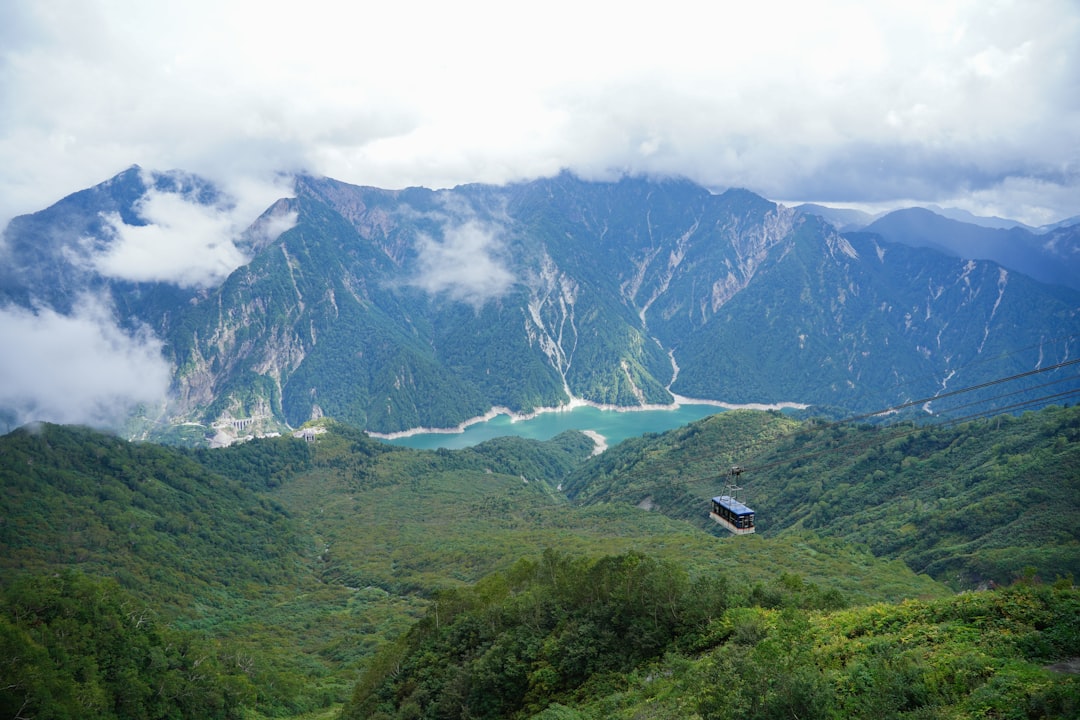
Saburomaru distillery (三郎丸蒸留所) is Japan’s oldest continuously licensed whisky maker in the Hokuriku region, and by most accounts the most committed to heavily peated single malt anywhere in the country. It operates inside Wakatsuru Shuzo (若鶴酒造), a sake brewery in Tonami City, Toyama Prefecture, that has made rice wine since 1862 and whisky since 1952. The distillery’s own Japanese-language history pages and staff interviews describe a story that rarely makes it into English coverage: a near-death fire in its first year, a six-decade run as a quiet regional producer, and a 2016 crowdfunding campaign that brought it back from the edge of closure.
What is Saburomaru distillery
Saburomaru takes its name from the neighbourhood of Saburomaru in Tonami City, Toyama, where the distillery has stood since the 1950s — a place name, not a reference to any shrine. It is run by Wakatsuru Shuzo under fifth-generation president and master blender Takahiko Inagaki (稲垣貴彦), and it is one of the few Japanese producers to build its entire identity around heavily peated whisky rather than treating peat as one style among several. For background on how Japan’s whisky rules apply to a small producer like this one, see our guide to what counts as Japanese whisky.
From rice shortage to whisky licence: why the distillery exists
Wakatsuru Shuzo was a sake brewery first, founded in 1862, and its whisky business grew directly out of a crisis in that older trade. World War II and the 1945 air raids on Toyama sharply cut sake production, and postwar rice shortages made it difficult to secure the grain a sake brewery depended on. The company’s second-generation president, Kotaro Inagaki, had already shown a willingness to invest in production quality years earlier: in 1927, during a banking crisis, he dug a deep well to reach the pure groundwater of the Shogawa River on the principle that good sake starts with good water. Facing the postwar rice shortage, he turned that same instinct toward finding ways to produce alcohol from ingredients other than rice.
In 1947, Wakatsuru brought in Shigetoshi Fukazawa, an engineer repatriated from Manchuria, and founded the Wakatsuru Fermentation Research Institute to experiment with alternative raw materials, including trials with Jerusalem artichokes. That research led to a miscellaneous liquor licence in 1950 and, in July 1952, a full whisky manufacturing licence. The first product, launched under difficult postwar conditions, was named Sunshine Whisky — a name the company has described as expressing a hope that a spirit made from water, air and sunlight could help a country that had lost so much during the war rebuild itself.
The rebuilding took an unplanned detour almost immediately. On 11 May 1953, a fire that started in the distillation room burned down six buildings at the site. Wakatsuru’s own history records that hundreds of local residents turned out over several days to help clear the wreckage, and the distillery was rebuilt within about six months — a debt to the local community that the company still references when it talks about its relationship with Tonami today.
Saved twice: the 2016 crowdfunding campaign
Whisky production continued quietly at Saburomaru for six decades, largely unknown outside Toyama. By the mid-2010s the equipment was aging and the facility was not set up to welcome visitors. In 2016, Wakatsuru launched a crowdfunding campaign asking supporters to help keep more than 60 years of whisky-making alive, with a target of 25 million yen. It raised roughly 38.26 million yen from 463 backers — well past the goal — and used the funds to renovate the distillery and open it to the public for the first time. Saburomaru reopened in July 2017 as the only whisky distillery in the Hokuriku region offering public tours, and in 2025 the site was added to Japan’s register of Tangible Cultural Properties.
ZEMON: Takaoka’s bell-casting tradition becomes a still
Why cast, not hammered
Every conventional copper pot still is built by hammering and welding sheet copper into shape, a slow, skilled process. Inagaki asked a different question: could Takaoka, a city a short drive from the distillery with roughly 400 years of history casting bronze temple bells, cast a pot still instead of forging one? Working with Old Craft Manufacturing (老子製作所), a Takaoka foundry known for bronze bell-making, the distillery developed ZEMON (ゼモン), described as the world’s first cast copper-tin alloy pot still, completed in December 2018 and in use for distillation from 2019.
What casting actually solves
The choice was not purely symbolic. Inagaki has pointed to practical gains from casting over hammering: a cast still can be built with thicker copper walls, giving it a longer working life than a hammered still of the same size; individual worn parts can be replaced rather than requiring the whole still to be rebuilt; and casting shortens the production lead time compared with traditional hand-forging, which matters in an industry where new distilleries have struggled to source stills at all. ZEMON later travelled beyond Toyama — a still built with the same casting process was installed at Hida Takayama distillery, another small Japanese producer that needed equipment it could not otherwise easily obtain. Readers interested in how other small-scale producers have approached equipment constraints may find our profile of Nagahama distillery a useful comparison.
Why heavily peated, in a country where almost nobody does that
Saburomaru has used heavily peated malt since whisky production began in 1952, importing peated malt from Scotland rather than sourcing a lighter, more neutral style. Inagaki has been direct about how unusual this is domestically, saying that Saburomaru may be close to the only Japanese distillery built primarily around peat. Production manager Itsuki Nakao (中尾樹) has described the discipline this creates rather than limits: “Because we only make smoky whisky, we think every day about how to bring out individuality within that.” Nakao has also spoken about resisting the temptation to manage the process purely by numbers: “Figures are only a guide. In the end you look at the actual thing in front of you. Fermentation fails if you’re too delicate or too careless about it. What matters is watching closely, every day, with a wide field of view.” He has framed the goal of the whisky itself in similar terms: not simply “tasty,” but something that “makes the person drinking it think, and stays in their memory.”
Fighting the climate: what Toyama’s heat and humidity forced them to change
Toyama’s climate works against slow, Scotland-style maturation. Japan’s hot, humid summers speed up maturation and increase evaporation loss compared with Scotland’s cooler, drier conditions, and Saburomaru’s own materials describe this directly as a problem the distillery had to engineer around rather than simply accept. The solution was mechanical: cooling equipment run on well water was installed to bring the warehouse environment closer to Scottish maturation conditions, an explicit attempt to slow the pace of aging rather than let Toyama’s climate dictate it by default. It is a concrete example of how the region’s weather did not just flavour the marketing copy — it forced a specific piece of engineering into the production process.
What the brand is building toward
Inagaki has framed Saburomaru’s mission under the banner “The Ultimate Peat,” describing it as both a continuation of the smoky style his great-grandfather chose in 1952 and a deliberate attempt to push that style further than most producers anywhere are willing to. He has also spoken of wanting to build “whisky that could only be made in Toyama” and take it to a global audience, and of Japan’s whisky industry needing to mature into a genuine culture rather than ride out a passing boom, an ambition he has connected to studying the range of styles found across Scotland’s many distilleries. The distillery’s tarot-themed limited releases — The Fool, The Magician, The High Priestess and The Empress among them — have picked up medals at the World Whiskies Awards and the Tokyo Whisky & Spirits Competition, alongside its core single malt, Saburomaru II, which also won gold at the 2023 Tokyo Whisky & Spirits Competition.
| Bottle | Style | What’s inside | Notable for |
|---|---|---|---|
| Saburomaru II | Single malt | Heavily peated malt, distilled in the ZEMON cast stills | Core range; gold medal, Tokyo Whisky & Spirits Competition 2023 |
| Tarot series (The Fool, The Magician, and others) | Single malt, limited release | Selected casks named after tarot cards | Multiple World Whiskies Awards and TWSC medals |
| Sunshine Whisky | Historic blend | Wakatsuru’s first whisky, 1953 | No longer in production; named for a hoped-for postwar recovery |
For a reader outside Japan, the takeaway is not that Saburomaru makes the country’s smokiest whisky, though that claim shows up often. It is that almost every distinctive thing about the distillery — the cast still, the engineered maturation, the century-old peat commitment — traces back to a family business solving a specific, local problem rather than copying a Scottish template wholesale. That is a different kind of authenticity than the more common story of Japanese distillers importing Scottish equipment and methods unchanged, and it is worth knowing before you decide whether a heavily peated Japanese single malt is something you want to try.
Frequently asked questions
Q: Is Saburomaru whisky always heavily peated?
A: The distillery’s core identity is built around heavily peated malt, a style it has used since it first received a whisky licence in 1952, and staff describe smokiness as the constant they build individuality around rather than a variable feature. Limited releases vary in cask and finish, but the peated character has been the distillery’s defining choice from the start rather than a recent trend.
Q: What is ZEMON and why does it matter?
A: ZEMON is a pot still cast rather than hand-forged, developed with a Takaoka foundry known for casting bronze temple bells and completed in 2018. Casting allows thicker copper walls for a longer working life, lets individual worn parts be replaced instead of rebuilding the whole still, and shortens production lead time compared with traditional forging, addressing a real equipment bottleneck in Japan’s small-distillery boom.
Q: How did Saburomaru distillery almost close, and how was it saved?
A: By the mid-2010s the facility was aging and not equipped for visitors, after six decades as a quiet regional producer. In 2016, Wakatsuru Shuzo ran a crowdfunding campaign that raised about 38.26 million yen from 463 backers against a 25-million-yen target, funding a renovation that reopened the distillery to the public in July 2017 as the only visitable whisky producer in the Hokuriku region.
Q: Does Toyama’s climate actually affect how the whisky is made?
A: Yes, directly. Japan’s hot, humid summers accelerate maturation and increase evaporation loss compared with Scotland, so Saburomaru installed cooling equipment powered by well water to bring its warehouse conditions closer to a Scottish maturation pace. It is a specific engineering response to the local climate rather than a general claim about terroir.
Sources
- 三郎丸蒸留所の歴史 — Wakatsuru Shuzo official site (Japanese)
- こだわり/三郎丸蒸留所 — Wakatsuru Shuzo official site (Japanese)
- 三郎丸蒸留所|”煙”を愛する若き作り手が紡ぐ、富山発スモーキーウイスキー — Toyama Prefecture tourism (Japanese)
- 世界初の鋳造製蒸留機、飛騨高山蒸溜所に導入される「ZEMON」とは? — Pen Online (Japanese)
- 北陸唯一の蒸留所を改修し、ウイスキー好きが集まる見学施設へ! — READYFOR crowdfunding page (Japanese)
- 北陸最古「三郎丸蒸留所」のウイスキーが世界で評価されるようになったワケ — Mynavi News (Japanese)