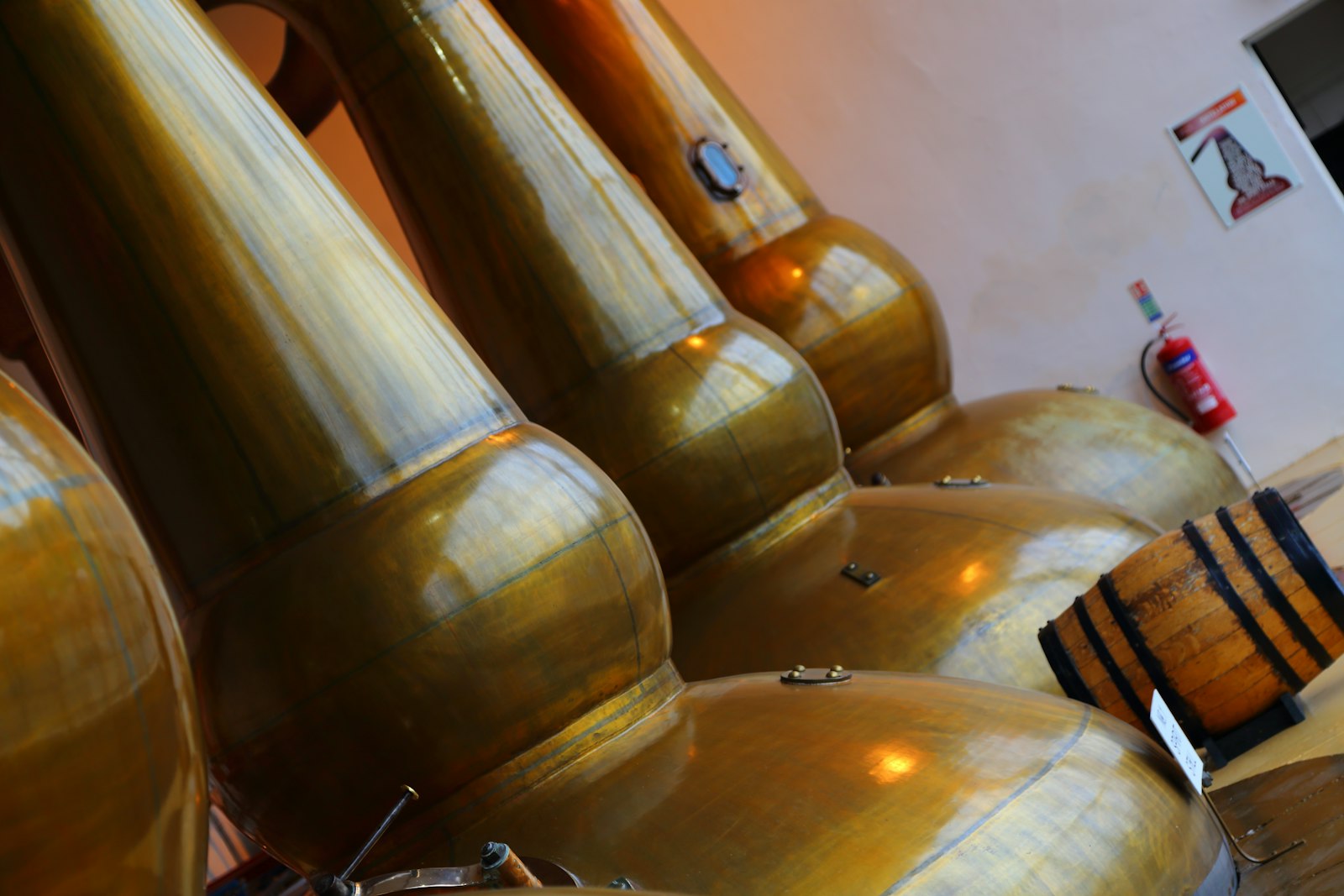
Chichibu distillery is a small, independent whisky producer in Saitama Prefecture that has become one of the most talked-about names in Japanese whisky since it opened in 2008. It was founded by Ichiro Akuto, whose family has made sake and shochu in the town of Chichibu (秩父) since the 17th century. The distillery runs on a tiny scale, using imported Scottish pot stills and, unusually, fermentation vessels made from native mizunara oak. Very little of what it makes reaches ordinary retail shelves outside Japan, which is exactly why collectors and casual fans alike keep searching for it.
What is Chichibu distillery
Chichibu is a craft-scale single malt distillery owned by Venture Whisky, the company Ichiro Akuto founded in 2004. It sits in the hills of Saitama, about two hours from central Tokyo, and produces whisky under the Ichiro’s Malt brand. Unlike Japan’s older, larger distilleries, Chichibu was built from scratch by one family with no corporate backing, and it has stayed deliberately small ever since. For readers new to the category, our guide to what counts as Japanese whisky explains how distilleries like this one fit into the wider industry.
From a shuttered family distillery to a global cult name
Akuto’s family company, Toa Shuzo, had operated the Hanyu distillery in Saitama, but the business was sold off and whisky production stopped in 2004 as domestic demand for Japanese whisky kept sliding; by that point, industry accounts put annual consumption at roughly a fifth of its early-1980s peak. Akuto, who had joined the family business after several years at a major drinks maker, moved to save around 400 casks of aging Hanyu spirit rather than see them scrapped. In an interview with Saitama Prefecture’s small-business support office, he has described the decision in personal terms rather than commercial ones: the casks were closing in on their twentieth birthday, and he has said he could not bring himself to abandon what he calls, in effect, a child that old. He founded Venture Whisky in 2004, arranged storage and bottling with Sasanokawa Shuzo in Fukushima, and began selling the rescued spirit as Ichiro’s Malt. That stock became the foundation of his reputation, most famously through the Card Series, a set of individually labelled Hanyu casks, each given its own playing-card design so that every cask read as a distinct character rather than one more line in a warehouse ledger. The series later became sought-after collector’s items and is widely credited with putting Ichiro’s Malt on the map outside Japan.
Building a new distillery from nothing was the next step. Construction at Chichibu began in 2007, and the first spirit ran from the stills in February 2008. According to JWIC, the Japanese Whisky Information Center, Chichibu was the first new whisky distillery license granted in Japan since 1973, roughly 35 years earlier, at a time industry sources describe as whisky’s “winter era” in Japan. Its early success is often credited with helping spark the wave of small, independent distilleries that opened across Japan over the following decade.
Recognition followed quickly. Ichiro’s Malt & Grain, the brand’s World Blended whisky, has won the World’s Best Blended Limited Release award at the World Whiskies Awards on more than one occasion, and a single cask bottled for the 2017 Chichibu Whisky Matsuri festival took the World’s Best Single Cask Single Malt title that year. Ichiro’s Malt Chichibu The First Ten, released to mark the distillery’s tenth anniversary, won a category award at the 2021 World Whiskies Awards, and Akuto himself was named Blender of the Year at the International Spirits Challenge in 2019.
The philosophy behind Ichiro’s Malt: local, hand-made, and slow
Chichibu’s choices only make sense once you know what Akuto is trying to prove: that a whisky can be built from the ground up in one specific place, using that place’s own materials, rather than assembled from imported barley, imported casks, and an imported process. In an interview with Saitama Prefecture’s small-business support agency, he has framed the long-term goal as making whisky “from raw ingredient to cask” using materials sourced in Chichibu itself, barley grown locally and casks cut from Chichibu wood, a level of self-sufficiency that goes well beyond a stylistic flourish into something closer to terroir. The brand name itself reflects the same personal stake: Ichiro’s Malt carries the founder’s own first name, not a corporate label, at a company he has described as Japan’s only manufacturer devoted solely to whisky.
The mizunara washbacks are one expression of that goal, and Akuto has said the choice began with his own reaction to the wood rather than a marketing brief: the first time he tasted whisky matured in mizunara casks, he has described being struck by how distinctive and unusual its character was, and he wanted that same wood involved in Chichibu’s process from the start. Mizunara is difficult to work with; it absorbs moisture and warps easily, so coopers must select only straight-grained timber, and Venture Whisky bought up equipment, including a splitter that separates the wood along its grain, from a cooperage that had gone out of business in order to make its own staves. In 2018 the distillery went a step further, harvesting eight mizunara trees from a stand growing above 900 meters in the hills around Chichibu and turning them into ten locally sourced casks, a small but literal step toward whisky made from the mountains that surround the distillery.
The same instinct shows up in how the barley is malted. Some of Chichibu’s grain is floor-malted, spread by hand on a malting floor and turned with wooden shovels rather than processed in an automated drum, a method so labor-intensive that very few distilleries anywhere still use it. According to JWIC, Chichibu’s own floor-malting operation now produces 10 to 15 tonnes a year, supplying roughly a fifth of the distillery’s malt needs, and forms the basis of the Floor Malted series. None of this is the most efficient way to make whisky. It is, by Akuto’s own account, the way he thinks it should be made in Chichibu specifically, trading standardization for a process tied as closely as possible to one small piece of Saitama.
Inside the still house: small stills and mizunara washbacks
Chichibu keeps production deliberately small and hands-on. Grist is mashed in a 2,400-liter mash tun, and staff still cut the grist by hand with a paddle when needed rather than relying only on machinery. Fermentation takes place in eight wooden washbacks made from mizunara, the same native Japanese oak more commonly associated with cask maturation than with fermentation vessels. Wort ferments for roughly 80 to 100 hours, well beyond the 48-to-60-hour norm cited for Scotch whisky production. For the first two days or so, yeast drives the fermentation as usual; after that, as the yeast weakens, resident lactic acid bacteria living in the porous wood surface become active and sour the mash, and it is this extended “sour mash” stage that is generally credited with pushing Chichibu’s spirit toward the fruity, layered esters the brand is known for.
The distillery’s wash and spirit stills were custom made by Forsyths in Scotland, the same firm that supplies stills to many Scotch whisky producers, giving Chichibu a lineage that ties directly back to traditional Scottish distilling equipment despite its Japanese setting. Some batches use barley that Akuto and his team floor-malted themselves, both in Chichibu and during a period of training in the UK, a method described above that forms the basis of the distillery’s Floor Malted releases.
Saitama’s climate plays its own role once the spirit goes into cask. Chichibu’s dunnage warehouses sit through summers that regularly exceed 30°C and winters that can drop to around -10°C, a far wider swing than most Scottish warehouses experience. Akuto has said that this temperature range speeds up maturation and pushes the angel’s share, the whisky lost to evaporation each year, to roughly 3-5%, noticeably higher than the commonly cited 2% average in Scotland. The warehouses themselves are built from stone and brick with earthen floors and low ceilings holding only three or four tiers of casks, a design intended to keep the interior cooler and more humid than the outside air. In other words, the same climate that makes Saitama an unusual choice for a Scottish-style pot still operation is treated at Chichibu as a working ingredient rather than a limitation to engineer around.
Key bottles and where the flavor profile lands
Ichiro’s Malt spans everything from an accessible entry-level blend to intensely allocated single cask releases. The table below covers three widely referenced points in the range, from easiest to find to hardest.
| Bottle | Style | Cask influence | International availability |
|---|---|---|---|
| Ichiro’s Malt & Grain | World Blended whisky, no age statement | Blend of malt whisky (including remaining Hanyu-era stock) and grain whisky | Widest reach; stocked by many specialist retailers |
| Ichiro’s Malt Chichibu The Peated | Peated single malt | Matured primarily in ex-bourbon barrels | Limited annual batches; sells out quickly |
| Ichiro’s Malt Chichibu The Floor Malted | Single malt from floor-malted barley | Small-batch, mixed cask maturation | Very limited; mostly secondary market and auction |
Across the range, tasting notes tend to describe Chichibu spirit as bright and fruity, with orchard fruit and honey in the unpeated expressions, and a smokier, more resinous profile in The Peated. The Floor Malted bottlings are prized for a fuller, oilier texture that fans attribute to the traditional malting method. What ties the range together is less a single flavor signature than a shared production choice: nearly every point of difference between these bottles, mizunara wood, floor-malted grain, cask origin, traces back to a decision Akuto made to keep a specific process local and hand-done rather than outsourced or automated. Choosing a Chichibu bottle, in that sense, is as much a bet on that approach as it is on any one taste profile.
Can international readers buy Chichibu, or visit the distillery
Buying Chichibu from outside Japan is realistic but rarely straightforward. Ichiro’s Malt & Grain is imported by specialist whisky retailers in the US, UK, and EU and is the most reliable bottle to find at a fixed retail price. Single malt Chichibu releases are produced in far smaller volumes, and most are allocated to specific markets or sold through ballots, so demand regularly outstrips supply and prices climb once a batch is gone from shelves. For older or single-cask bottlings, licensed whisky auction houses are usually a more realistic route than everyday retail, though prices there can vary a great deal from one sale to the next. Skurnik Wines & Spirits handles US importing for Venture Whisky, and dedicated Japanese whisky retailers such as Dekanta ship internationally to a wide range of countries, which is useful for anyone outside the small number of markets that receive an official allocation. Because volumes are so small to begin with, it is worth following a retailer’s mailing list or restock alerts rather than expecting to find single malt Chichibu sitting on a shelf.
Visiting in person is even more restricted. Chichibu is not generally open to public walk-in visitors, and tours are normally reserved for industry contacts, trade visitors, or press by prior arrangement. The distillery does hold one public open day each year, timed the day before the Chichibu Whisky Matsuri festival, when a limited number of tickets are released online and typically sell out within minutes. Readers planning a Japan trip around this event should book accommodation and tickets well in advance and have a backup plan in case the open day sells out. For a wider view of other producers worth tracking, our distillery guides hub covers more of Japan’s whisky-making regions.
Frequently asked questions
Q: Is Chichibu whisky available outside Japan?
A: Yes, but availability varies sharply by bottle. The entry-level Ichiro’s Malt & Grain blend is distributed fairly widely through specialist retailers in North America, Europe, and Australia. Single malt Chichibu releases are produced in much smaller volumes, are often allocated market by market, and typically sell out soon after release, pushing buyers toward secondary market sellers or licensed auction houses.
Q: Can I visit Chichibu distillery in person?
A: Public access is limited. Chichibu does not run regular public tours, and most visits are arranged in advance for trade, media, or industry guests. The distillery holds a single annual open day tied to the Chichibu Whisky Matsuri festival, with a capped number of tickets sold online that tend to sell out within minutes, so this is not a spontaneous stop for most travelers.
Q: What makes Chichibu’s production process distinctive?
A: Two details stand out: fermentation in mizunara oak washbacks rather than the more common stainless steel or pine, and a willingness to floor-malt some of its own barley by hand, now covering roughly a fifth of the distillery’s grain needs. Both are labor-intensive choices that few distilleries anywhere still make, and both trace back to founder Ichiro Akuto’s stated goal of building whisky from materials sourced as close to Chichibu as possible, including casks cut from mizunara trees harvested locally in 2018.
Q: What exactly is Ichiro’s Malt?
A: Ichiro’s Malt is the brand name used by Venture Whisky, the company Ichiro Akuto founded in 2004 and named after himself rather than a corporate identity. It began with roughly 400 casks of remaining stock rescued from the closed Hanyu distillery, sold individually as the well-known Card Series, and has since expanded to include whisky distilled at Chichibu itself, spanning blends, peated single malts, and small-batch floor-malted releases.
Sources
- 第7回:肥土伊知郎さん(株式会社ベンチャーウイスキー) — Saitama Prefecture official interview series (Japanese)
- 薫り高きウイスキーを熟成する日本の樽 — Mizu no Bunka (Mitsukan Water Culture Center) journal, on mizunara cask and washback sourcing (Japanese)
- 詳細 秩父蒸溜所 — Japanese Whisky Information Center distillery profile (Japanese)
- Chichibu Distillery — Nomunication
- What is Chichibu distillery? — The Whisky Exchange
- A Visit to the Chichibu Distillery — The Whiskey Wash
- The History of Ichiro’s Malt and the Chichibu Distillery Tour — Fun! Chichibu
- Visiting Chichibu Distillery — Whisky Saga