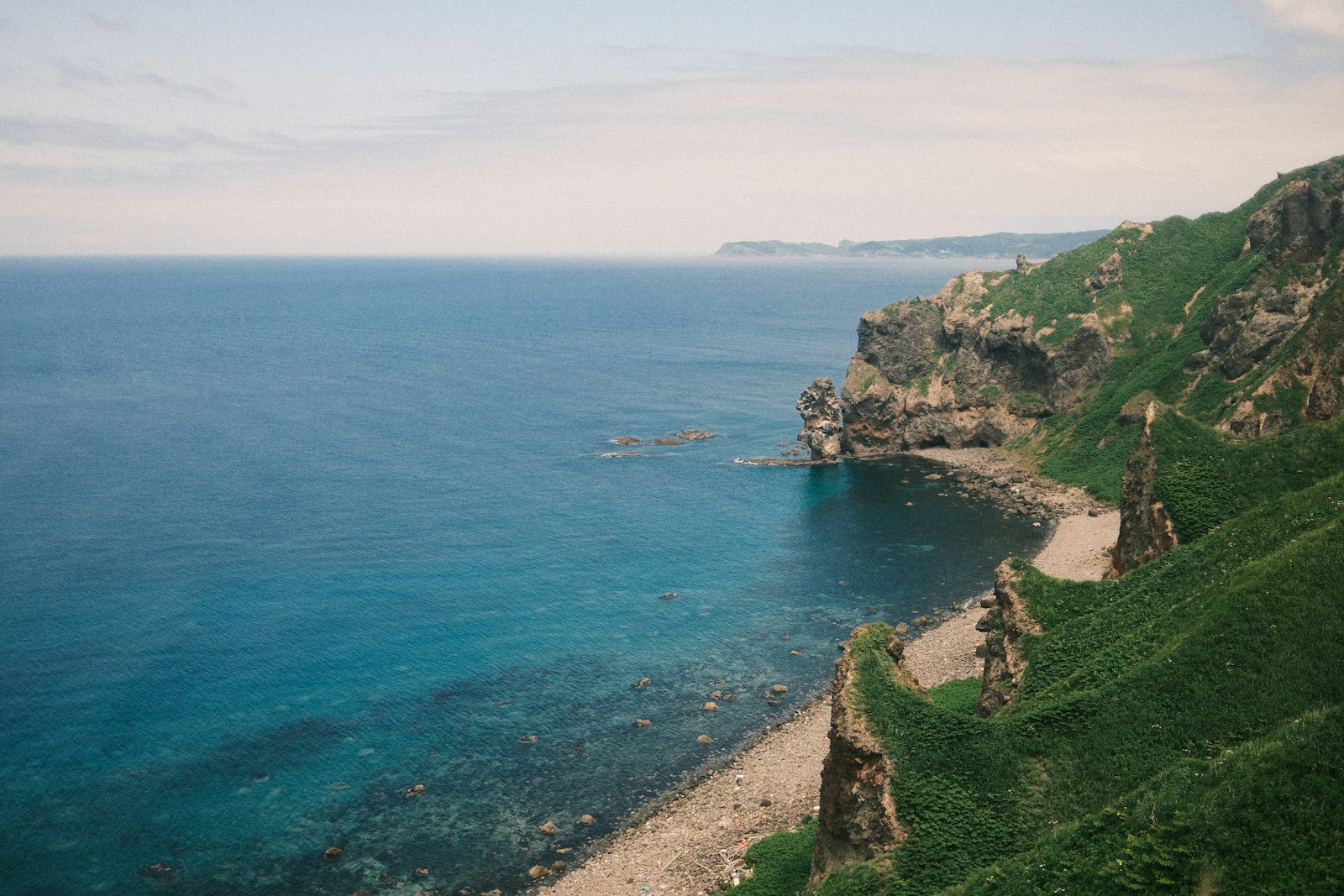
Akkeshi distillery is a peated single malt producer on Japan’s northern island of Hokkaido, built in a wetland town chosen deliberately because it reminded its founder of Islay, Scotland’s peat-heavy whisky region. Distillation began in 2016, making Akkeshi one of the newest names among Japan’s more established whisky makers, and its wetlands supply the distillery with its own peat. For readers outside Japan, Akkeshi is one of the more approachable new-wave distilleries to track down, though visiting it in person takes real planning.
What is Akkeshi distillery
Akkeshi is a single malt whisky distillery in the fishing town of Akkeshi (厚岸), on the eastern coast of Hokkaido. It is owned by Kenten Jitsugyo, a Tokyo-based trading company whose founder, Keiichi Toita, set out to build a Japanese answer to the peated malts of Islay. The distillery draws its process water from the Homakai River and sits close to the sea, conditions Toita judged similar enough to Islay’s maritime climate to support a comparable style of whisky. Readers unfamiliar with how Japan’s whisky rules work can start with our guide to what is Japanese whisky before diving into individual producers.
A young distillery built for peat
Akkeshi was founded in 2013 and began distilling in October 2016, which made it the first new whisky distillery to open in Hokkaido in around 80 years. According to Japanese-language industry profiles, Toita’s interest in whisky traces back to a personal fondness for Islay malts, and he has been described as wanting to eventually build whisky himself using traditional Scottish methods to produce something in that same style. Rather than treat that as an abstract ambition, Kenten Jitsugyo went looking for a Japanese site that actually matched Islay’s conditions on paper: a cool, damp climate, wetlands close to the sea, abundant peat in the ground, and water of a similar hardness. Akkeshi, already known nationally for its oysters, matched on every count, and Scotland’s Forsyths, the coppersmith that built the distillery’s stills, sent engineers to stay on site for several months during construction to help transfer that expertise directly.
The site was chosen specifically for its surroundings: Akkeshi sits amid extensive wetlands with a peat layer that runs roughly 50 meters deep in places, an unusually rich local source of the fuel that gives peated whisky its smoky character. Winters in the area can fall to around -20°C against summer highs near 25°C, and that swing is described in Japanese distillery coverage as a factor that speeds maturation, the same climate logic used to explain faster aging at whisky-producing regions elsewhere in Japan. Rather than importing peat exclusively from Scotland, as most Japanese distilleries do, Akkeshi began harvesting its own peat blocks from the ground near the distillery starting in April 2020, giving it a genuinely local claim to the Islay-style whisky it set out to make.
The distillery’s first single malt release, Sarorunkamuy, took its name from the Ainu word for the Japanese crane, a bird associated with the wetlands around Akkeshi. It reached the market in February 2020, a little over three years after distillation began, which is a realistic timeline for any new distillery waiting on spirit to mature into something ready for release.
Kenten Jitsugyo’s own history explains why Akkeshi looked so deliberately toward Scotland. Founded in 1964 to trade in food ingredients and alcoholic beverages, the company came to whisky through its chief executive, Keiichi Toita, who traced his interest back to a single glass of Ardbeg 17 Year Old in a Ginza bar. That experience pushed Kenten Jitsugyo first into exporting Japanese whisky, then into bottling it, and eventually, as aged Japanese stock grew harder to source, into building a distillery of its own. Early flavor experiments began in 2013 with test-aged spirit purchased from two existing Japanese distilleries, laying the groundwork before construction at Akkeshi itself got underway.
The Akkeshi All-Star ambition: making the whisky Hokkaido itself
Matching Islay’s climate was only the starting point. According to Katsuyuki Tatsuzaki, the distillery’s manager, quoted in a feature by the Hokkaido Association of Corporate Executives, his personal goal is what he calls an “Akkeshi All-Star” whisky, one made entirely from barley, peat, and mizunara cask wood sourced in Akkeshi itself rather than assembled from imported materials. That goal has been pursued in stages rather than all at once. Because growing barley reliably in Akkeshi proved difficult, the distillery first worked toward an intermediate “all Hokkaido” whisky: barley harvested in Furano, on the other side of the island, in July 2017, distilled at Akkeshi, and matured in casks made from Hokkaido mizunara, with the distillery projecting it would be ready to sell only a few years later. Alongside that effort, Akkeshi has also run its own contracted cultivation of a Hokkaido two-row barley variety called Ryofu since 2017, used in some releases together with imported Scottish barley as part of the same terroir-driven approach.
The mizunara program follows a similar local-first logic. In March 2017, the distillery cut mizunara trees, some 100 to 200 years old, from Hokkaido prefectural forest land under a formal forest-management arrangement, then air-dried the wood for roughly a year before a cooperage turned it into casks. Industry profiles describe the resulting cask character in savory rather than sweet terms, closer to an umami or dashi-like quality than the vanilla notes typical of ex-bourbon wood, though that description comes from third-party industry write-ups rather than Akkeshi’s own tasting notes. On the peat side, the distillery installed German-made malting equipment in 2021 and began producing its own peated malt from locally cut Akkeshi peat starting in 2022, closing another gap between “whisky made near Akkeshi” and “whisky made of Akkeshi.”
The 24 Solar Terms series is where this local-sourcing project meets the brand’s own storytelling. Rather than naming releases after casks or vintages, Akkeshi ties each bottling to one of the 24 divisions of the traditional East Asian solar calendar, a system that marks the turning of the seasons in finer steps than the four Western seasons. Independent analysis of the series has pointed out that the structure is not just a naming device: releases tied to odd-numbered solar terms are bottled as single malt, while even-numbered terms are released as malt-and-grain blends, a distinction that Japanese commentators argue is set at the raw-material stage rather than applied after the fact. Whether or not every drinker notices that pattern, the series as a whole is an explicit attempt to fold a Japanese sense of seasonal time, expressed through smoke, brine, and cask character shifting release to release, into a format Scotch whisky drinkers already understand.
What Akkeshi makes: peat, mizunara and a run of seasonal releases
Sarorunkamuy blends malt matured in mizunara oak casks with spirit aged in bourbon, sherry, and red wine casks, giving Akkeshi’s flagship a broader cask profile than a typical single-cask Islay malt. Since then, the distillery has built its identity around the 24 Solar Terms series described above, with individual releases named after solar terms such as Usui and Daikan. Early in its life, Akkeshi also released young spirit under its Foundations New Born series, including a bottling matured in bourbon barrels for eight to 17 months, aimed at showing drinkers how the distillate develops before full maturation.
The result is a house style that leans into smoke and maritime character while still varying noticeably from release to release, since each solar term bottling can draw on a different combination of casks and, per the odd/even structure above, a different base recipe entirely. That variation is part of the appeal for collectors, but it also means Akkeshi’s range is less consistent from bottle to bottle than a distillery built around one or two permanent expressions.
The Islay comparison that Akkeshi invites is really about shared inspiration rather than an identical outcome. Both regions share a peat-rich, maritime setting, but Hokkaido’s climate, mizunara cask influence, and Akkeshi’s own locally cut peat give the whisky a character that sits alongside Scottish peated malts without copying any one of them directly. That distinction is part of what has made Akkeshi interesting to reviewers looking for something more than a straightforward Islay imitation.
Key bottles and flavor profile
| Bottle or series | Style | Cask influence | Notes |
|---|---|---|---|
| Sarorunkamuy | Peated single malt, flagship release | Mizunara, bourbon, sherry and red wine casks | First single malt release, launched February 2020 |
| 24 Solar Terms series | Limited single malt or malt-and-grain releases | Varies by release; alternates single malt and blend by solar term | Named after Usui, Daikan and other solar terms; sought by collectors |
| Foundations New Born | Young spirit, early series | Bourbon barrels, matured 8-17 months | Shows the distillate before full maturation |
Across the range, expect smoke and brine to lead, backed by the fruitier notes that come from the varied cask program rather than a single, unchanging house profile.
For a distillery still in its first decade, Akkeshi has picked up a steady run of international recognition. Hokkaido Akkeshi Whisky Kanro took a category win at the World Whiskies Awards in 2021, Repunkamuy repeated that feat in 2024, and Keichitsu earned a bronze medal the same year. Kokuu reached the global finalist stage at the 2026 World Whiskies Awards, suggesting the distillery’s quality has kept pace even as production has scaled up from its earliest New Born releases.
Can international readers buy Akkeshi, or visit the distillery
Akkeshi has built distribution more quickly than many of Japan’s newer distilleries. In the United States, importer Skurnik Wines & Spirits and retailers such as Wooden Cork and High Road Spirits carry Akkeshi expressions, and specialist shops in the UK and EU stock it as well, so overseas buyers have a reasonable chance of finding a current release through normal retail channels rather than relying only on auctions. Older or limited solar term bottlings, however, do turn up on licensed whisky auction sites once they sell out at retail. Because Akkeshi releases new solar term expressions on a rolling basis rather than keeping a single flagship on shelves indefinitely, it is worth checking a retailer’s current catalog rather than searching for one specific bottle name, since last year’s edition may already have been replaced by a newer one.
Visiting is a different matter. Akkeshi distillery has no public visitor center and does not run its own tours. The only authorized way to see inside is through Akkeshi Gourmet Park “Conchiglie,” a local operator that runs the sole approved tour to the distillery grounds, with reservations required at least three days ahead of a tour date. Visitors can walk into the rackhouse but view the distillation building itself from an outdoor observation deck through glass windows rather than stepping inside, and the tour is typically paired with a New Born tasting sample and a visit to a nearby oyster bar. Akkeshi is remote even by Hokkaido standards, so this is a trip best combined with wider travel plans around eastern Hokkaido. Readers weighing up which distilleries are realistic to visit on a Japan itinerary can compare options in our distillery guides hub.
Frequently asked questions
Q: Is Akkeshi whisky peated?
A: Yes. Akkeshi was built specifically to produce an Islay-style peated single malt, and its location amid Hokkaido wetlands gives it access to a local peat source roughly 50 meters deep in places. The distillery began cutting its own peat blocks in 2020 and started producing its own peated malt from that local peat in 2022, adding a genuinely local element to a smoky, maritime house style.
Q: Can visitors tour Akkeshi distillery directly?
A: Not on their own. Akkeshi has no in-house visitor center or public tour program. The only authorized way to see the site is through a local operator, Akkeshi Gourmet Park “Conchiglie,” which runs the sole approved tour with reservations needed at least three days in advance, including a rackhouse visit and an outdoor view of the distillation building.
Q: Where can overseas fans buy Akkeshi whisky?
A: Distribution has expanded quickly for a distillery this young. US drinkers can find Akkeshi through importer Skurnik Wines & Spirits and retailers including Wooden Cork and High Road Spirits, while specialist retailers in the UK and EU also stock current releases. Sold-out limited bottlings, particularly older 24 Solar Terms editions, are more commonly found through licensed whisky auction houses.
Q: What does the 24 Solar Terms series refer to, and why did Akkeshi build it?
A: It is a running series of limited releases, each named after one of the 24 divisions of the traditional East Asian solar calendar, such as Usui or Daikan, with odd-numbered terms bottled as single malt and even-numbered terms as malt-and-grain blends. Distillery manager Katsuyuki Tatsuzaki has described his broader goal as an “Akkeshi All-Star” whisky built from barley, peat, and mizunara wood all sourced in Akkeshi itself, and the series is one way that local, seasonal focus shows up in the finished bottles.
Sources
- 厚岸蒸溜所の3年目の挑戦 ー夢は”厚岸オールスター”でのウイスキー造りー — Hokkaido Association of Corporate Executives (Japanese)
- 詳細 厚岸蒸溜所 堅展実業 — Japanese Whisky Information Center distillery profile (Japanese)
- いま注目すべき蒸留所、厚岸蒸溜所 — Serai.jp, on local barley and site selection (Japanese)
- 暦を飲む──厚岸ウイスキー「二十四節気シリーズ」の構造と、その先 — analysis of the 24 Solar Terms design structure (Japanese)
- Akkeshi Distillery — Nomunication
- Meet Japan’s Answer To Scotland’s Islay — 88 Bamboo
- Akkeshi Distillery Tasting and Tour Info — Whiskey Lore
- Akkeshi Distillery: Visit Report — Japanese Whisky Dictionary
- Akkeshi Daikan World Blend — Whisky Auctioneer