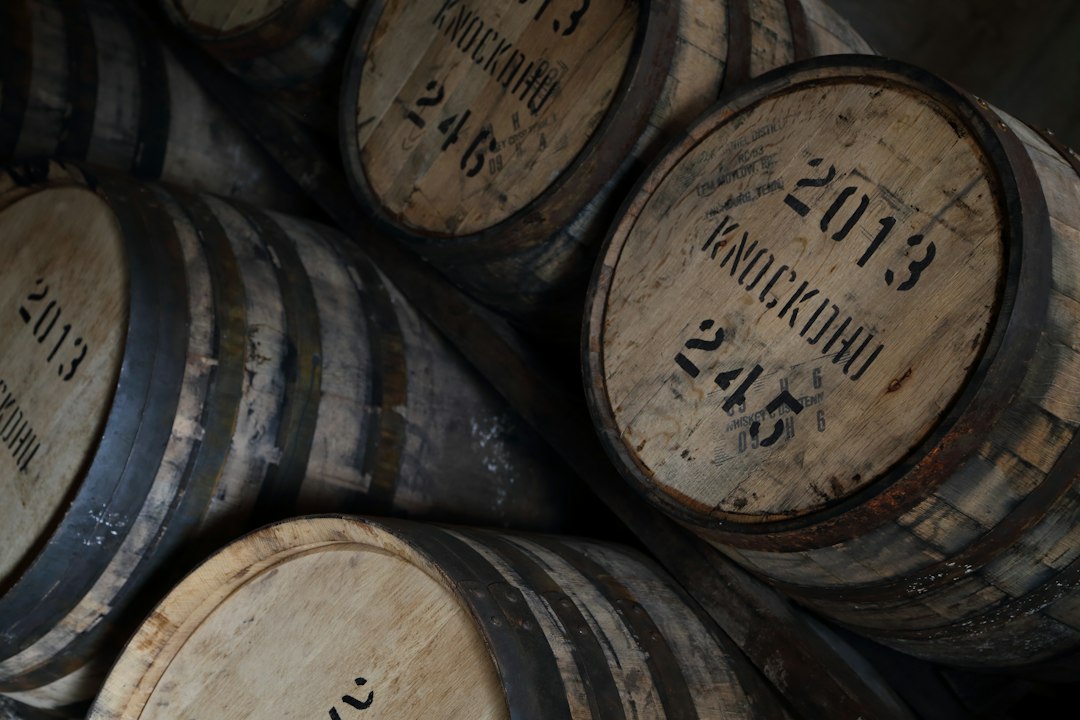
Cask & Forest (カスクアンドフォレスト), a Tokyo-based independent bottler founded in April 2025, will release two new single casks in its THE NATIVE CASK series on September 29, 2026. One is a heavily peated malt from Nagahama (長濱) distillery in Shiga Prefecture, matured inside a disused road tunnel. The other is a single grain whisky from Hishida (菱田) distillery in Kagoshima Prefecture, made with the roasted barley its owner uses for barley shochu. Both go on sale at 11:00 JST through the company’s official online store. Independent bottling of Japanese craft whisky is still a small field, and this pair shows what a Japanese bottler can do that the distilleries’ own ranges usually don’t.
Nagahama #3.2: peat and a 300-meter tunnel
THE NATIVE CASK #3.2 was distilled at Nagahama in 2022 and bottled in 2026 from a single first-fill bourbon barrel. The malt is heavily peated Laureate barley, a Scottish-grown variety. The cask spent its life in a tunnel more than 300 meters long. Whisky writer Mamoru Tsuchiya (土屋守), who advises Cask & Forest, describes it as a former national-road tunnel that has been taken out of service. According to the distillery, air moves gently through the space, temperatures swing far less across the year than outside, and the angel’s share tends to be lower than in its other warehouses. The whisky was bottled without added water. It costs ¥18,700 including tax.
Hishida #4: a grain whisky built on shochu barley
Hishida is run by Tensei Shuzo (天星酒造), which began as a shochu maker on the Osumi Peninsula in 1901 and set up the distillery in 2022 to produce both malt and grain whisky. When the team started on grain whisky, they turned to the roasted “chocolate” barley already used in the company’s barley shochu. The distillery says the toasty, chocolate-like character survived redistillation, which convinced them to lay the spirit down. According to Tsuchiya, the mash uses Japanese barley as the main grain, with German malt for saccharification. The cask was distilled in 2023, filled into a bourbon barrel, and bottled in 2026 at about three years old. It is non-peated and costs ¥8,800.
The press release does not give an ABV or bottle count for either whisky. As single casks, both will be small releases. Tsuchiya calls the series a “first stage” for the company. He says Cask & Forest is talking with forestry cooperatives and cooperages about casks made from Japanese timber, and is working toward a warehouse of its own. The company’s name refers to the forests that cover close to 70% of Japan.
What it means outside Japan
Neither bottle has been announced for export. Both are sold through a Japanese online store, and we could not confirm whether it ships abroad, so buyers overseas will most likely need a forwarding service or the secondary market (see our guide to importing Japanese whisky from Japan). The model itself is worth watching. In Scotland, independent bottlers such as Gordon & MacPhail and Signatory are a standard way for drinkers to try a distillery’s spirit from casks the owner never releases. In Japan, single casks are still sold mostly by the distilleries themselves or as retailer exclusives. The Hishida cask also stands out against the Japanese single grains that reach Western shelves. Those, like Nikka Coffey Grain, are mostly corn-based column-still whiskies. A roasted-barley grain from a shochu house is a very different kind of spirit.
Source: PR TIMES (Cask & Forest) (Japanese)