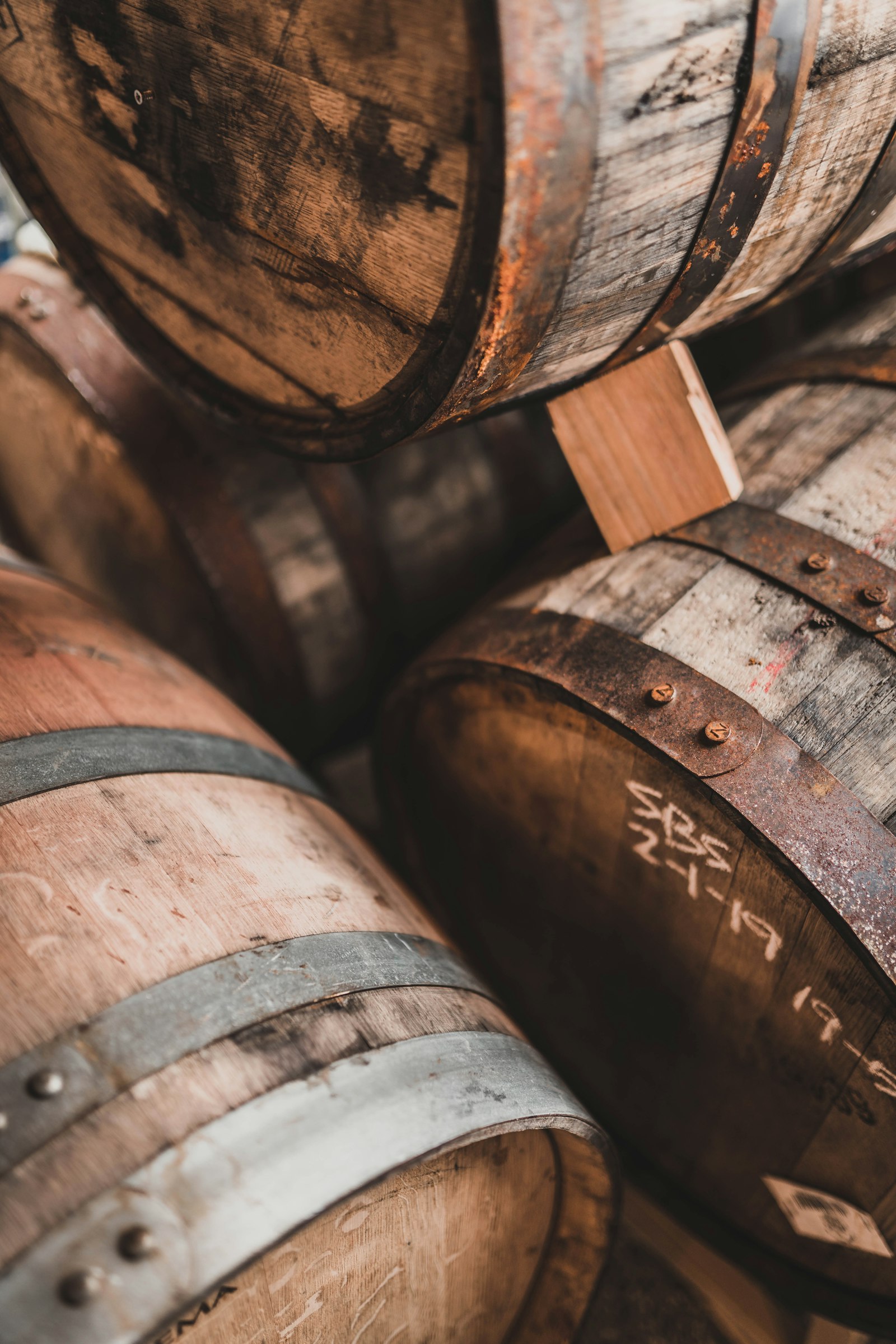
Yoichi distillery is Nikka’s founding site in Hokkaido, built in 1934 by Masataka Taketsuru, the engineer often called the father of Japanese whisky. It is best known for coal-fired pot stills, a direct-fire distillation method that has almost disappeared even in Scotland, where Taketsuru first learned it. For overseas readers, Yoichi is also one of the easiest Japanese distilleries to actually visit, with free public tours and a museum that requires no reservation.
What is Yoichi distillery
Yoichi is a single malt whisky distillery in the coastal town of Yoichi (余市), on the western side of Hokkaido, owned and operated by Nikka Whisky Distilling. It was founded by Masataka Taketsuru, who traveled to Scotland in 1918 to study distilling firsthand before bringing that knowledge back to Japan. Yoichi is often described as Japan’s spiritual home of single malt, and it remains one of the country’s most historically significant sites for anyone researching what is Japanese whisky and where its Scottish influences came from. Nikka itself has grown into one of Japan’s two largest whisky producers alongside Suntory, and Yoichi remains the company’s oldest and most closely identified production site, distinct from its sister distillery Miyagikyo on the mainland.
Taketsuru’s search for a Japanese Scotland
Taketsuru chose the Yoichi site deliberately, after years spent studying distilling in Scotland from 1918. He wanted a location that matched Scotland’s cool maritime climate, clean air, and reliable spring water, and Japanese-language accounts of the search describe him touring sites around the country before settling on Yoichi, whose roughly 8°C average annual temperature was close enough to Scotland’s to satisfy a belief he is said to have held throughout his career: that whisky is a drink that has to be made on northern land. He had reportedly also considered Ebetsu, further inland on Hokkaido, but accounts of the decision say he ruled it out over the flood risk posed by the nearby Ishikari River, choosing Yoichi’s coastal site, fed by underground springs from the surrounding mountains, instead.
The distillery’s early years show how much of a gamble the choice really was. Taketsuru founded a company called Dai Nippon Kaju, or the Great Japanese Juice Company, in 1934, and construction at Yoichi was completed the same year. Because Yoichi sits in an apple-growing region, the company sold apple juice, launched in 1935 under the name Nikka Ringo Juice, to generate income while its first whisky matured quietly in cask; pot stills went into operation and distillation itself began only in 1936, and the company’s first whisky did not reach the market until 1940, six years after the business was founded. The company shortened its name to Nikka only in 1952, once whisky sales were established enough to carry the business on their own.
Taketsuru had returned from Scotland in 1920 with more than technical knowledge. During his apprenticeship there, he had met Jessie Roberta “Rita” Cowan in Kirkintilloch, near Glasgow, in 1919, and the two married in a simplified registry-office ceremony in Glasgow in January 1920, against her mother’s wishes, when Taketsuru was 26 and Rita was 24. He brought her back to Japan with him that November. Rita lived in Yoichi for the rest of her life and died there in December 1960. Much of what is publicly known about their marriage today comes filtered through the 2014 NHK drama Massan, which was based on their story, and through family reminiscences collected well after the fact; specific scenes often repeated in tribute articles, such as a particular exchange over “Auld Lang Syne” or an anecdote about a hymn passed down through their son, are drawn from those later recollections rather than from contemporary documentation, and are best read as family memory rather than verified history. Their former residence still stands on the distillery grounds and is open to visitors, alongside a restaurant, RITA’s Kitchen, that opened on site in 2023.
What set Yoichi apart from the start was Taketsuru’s insistence on direct coal-fired distillation, the same method used at Longmorn distillery in Scotland, where he had trained. Coal firing was common practice in Scotland during Taketsuru’s student years, but it has almost entirely disappeared there since, replaced by steam heating that is easier to control. Yoichi kept the old method, and it remains one of the very few distilleries anywhere in the world still using it today.
Coal fire: what Yoichi gives up, and what it keeps
Direct coal firing is a genuinely harder way to run a still, and Japanese-language coverage of the distillery’s own craftspeople is fairly candid about the trade-off. Rather than setting a dial and walking away, as steam heating allows, staff feed coal by hand through a lower opening in the furnace and must check and adjust the fire’s intensity roughly every five to ten minutes throughout the run. Judging the fire by eye means opening the furnace door to look, but doing so lets in outside air that cools the flame, so the work depends on experience and feel as much as on instruments; modern sensors now monitor furnace conditions, but staff still confirm the fire visually rather than trusting gauges alone. What Yoichi sacrifices is consistency and labor cost: coal firing is slower to control, harder to keep perfectly even, and needs more people watching it around the clock than a steam-heated still does. What it keeps, according to the distillery’s own account of the process, is a wash that gets lightly scorched against the inside of the still from the higher, less even heat, which is widely credited with giving Yoichi’s spirit its distinctively toasted, robust, full-bodied character. A 2022 feature on Nikka’s parent company Asahi Group profiled the team behind this work, including Taka Kato, noted as the only woman among Yoichi’s coal-fire distilling staff at the time, evidence that the craft is still an active, staffed discipline today rather than a preserved museum display, even though visitors touring the site see the same stills and the same manual firing process Taketsuru introduced in the 1930s. For a drinker deciding between a coal-fired Yoichi malt and a steam-distilled Japanese single malt, the choice is effectively a choice between two different relationships to control: one built around precision and repeatability, the other built around a harder, more variable process that Nikka has judged worth the extra labor for nearly a century.
What Yoichi makes: a toasted, robust character
That coal-fired process is the main reason Yoichi’s spirit reads as heavier and smokier than most steam-distilled Japanese malts, and maintaining coal fires demands more physical labor than modern heating methods, since staff must shovel and monitor the fires by hand rather than adjusting a dial, a production choice Nikka has kept going as both a stylistic decision and a point of institutional pride that visitors can see firsthand on a distillery tour.
Nikka has adjusted its labeling approach over the years in response to supply constraints. In 2015, the company discontinued the 10, 12, and 15-year-old age statements on Yoichi single malt because of a shortage of sufficiently aged stock driven by rising global demand. A permanent no-age-statement Yoichi Single Malt followed in 2016, blending spirit matured in a mix of casks, including new American oak and ex-sherry, to preserve a consistent house style without relying on a fixed number of years in cask.
Key bottles and flavor profile
| Bottle | Type | Cask influence | Notes |
|---|---|---|---|
| Yoichi Single Malt (no age statement) | Permanent single malt release | Mix of new American oak and ex-sherry casks | Replaced age-stated range in 2016; bottled at 45% ABV |
| Yoichi Single Malt 10 Year Old | Age-stated single malt, annual limited release | Selected mature casks | Returned in 2022 after age statements were dropped in 2015 |
| Nikka Whisky From The Barrel | Blended whisky | Blend built around Yoichi and Miyagikyo malts | Widely distributed internationally; showcases Yoichi’s character within a blend |
The no-age-statement single malt is the most reliable way to taste Yoichi’s coal-fired character on a regular basis, with the toasted, robust notes the distillery is known for. The 10 Year Old, when available, adds more depth and polish from additional cask time, while From The Barrel offers a more affordable, widely available way to sample Yoichi’s influence blended alongside Miyagikyo, Nikka’s other malt distillery.
Can international readers buy Yoichi, or visit the distillery
Buying Yoichi from outside Japan is more straightforward than most of the country’s smaller craft distilleries, since Nikka is a major producer with established export channels. Nikka is part of the Asahi Group, one of Japan’s largest beverage companies, which gives its whisky brands a distribution network that far outstrips what an independent distillery like Chichibu or Akkeshi can manage on its own. The no-age-statement Yoichi Single Malt is available through Nikka’s international distributors in North America, Europe, and Australia, generally priced around $90 depending on market. The Yoichi Single Malt 10 Year Old, which returned as an annual limited release in 2022, launched at a suggested retail price of about $175 and rolled out to the UK before reaching the US, so availability and timing can lag by market and by year. Nikka Whisky From The Barrel is the easiest Yoichi-related bottle to find almost anywhere, since it is one of Nikka’s most widely distributed blends.
Visiting is genuinely accessible, which is unusual for a Japanese whisky distillery. Yoichi offers free guided tours that end with a complimentary tasting of up to three whiskies per person, though participants must be of legal drinking age and cannot be driving afterward. Tours fill up quickly, often two weeks ahead, so booking in advance is strongly recommended. The on-site Nikka Museum and entrance area, including a shop, require no reservation and can be explored at leisure, and paid options exist for visitors who want more depth, including a Key Malt Tasting Seminar and a longer Blend Seminar where guests build their own blend. The distillery sits close to Yoichi Station, making it an easy add-on to a Hokkaido itinerary that might also include Sapporo. The museum complex covers Taketsuru’s own story in detail, including his years training in Scotland and his marriage to Rita Cowan, giving overseas visitors context that a straightforward production tour would not, alongside the coal-fired stills themselves and the original warehouse buildings. Readers comparing which distilleries are realistic to fit into a Japan trip can browse more options in our distillery guides hub.
Frequently asked questions
Q: Why does Yoichi use coal-fired stills?
A: Masataka Taketsuru installed coal-fired pot stills when he built Yoichi, replicating the direct-fire method he learned at Longmorn distillery in Scotland during his studies there from 1918. The technique has all but vanished even in Scotland, replaced by easier-to-control steam heating, but Nikka has preserved it at Yoichi, where staff still feed coal by hand and adjust the fire roughly every five to ten minutes. The intense, uneven heat lightly scorches the wash and contributes to the whisky’s toasty, robust character, a trade-off the distillery has judged worth the extra labor for nearly 90 years.
Q: Is Yoichi whisky age-stated?
A: Mostly no. Nikka discontinued the 10, 12, and 15-year-old Yoichi age statements in 2015 because of a shortage of sufficiently mature stock, replacing them with a permanent no-age-statement Yoichi Single Malt in 2016. An age-stated Yoichi Single Malt 10 Year Old returned in 2022 as an annual limited release, but it is not a permanent fixture of the range in the way the age-stated bottlings once were.
Q: Can I visit Yoichi distillery as a tourist?
A: Yes, and it is one of the more visitor-friendly distilleries in Japan. Nikka offers free guided tours that include a complimentary tasting, plus a museum and shop area that need no reservation at all. Tours can fill up as much as two weeks in advance, so booking ahead is worthwhile, and the site is easy to reach near Yoichi Station on Hokkaido’s coast.
Q: Is Yoichi part of Nikka Whisky?
A: Yes. Yoichi was founded in 1934 by Masataka Taketsuru and is Nikka Whisky Distilling’s original and founding production site, though distillation itself did not begin until 1936 and the company’s first whisky was not sold until 1940. Nikka later added a second malt distillery, Miyagikyo, and blends from both sites feed products such as Nikka Whisky From The Barrel, but Yoichi remains the company’s historical home and the source of its coal-fired single malt.
Sources
- 余市町でおこったこんな話 その114「竹鶴政孝のメロディ」 — Yoichi town official history page, on fact vs. later family recollection (Japanese)
- 詳細 北海道 余市蒸溜所 ニッカウヰスキー — Japanese Whisky Information Center distillery profile (Japanese)
- 日本ウイスキーの歴史「ニッカウヰスキー」余市蒸溜所 — NIHONMONO, on site selection and Taketsuru’s philosophy (Japanese)
- 余市蒸溜所で90年続く「竹鶴の火」 受け継がれる石炭直火蒸留の技 — Hokkaido Shimbun, on the craft of coal-fired distillation (Japanese)
- Yoichi Distillery — Dear WHISKY
- Our Facilities: How to Enjoy — Yoichi Distillery, Nikka Whisky
- FAQ — Yoichi Distillery, Nikka Whisky
- Japanese Whisky Lovers Rejoice — Robb Report
- Nikka discontinues whisky age statements — The Spirits Business