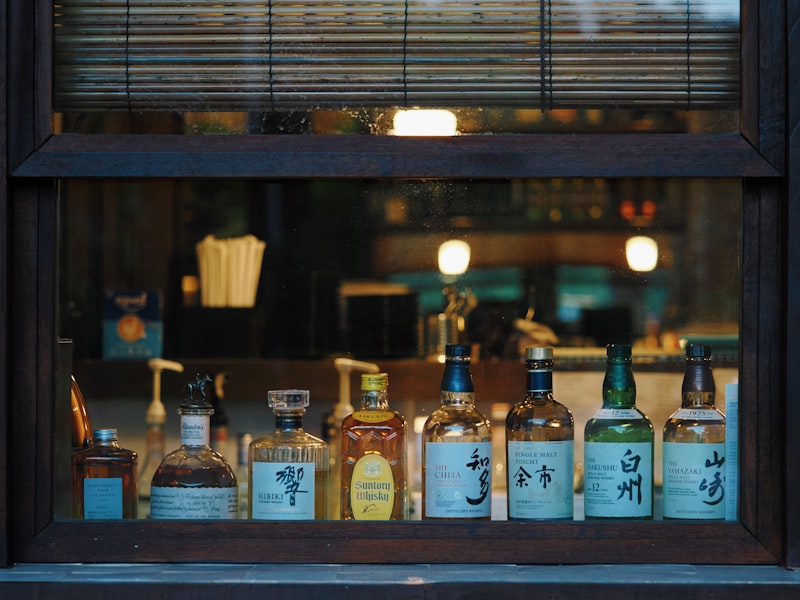
An age statement is a single number on a label — “12 Year Old,” “17 Year Old” — and it means one specific thing: the youngest whisky in that bottle has spent at least that many years in a cask. Everything older is allowed to be in there too, but nothing younger. For about a decade, that number quietly disappeared from most Japanese whisky shelves, replaced by non-age-statement (NAS) bottles with names instead of numbers. It is now starting to come back. This guide covers what the number actually promises, why it vanished, whether its absence should worry you, and which bottles have brought it back as of 2026.
What an age statement actually promises
The convention is the same one Scotch popularized and Japanese whisky inherited: if a bottle says “12 Year Old,” every drop inside has matured for at least 12 years, even if the blend also includes whisky that is 20 or 30 years old. The number on the label always refers to the youngest component, never an average and never the oldest cask used. For Scotch, this is not just tradition — the Scotch Whisky Regulations 2009 make it a legal requirement, and a false age claim is a trading standards violation, not just bad manners.
Japanese whisky doesn’t have that legal backing. As we cover in our explainer on the JSLMA standard, the six requirements that define “Japanese whisky” cover water source, production location, distillation strength, cask size, minimum three-year aging, and bottling location — but nothing in that list specifically governs whether a printed age number has to reflect the youngest whisky in the blend. In practice, every major Japanese producer follows the youngest-in-the-blend convention anyway, because it is the standard the whole category was built on. But it is worth being precise about the difference: for Scotch, that promise is enforced by statute; for Japanese whisky, it is upheld by industry norm and reputation, not by a specific rule written into the JSLMA text.
Why the numbers started disappearing
The short version: Japan ran out of old whisky. Japanese whisky consumption collapsed for roughly 25 years after 1983, and distilleries laid down far less new spirit through the 1990s and early 2000s than they had at the market’s peak. When global demand for Japanese whisky surged from the mid-2010s onward — driven in part by the 2008 kakuhai highball boom finally translating into export demand, plus a wave of international award wins — distillers found themselves short of the well-aged stock they needed to keep selling whisky with a “12” or “17” on the label. We cover that supply story in full in our explainer on the Japanese whisky shortage. The short-term fix was to stop promising an age at all. A NAS bottle can legally include whisky as young as three years old — the JSLMA minimum — blended with whatever older stock is available, without the producer being locked into a floor they can no longer guarantee at volume.
The bottles that lost their numbers
This wasn’t a single event; it happened bottle by bottle across a five-year stretch. Hibiki 17 Year was discontinued in 2018, with the NAS Hibiki Harmony, first released in 2015, absorbing its place in the lineup rather than replacing it directly. Hakushu 12 Year was pulled in June 2018 and stayed off shelves for nearly three years before returning as a limited release in March 2021. Nikka went further with Taketsuru: the 17, 21, and 25 Year expressions, along with the original NAS Pure Malt, were all discontinued in January 2020 and replaced by a reformulated Taketsuru Pure Malt built around a different blend of Yoichi and Miyagikyo malt, with no return of the aged expressions since. Not every core bottle lost its number, though — Yamazaki 12 Year kept its age statement through the entire shortage, and Suntory managed the supply problem there through repeated price increases instead of dropping the age.
Does losing the number mean losing quality?
Not automatically, and this is the part most competitor explainers gloss over. An age-stated whisky is bound by a floor: nothing in the blend can be younger than the number on the label, no matter how that constrains the final flavor. A NAS whisky isn’t bound by that floor, which means a blender can use younger, more abundant spirit as the backbone and fold in small amounts of genuinely old, scarce stock for character, without being forced to throw out every cask under the stated age. Japanese retailers writing about this shift generally frame NAS the same way: not as a downgrade, but as a different set of constraints that rewards blending skill rather than cask inventory. That doesn’t mean every NAS bottle is excellent — some clearly are built primarily to move young stock quickly — but the absence of a number on the label is not, by itself, evidence of a worse whisky.
The comeback: age statements are returning
By the early 2020s, the shortage that forced the NAS shift had started to ease, and both major producers have begun reintroducing aged expressions from stock they set aside years earlier specifically for this purpose. Nikka brought back Yoichi Single Malt 10 Year in 2022, its first core age-stated Yoichi release in years. Miyagikyo followed in a more delayed fashion: Asahi Breweries, Nikka’s parent company, announced a limited-edition Single Malt Miyagikyo 10 Year in September 2025 — its first aged Miyagikyo release since 2015 — originally planned for an October 2025 launch, though a system failure at the company pushed the actual release to February 3, 2026. The run is limited to roughly 18,000 bottles split between the domestic Japanese and export markets, bottled at 45% ABV. It is a small release relative to the category’s overall volume, but it signals that producers are willing to spend down carefully rebuilt aged stock rather than hold it back indefinitely.
| Bottle | Age statement dropped | Status as of 2026 |
|---|---|---|
| Hibiki 17 Year | 2018 | Not revived; replaced in the lineup by NAS Hibiki Harmony |
| Hakushu 12 Year | June 2018 | Returned as a limited release, March 2021 |
| Taketsuru 17/21/25 Year | January 2020 | Discontinued permanently; replaced by reformulated NAS Taketsuru Pure Malt |
| Nikka Yoichi 10 Year | Mid-2010s | Returned in 2022 |
| Nikka Miyagikyo 10 Year | 2015 | Returned as a limited release, February 2026 |
| Yamazaki 12 Year | Never dropped | Kept its age statement throughout; price raised instead |
How to actually read a Japanese whisky label
A few terms get confused with age statements even though they mean something else. “Distiller’s Reserve” or similar house names describe a NAS product with no implied minimum age beyond the three-year JSLMA floor, not a specific maturation period. A vintage or harvest year on a label (occasionally seen on limited releases) tells you when the whisky was distilled or bottled, not how long it aged — you would need to do the subtraction yourself, and only if both dates are actually printed. “Single malt” describes the grain and the distillery count, not the age, and a single malt can be NAS just as easily as a blend can. If a number appears on the front label next to the word “years” or “年,” that is the only figure you can treat as an enforceable-by-convention age floor; anything else on the label is a name, not a promise.
What this means when you’re comparing prices
Age statements and price tend to move together for a straightforward reason: guaranteeing a minimum age locks a producer into using older, scarcer, more expensive stock, and that cost gets passed on. This is part of why bottles like Yamazaki 12 have climbed in price over the past several years rather than losing their age statement — Suntory chose to keep the promise and raise the number on the price tag instead of the alternative. We go through that pricing mechanism in more detail in our explainer on why Japanese whisky costs what it does. It also means a NAS bottle at a lower price point is not necessarily “worse value” than an age-stated one at a higher price — it is a different trade-off, between a guaranteed minimum maturation and a lower price built on blending flexibility, and neither side of that trade is inherently the smarter buy.
Q: What does a “12 Year Old” statement actually mean on a Japanese whisky?
A: It means every whisky used in that bottle has matured for at least 12 years, even if some of the blend is considerably older. The number always refers to the youngest whisky in the bottle, following the same convention Scotch popularized, never an average age and never the oldest cask included.
Q: Is a NAS (no age statement) Japanese whisky automatically lower quality?
A: No. NAS simply means the blender isn’t bound by a minimum-age floor across the whole blend, which allows more flexibility in combining younger, more abundant stock with smaller amounts of older whisky. Quality depends on the blending, not on whether a number appears on the label, though NAS bottles do vary widely in how much old stock they actually contain.
Q: Why did Japanese whisky brands stop using age statements?
A: A prolonged sales collapse from 1983 onward led distillers to lay down far less aged stock through the 1990s and 2000s. When international demand surged from the mid-2010s, producers ran short of whisky old enough to keep selling age-stated bottles at volume, and many switched to NAS expressions to keep supply flowing without breaking their own age promises.
Q: Are Japanese age statements coming back?
A: Selectively, yes. Nikka reintroduced Yoichi Single Malt 10 Year in 2022 and a limited-run Miyagikyo Single Malt 10 Year in February 2026, both drawing on aged stock set aside specifically for this purpose. These remain limited releases rather than full returns to pre-shortage lineups, but they mark a genuine shift after roughly a decade of NAS-dominated releases.
Sources
- Barrel365, “2015年の終売から10年。シングルモルト宮城峡10年、待望の復活” (Japanese)
- Enoki Shoten (榎商店), “ノンエイジと年数表示のウイスキーどちらがおすすめ?違いは?” (Japanese)
- Asahi Breweries, official product announcement for Single Malt Miyagikyo 10 Year, September 2025 (asahibeer.co.jp, Japanese; direct fetch blocked, confirmed via search)
- WhiskyCast, “Japanese Whisky’s Age Statement Comeback Is the Most Important Shift in the Category in a Decade”