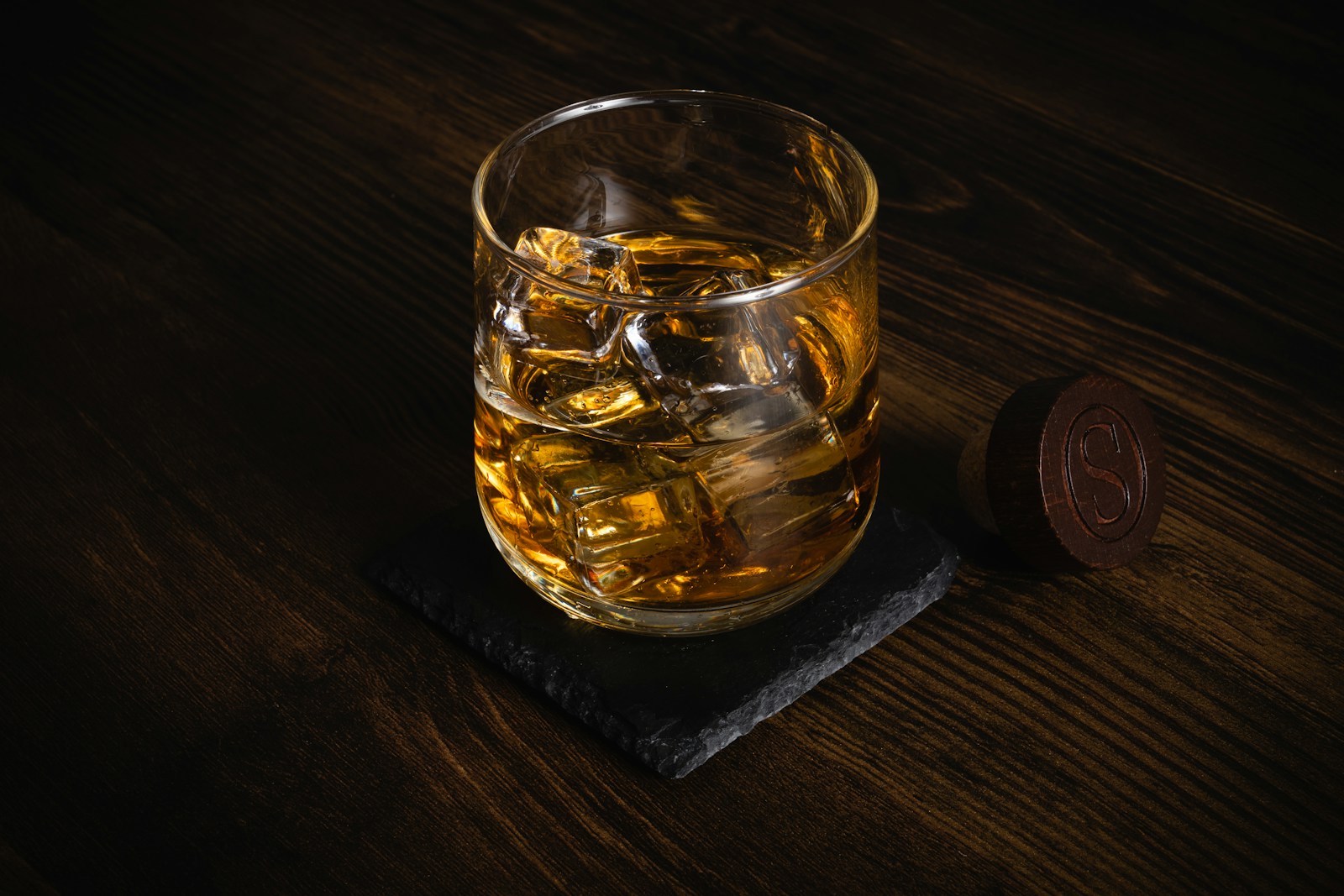
Yamazaki 12 Year Old is the bottle most people mean when they say “Japanese whisky” without naming one. It was the first single malt Suntory ever sold, the first Japanese whisky to win a gold medal at a major international competition, and — over the past decade — the bottle whose price has moved the most. None of that is a taste claim. It is a set of facts about how this whisky came to exist and why it costs what it costs today, and that is what this guide covers: not what is in the glass, but what is in the price.
What is actually in the bottle
Yamazaki (山崎) is a single malt, meaning every drop comes from the Yamazaki distillery near Kyoto rather than being blended across sites. The 12 Year Old expression is built from three component whiskies matured in three different cask types: American oak puncheons, Spanish sherry casks, and mizunara (ミズナラ), a Japanese oak. Chief Blender Shinji Fukuyo and his team combine these components so that no single cask character dominates — a house style Suntory has maintained since the first release. The bottling is 43% ABV (86 proof), and every bottle carries a 12-year age statement, meaning the youngest whisky in the blend has spent at least 12 years in a cask before bottling.
That three-cask structure is not a marketing footnote. It is the reason Yamazaki 12 tastes different from a Scotch single malt built mostly on ex-bourbon and ex-sherry casks, and it is the reason mizunara casks in particular are worth understanding on their own — Suntory only has a few thousand of them out of roughly 1.2 million casks in its inventory, because mizunara oak is slow-growing, prone to leaking when new, and takes years of maturation before its characteristic incense-like character develops. We go into how that cask actually works, and why it is so hard to use, in a separate guide to mizunara oak whisky.
Why Suntory made a single malt in the first place
Yamazaki 12 was not an obvious product to launch. According to Suntory’s own account of the bottle’s history, blended whisky was the entire Japanese market in the early 1980s, and single malt was considered a niche category with limited appeal even in Scotland. Keizo Saji (佐治敬三), Suntory’s second master blender and the son of founder Shinjiro Torii, made the call anyway. His reasoning, as Suntory describes it, was that Japanese consumer tastes were diversifying, and a whisky with a distinct, individual character would eventually find an audience even in a market built on blends.
Saji’s brief to his blending team was specific: not a copy of a Scotch single malt, but something with what Suntory calls a distinctly Japanese balance — multiple malt components blended so that none overpowers the others, rather than one dominant cask character carrying the whisky. After roughly two years of development, Yamazaki launched on March 14, 1984, as Japan’s first commercial single malt whisky. It was a bet on a category that barely existed domestically, made two decades before the international whisky world had any reason to pay attention to Japan.
The 2003 award that changed the trajectory
The international attention came in 2003, when Yamazaki 12 became the first Japanese whisky to win a gold medal at the International Spirits Challenge (ISC), one of the whisky industry’s more closely watched competitions. Before that result, Japanese whisky was largely absent from the conversations Scotch and bourbon writers were having about the category. After it, Yamazaki — and Japanese single malt more broadly — became something international buyers, critics, and eventually collectors actively sought out.
Suntory has kept collecting recognition since: House of Suntory’s own awards record lists further ISC gold medals for Yamazaki 12 in the years since, and other expressions in the range — Yamazaki 18 and Yamazaki 25 — have taken top honors at the ISC more recently. The 2003 result matters more than the later ones for a simple reason: it was the first, and it happened at a moment when almost no one outside Japan was paying attention. Everything that made Yamazaki 12 hard to find fifteen years later traces back to a reputation that started with that single result.
What actually happened to the price
This is the part most tasting-note reviews skip, and it is the part that determines whether the bottle is worth buying at today’s price. Two separate things pushed Yamazaki 12 up: rising demand outpacing a fixed, aging supply of stock, and a series of manufacturer price increases layered on top of that demand.
Suntory’s own numbers, from its April 2024 pricing announcement, show the scale of the most recent domestic increase: Yamazaki 12’s Japanese suggested retail price rose from ¥10,000 to ¥15,000 (tax excluded) — a 50% increase in a single revision. Suntory’s stated reasons were sustained domestic and international demand for premium Japanese whisky, the long production lead times inherent to an age-stated product, and continued investment in production capacity. A further revision took effect on shipments from April 2026, pushing the tax-included Japanese retail price to roughly ¥17,600. For context, a non-age-statement Yamazaki in the same lineup rose from ¥4,500 to ¥7,000 in the same 2024 revision — a smaller absolute jump, on a bottle with no minimum-age promise to keep.
US retail pricing has followed a similar arc from a different starting point. Industry price-tracking sites that monitor US retailers put Yamazaki 12 at roughly $45 in 2013; by the early 2020s, driven partly by the 2015 discontinuation of the cheaper Yamazaki 10 and Hibiki 12 (which pushed buyers toward the remaining age-stated bottles), typical US shelf prices had climbed into the $150–$300 range. As of 2026, most US retailers price a 750ml bottle of Yamazaki 12 between roughly $150 and $250, depending on region and retailer markup — well above Suntory’s own domestic list price once converted, which is a gap that reflects allocation and distributor markup as much as anything Suntory itself charges. For the broader mechanics of why aged Japanese whisky specifically behaves this way — and why it differs from how Scotch pricing has moved — see our explainer on why Japanese whisky costs what it does and the longer account of the Japanese whisky shortage that created the scarcity in the first place.
Does the age statement still mean something
Age statements are the detail that separates Yamazaki 12 from most of what has replaced it on shelves. Under the labelling standard that Japan’s whisky industry adopted in 2021, a stated age must reflect the youngest whisky in the bottle — the same rule Scotch has followed for decades. That is a legal minimum, not a marketing claim, and it is one reason Yamazaki 12 costs more to produce than a no-age-statement (NAS) bottling: Suntory has to hold back enough 12-year-old stock to keep supplying it, rather than blending in younger, cheaper whisky as needed. See our guide to what actually counts as Japanese whisky under the 2021 standard for how that labelling rule works in full.
Most of the Japanese whisky industry has moved the other way. Faced with the same aged-stock shortage that pushed Yamazaki 12’s price up, Suntory, Nikka, and most other producers have leaned on NAS releases — bottles with no minimum-age promise, which let a blender use whatever stock is available rather than committing to a 12-year minimum years in advance. Suntory’s own NAS Yamazaki, sold alongside the 12, is one example: cheaper, and built from whatever component whiskies are on hand rather than a guaranteed minimum age. That makes Yamazaki 12’s continued existence as an age-stated bottle somewhat unusual for 2026 — it is a commitment of aged stock that most competing blends and even some competing single malts no longer make, and that commitment is a real part of what the price is paying for, separate from any question of how it tastes.
How Yamazaki 12 compares with what else is on the shelf
Yamazaki 12 does not sit alone in its price bracket. Buyers deciding whether to spend $150–$250 on it are usually also looking at Suntory’s own Hibiki Harmony, Nikka’s From the Barrel, and Suntory’s own no-age-statement Hakushu — four bottles built on very different premises.
| Bottle | Age statement | Typical US price | What it is built on |
|---|---|---|---|
| Yamazaki 12 | Yes, 12 years | $150–$250 | Single distillery, 3 cask types, guaranteed minimum age |
| Hibiki Harmony | No | $90–$130 | Blend of malt and grain from 3 Suntory distilleries |
| Nikka From the Barrel | No | $70–$85 | High-proof blend, 51.4% ABV, no age commitment |
| Hakushu (Distiller’s Reserve) | No | $70–$100 | Single distillery, no minimum-age stock commitment |
The pattern in that table is not subtle: the three NAS bottles cluster between $70 and $130, while the one bottle that still guarantees a 12-year minimum age sits well above all of them. That is not proof that Yamazaki 12 is worth the difference — taste is a separate question this guide is not making claims about — but it does mean the premium is not random. It maps directly onto the one structural difference the spec sheet actually shows: an age guarantee the other three do not make.
What this means if you are deciding whether to buy it
Yamazaki 12 is not overpriced relative to its own category logic. Suntory’s price increases have tracked real cost pressures the company has documented in its own pricing announcements — long lead times on aged stock, sustained demand, and continued capacity investment — and the bottle remains one of a shrinking number of widely available Japanese whiskies still making a specific, enforceable age promise. Where it is fair to push back is on the gap between Suntory’s own list price and what US retailers actually charge, which is wider than the manufacturer increases alone would explain, and reflects allocation scarcity as much as production cost. Buyers who specifically want the reassurance of a 12-year minimum, and the three-cask structure built around it, are paying for something real. Buyers who mainly want a well-regarded Japanese whisky without that specific guarantee have cheaper, NAS options that cost thirty to sixty percent less.
Q: Is Yamazaki 12 actually 12 years old?
A: The age statement means the youngest whisky in the blend has matured at least 12 years, which is the standard rule for age-stated whisky under both Scotch and the 2021 Japanese labelling standard. Older components can be included, but nothing younger than 12 years is used, which is why Suntory has to hold back enough 12-year-old stock years in advance to keep supplying the bottle.
Q: Why did Yamazaki 12 get so much more expensive?
A: Two things happened together: demand for Japanese whisky rose faster than the aged stock available to meet it, and Suntory raised its own list prices twice in Japan in recent years, citing production lead times, sustained demand, and capacity investment in its own pricing announcements. US retail prices sit further above Suntory’s Japanese list price because of allocation scarcity and distributor markup on top of the manufacturer increase.
Q: What is the difference between Yamazaki 12 and the non-age-statement Yamazaki?
A: The NAS Yamazaki carries no minimum-age guarantee, which lets Suntory blend in whatever component whiskies are available rather than committing years in advance to hold back enough 12-year-old stock. It is priced meaningfully lower than the 12 Year Old in Suntory’s own domestic price list, reflecting that reduced commitment rather than a difference in cask types used.
Q: Is Yamazaki 12 worth it compared to Hibiki Harmony or Nikka From the Barrel?
A: That depends on what you are paying for rather than which tastes better, since this guide does not make taste claims. Hibiki Harmony and Nikka From the Barrel are both non-age-statement blends priced well below Yamazaki 12, so the premium on Yamazaki 12 buys a guaranteed minimum age and a single-distillery, three-cask structure that the other two do not commit to.
Sources
- Suntory Holdings, official press release on domestic premium whisky price revisions, April 2024 (Japanese) — suntory.co.jp/news/article/14499.html
- Suntory, official company blog, “The birth and journey of the single malt whisky Yamazaki” (Japanese) — suntory.co.jp/factory/blog-d/000127.html
- Suntory, official company blog, “The birth of Japan-made mizunara casks” (Japanese) — suntory.co.jp/factory/blog-d/000027.html
- House of Suntory, official Yamazaki product page — house.suntory.com/yamazaki-whisky
- House of Suntory, official awards and recognition page — house.suntory.com/about-the-house/awards