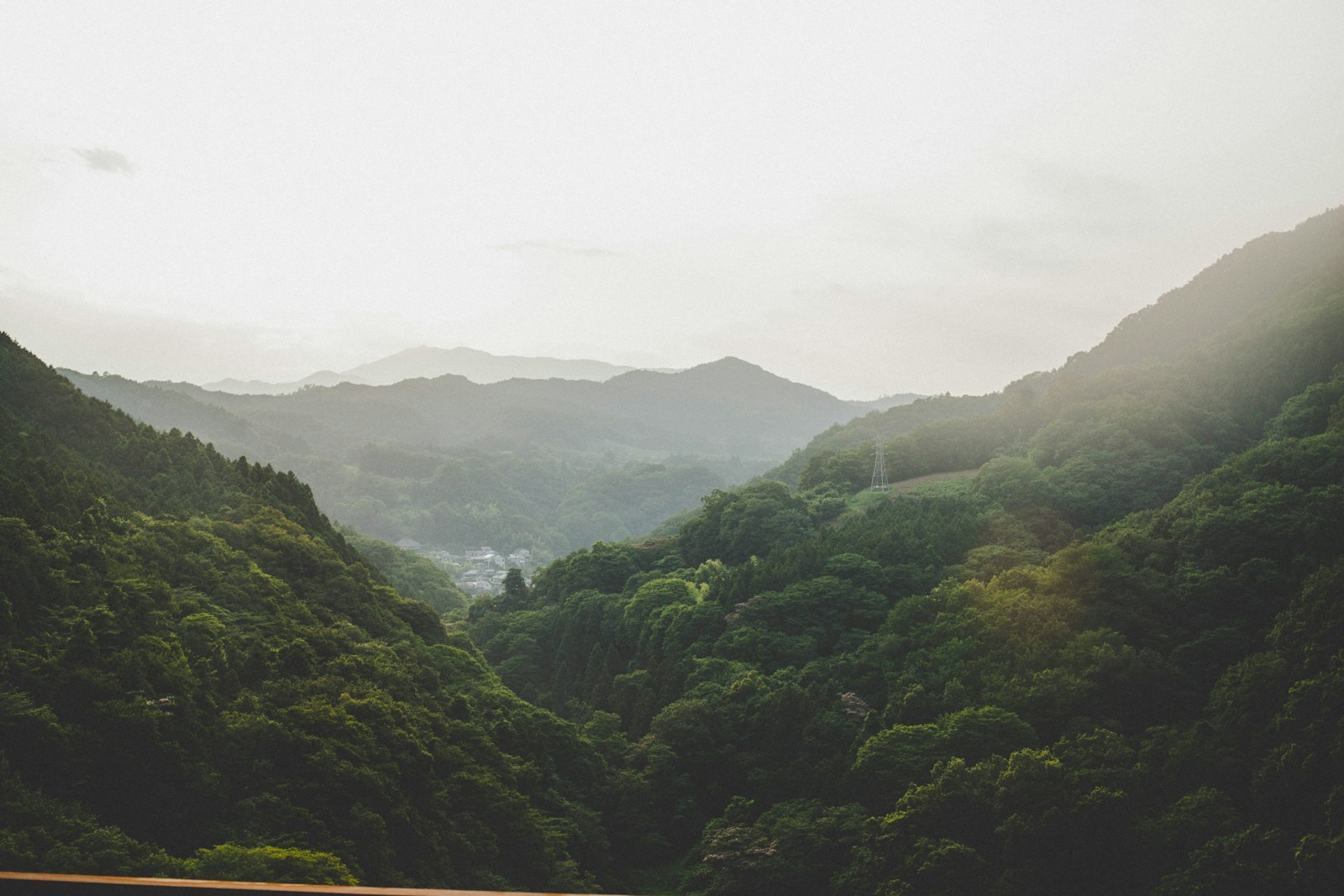
Hakushu distillery (白州蒸溜所) is Suntory’s second malt whisky distillery, built in 1973 in the forested foothills of the Southern Alps in Hokuto, Yamanashi. It is usually introduced as “the forest distillery,” and that is not just a marketing line: the site was chosen specifically to produce whisky that could not taste like Yamazaki, Suntory’s first distillery, by working with a different climate, different water, and deliberately different equipment. Understanding why Suntory built a second distillery at all, rather than simply expanding Yamazaki, explains most of what makes Hakushu distinctive.
What is Hakushu distillery
Hakushu is one of two malt whisky distilleries operated by Suntory in Japan, alongside Yamazaki. It sits roughly 700 meters above sea level on the slopes of Mt. Kaikomagatake, within a company-owned forest reserve of several hundred hectares in Hokuto, Yamanashi Prefecture. Construction finished in 1973, exactly fifty years after Yamazaki began operating. For readers new to the category, our guide to how Japanese whisky differs from Scotch is a useful starting point, since Suntory’s two-distillery approach is one of the clearest examples of that difference in practice.
Why Keizo Saji built a second distillery instead of expanding Yamazaki
The decision to build Hakushu came from Keizo Saji, Suntory’s second master blender and the son of founder Shinjiro Torii. By the early 1970s, Yamazaki had been running for half a century and Suntory’s whisky business had grown well beyond what one distillery’s range of malts could support on its own. Rather than simply add capacity at Yamazaki, Saji searched across Japan for a second site that could produce genuinely different malt whisky, and water quality was the deciding factor: he is described as having found rare, extremely soft water filtered through centuries of granite in the high-elevation forest around Mt. Kaikomagatake, unlike anything available near Yamazaki. Choosing a site an entire mountain range away from Suntory’s first distillery was a deliberate move to broaden the company’s range of house malts rather than deepen a single style.
The forest distillery: how elevation and climate shape the process
Hakushu’s nickname, “the forest distillery,” describes its setting literally: the plant is built inside Suntory’s own forest holding rather than at its edge, and the company frames whisky-making there as inseparable from managing that forest. At roughly 700 meters, Hakushu sits at a noticeably higher elevation and cooler average temperature than Yamazaki, and production choices follow from that. Fermentation at Hakushu uses wooden washbacks in part to help retain heat during the mountain air’s cooler spells, a practical response to climate rather than a purely traditional preference. Suntory also varies pot still shapes and cask selection at Hakushu specifically to suit the site’s conditions, aiming, in the company’s own description, to build “an array of single malt whiskies with a variety of characters that reflect its surroundings” rather than a single fixed house style.
Built to be different from Yamazaki, on purpose
Suntory does not describe Hakushu as a backup or a scaled copy of Yamazaki. Yamazaki itself is known for internal variety, running a mix of stainless steel and wooden fermentation vessels and a wide range of still shapes to produce many different malt characters in one place. Hakushu was built to extend that same philosophy geographically: rather than only varying equipment within one site, Suntory varies the site itself, using Hakushu’s cooler climate, different water chemistry, and separate maturation warehouses to produce malt whisky that Yamazaki’s environment could not replicate even with identical stills. The practical result is that Suntory’s blenders, including Hakushu single malt itself, have two structurally different pools of malt whisky to draw on, not just two production buildings making similar spirit.
What the name and the water sanctuary reveal
The place name Hakushu comes from an older local name, Shirasu (白須), for the sandbar-like land at the confluence of the Kamanashi and Ojira rivers; “su” in the older reading refers to a river sandbar, and the characters were later written as 白州, read Hakushu. The “white” in the name functions as an auspicious description of clear, pure water and land rather than a literal color reference. That naming lines up with how Suntory frames its water source today: the company has designated the surrounding Southern Alps forest a “Natural Water Sanctuary,” an internal conservation program built around the claim that rain and snowmelt filtering through Mt. Kaikomagatake take around two decades to reach the aquifer beneath the distillery. Whether or not every reader treats that figure as precise, the underlying point is consistent with the site’s history: this was chosen, and has been managed since, specifically as water-producing land.
Suntory’s forest stewardship is not limited to Hakushu, and seeing the wider program clarifies how deliberate the commitment is. The company’s “Natural Water Sanctuary” initiative began at a single site in Aso, Kumamoto in 2003 and has since grown to roughly 27 locations across 16 prefectures, covering more than 12,000 hectares, with land-use agreements running a minimum of 30 years and, at some sites, up to a century. The work itself is unglamorous: selective thinning of overcrowded conifer stands, replanting broadleaf trees where monoculture forestry has reduced biodiversity, and repeated cycles of survey, planning, and follow-up measurement rather than a one-time planting event. Applied to the Hakushu forest specifically, that program is the mechanism behind the twenty-year aquifer claim, not just the marketing behind it: healthier, more varied forest cover is what allows rainfall to filter slowly through granite rather than running off quickly, which is the entire reason the site was chosen in the first place.
Hakushu against the rest of Suntory’s range
Hakushu is easiest to place next to the other core single malt in Suntory’s lineup and one independent craft distillery working in a similarly wooded, mountainous setting.
| Distillery | Setting | House approach | Best known for |
|---|---|---|---|
| Hakushu | Forest, ~700m, Southern Alps, Yamanashi | Varied stills and casks tuned to a cooler, high-elevation climate | Green, herbal notes with a smoky thread in some expressions |
| Yamazaki | Valley confluence near Kyoto, lower elevation | Wide internal variety of stills and fermentation vessels at one site | Fuller, richer, often sherry-cask-associated character |
| Chichibu | Hills of Saitama, independent craft scale | Small-batch, mizunara washbacks, some floor-malted barley | Bright, fruity spirit from hands-on, low-volume production |
Placed side by side, the contrast is less about which distillery is “better” and more about scale of intent: Suntory built two full distilleries specifically to widen its blending palette, while a distillery like Chichibu pursues variety through hands-on process choices at a fraction of the size. Both are legitimate answers to the same underlying question of how a Japanese whisky maker builds range rather than relying on one fixed profile.
What this means if you are choosing a bottle
We have not tasted Hakushu ourselves and will not describe its flavor as settled fact; published tasting notes commonly cite green, herbal, and lightly smoky characteristics, and readers should treat that as secondhand description, not our judgment. What the history does support is a clear reason to reach for Hakushu specifically rather than Yamazaki when the two are sitting on the same shelf: it represents a distinct set of production decisions, built around a different mountain, a different water source, and a different climate, chosen on purpose so that Suntory’s range would not be limited to one distillery’s character. That is a more concrete reason to choose between them than a general sense that one is “smokier” than the other, and it is worth knowing which decisions produced the bottle in front of you, particularly given how differently the two distilleries are priced and allocated internationally. Our guide to where to find Japanese whisky in the US covers current availability for both.
Frequently asked questions
Q: What does the name Hakushu mean?
A: Hakushu (白州) derives from an older local name, Shirasu, describing the sandbar-like land at the confluence of the Kamanashi and Ojira rivers near Hokuto, Yamanashi. The characters translate loosely to “white sandbar,” with “white” used in the older sense of clear or pure rather than as a literal color, which fits how the distillery’s water source is described today.
Q: Why did Suntory build Hakushu instead of expanding Yamazaki?
A: By the early 1970s, Suntory’s whisky business had outgrown what Yamazaki’s malt could support alone, and master blender Keizo Saji wanted a genuinely different style of malt whisky rather than more of the same. He searched across Japan and settled on the Southern Alps site for its distinct granite-filtered water and cooler, high-elevation climate, factors that could not be replicated by simply adding capacity at Yamazaki.
Q: Is Hakushu whisky smoky like a peated Scotch?
A: Hakushu is generally associated with green, herbal notes and a lighter smoky thread in some expressions rather than the heavy peat character common in Islay Scotch. We have not tasted it ourselves, so read that description as a summary of widely published tasting notes rather than a claim we are making directly.
Q: How is Hakushu different from Yamazaki in practical terms?
A: The two distilleries sit in different climates, draw on different water sources, and use varied still shapes and cask programs suited to each site, all chosen deliberately so Suntory’s blenders have two structurally different malt whisky profiles to work with rather than two versions of the same spirit.