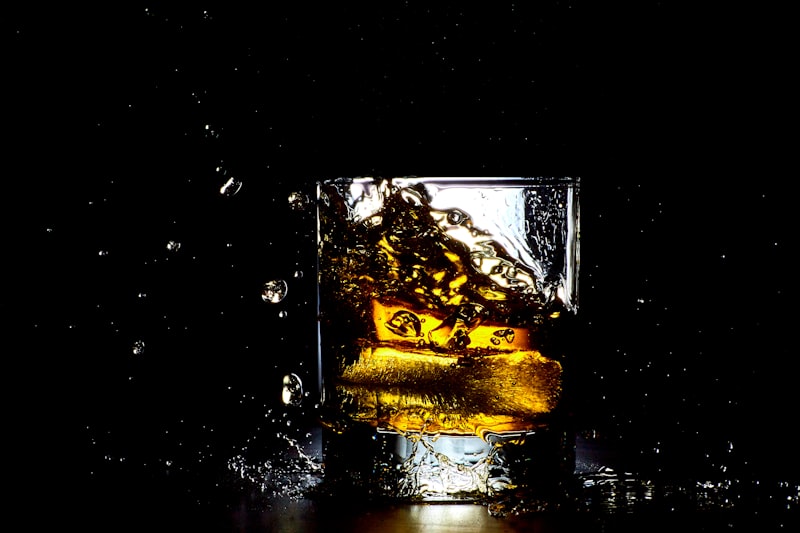
A Japanese whisky highball is whisky, ice, and soda water. That is the entire ingredient list. But the reason it became the default way to drink whisky in Japan — and the reason bartenders in Tokyo treat it as a technique rather than a mixer — is that the build determines almost everything about the glass in front of you: how long it stays cold, how long it stays fizzy, and how much it dilutes while you are still on the first few sips. This guide walks through the build step by step, explains the physical reason behind each step, and covers why this specific drink is tied to one of the more consequential marketing decisions in the recent history of Japanese whisky.
What a Japanese whisky highball actually is
The highball itself is not a Japanese invention — whisky and soda has been served in bars since the 19th century. What is distinctly Japanese is the standardized, almost procedural way it is built and served, refined over decades in Tokyo’s whisky bars and then codified by Suntory for mass consumption. The Japanese version is typically built at a ratio of one part whisky to three or four parts soda, served in a tall, narrow glass, and finished with a single controlled stir rather than a shake or a long mix.
That narrow glass is not a style choice. A tall, narrow shape has less surface area exposed to air relative to its volume than a short, wide tumbler, which slows how quickly the drink loses carbonation and warms up. It is the same reason a flute keeps champagne fizzy longer than a coupe does. In Japan, this glass is sometimes chilled in a freezer before service specifically so the first sip is as cold as the last.
Why the technique matters more than it looks
Carbonation is the point, not a side effect
Unlike a whisky and cola or a whisky sour, a highball has almost nothing else in the glass to fall back on if the fizz goes flat. Dissolved carbon dioxide escapes faster as a liquid warms and faster still when it is agitated, which is why every step in a proper build is really a step to protect carbonation: chilling the glass and the whisky before the soda ever goes in, pouring gently rather than dropping the soda straight onto the ice, and stirring once instead of stirring the way you would a Manhattan.
Dilution starts before you pour anything
Ice that is already partially melted, or ice sitting in a room-temperature glass, starts diluting the whisky before the soda arrives, which throws off the ratio you were aiming for. This is why bars that take highballs seriously use large, dense ice cubes rather than small cubes from a standard tray — a bigger cube has less surface area relative to its volume, so it melts more slowly and dilutes the drink more slowly, even across a 20-to-30-minute glass.
How to build one, step by step
None of these steps require special equipment, though a bar spoon helps. The sequence matters more than any single ingredient.
- Chill the glass first. A few minutes in the freezer, or a quick fill-and-dump with ice water, brings the glass down to a temperature where it will not warm the drink on contact.
- Fill it with ice, to the top. Use the largest, clearest cubes available. A glass that is only half full of ice has more room for the whisky and soda to move around and lose gas as you stir.
- Pour the whisky over the ice. A standard single serving is around 45 ml (1.5 oz), though the exact amount depends on the ratio you are building toward.
- Stir the whisky and ice briefly, on its own, before the soda goes in. This brings the whisky down to the ice’s temperature so it will not immediately warm the soda water when the two combine.
- Add the soda water slowly, down the side of the glass or over the back of a spoon rather than pouring it straight down the middle. A direct pour onto ice agitates the liquid and knocks carbonation out before you have taken a single sip.
- Give it one stir, from the bottom of the glass to the top, and stop. The goal is to lift the denser whisky up through the lighter soda without beating the bubbles out. One rotation is usually enough.
- Garnish only if you want to. A twist of lemon peel or a thin coin of grapefruit peel, expressed over the glass rather than dropped in, adds aromatic oils without adding sugar or juice to the drink.
What you should not do: shake it, stir it more than a couple of times, use crushed or small ice, or let the soda sit out and go flat before you pour it. Each of those either drives out carbonation directly or accelerates the dilution that makes the drink taste more diluted over time.
Getting the ratio right
Recommendations vary by brand and by how strong a drink you want, but they cluster in a fairly narrow band. Because whisky-to-soda ratio and the whisky’s bottled strength determine the drink’s final alcohol content, the numbers below are arithmetic, not a taste judgment — we have not tasted these drinks and are not ranking them.
| Ratio (whisky:soda) | With a 40% ABV whisky | With a 43% ABV whisky | Typical use |
|---|---|---|---|
| 1:3 | ~10.0% ABV | ~10.8% ABV | Stronger pour, often the first drink of the night |
| 1:3.5 | ~8.9% ABV | ~9.6% ABV | The commonly cited “golden ratio” in Japanese bar culture |
| 1:4 | ~8.0% ABV | ~8.6% ABV | Lighter, built for drinking through a meal |
Suntory’s own recipe for Toki, its whisky built specifically around the highball, calls for a 1:3 to 1:4 ratio, landing the finished drink somewhere between a light beer and a glass of wine in strength. Suntory’s Japanese-language recipe page for Kakubin (角瓶), the older and more traditional base for a Japanese highball, points to a similar range, and Japanese bar culture generally treats 1:3.5 as the reference point rather than a fixed rule.
How the highball rescued Japan’s whisky industry
The highball is not just a serving style in Japan — it is tied directly to how the domestic whisky industry survived a multi-decade sales collapse. Japanese whisky consumption had been declining for roughly 25 years by the mid-2000s, as younger drinkers came to see whisky as an older generation’s drink. In April 2008, Suntory launched a nationwide campaign built around the kakuhai (角ハイ), the Kakubin highball, complete with a dedicated “Kakuhai Tower” soda dispenser for bars and a standardized, trained-staff version of the build described above. Suntory brought roughly 15,000 bars and izakaya on board with the standardized recipe by the end of 2008, a number that grew to around 60,000 venues within about a year, according to a report from J-Net21, the SME support portal operated by Japan’s Organization for Small & Medium Enterprises and Regional Innovation (Japanese).
The results were immediate by industry standards: domestic whisky shipments rose roughly 110% year-on-year in 2009, the first double-digit growth the category had seen since 1998, and continued growing into 2010. That demand recovery is one of the reasons Japanese distilleries were caught short of aged stock a few years later, a shortage that reshaped how the industry labels and prices its whisky — a story covered in more detail in our explainer on why Japanese whisky ran short of aged stock. The highball did not just give Japan a new drink; it gave the whisky business a reason to keep distilling through the 2010s, which is part of why the bottles on shelves today look and cost the way they do.
Choosing a whisky that was built for this
Not every Japanese whisky is designed with a highball in mind. Single malts like Yamazaki or Hakushu are generally positioned, priced, and marketed around neat or on-the-rocks drinking, where subtler characteristics are easier to pick out. Blends, on the other hand, are frequently built with dilution in mind from the start. Suntory Toki is the clearest example: the blend leans on Chita grain whisky and Hakushu malt specifically because that combination is said to hold up well once soda and ice are added, and Suntory markets and photographs it almost exclusively in highball form rather than as a sipping whisky. You can read more about how that blend is put together, and what it costs, in our Suntory Toki review.
Kakubin remains the everyday, lower-cost option most associated with the original 2008 campaign, and it is still the whisky most Japanese bars default to when a customer simply orders “a highball” without naming a brand. Either one is a more reasonable choice for a nightly highball than an aged single malt, both on cost grounds and because that is what they were built to do. If you want a wider shortlist of approachable bottles beyond Toki and Kakubin, our guide to the best Japanese whisky for beginners covers five that are actually easy to find.
Q: What is the correct whisky-to-soda ratio for a Japanese highball?
A: Most Japanese recipes fall between 1:3 and 1:4, whisky to soda. Suntory’s official recipe for Toki specifies 1:3 to 1:4, while Japanese bar culture often references 1:3.5 as a general benchmark. The exact ratio is a matter of preference and how strong you want the finished drink to be, not a fixed rule.
Q: Do I need a special glass to make one properly?
A: You do not need a specific branded glass, but a tall, narrow glass performs better than a short, wide one because it exposes less of the drink’s surface area to air, which slows the loss of carbonation. Chilling whatever glass you use beforehand matters more than the glass’s shape or brand.
Q: Can I use any whisky, or does it have to be a Japanese blend?
A: Any whisky can technically be built into a highball, but blends designed for dilution, such as Suntory Toki or Kakubin, tend to hold their character better at a 1:3 to 1:4 ratio than single malts priced and marketed for neat drinking. Using an expensive single malt is not necessary and arguably wastes what that whisky is built to show on its own.
Q: Why does the stirring technique matter so much?
A: Dissolved carbon dioxide escapes faster when a liquid is agitated, so an aggressive or prolonged stir knocks carbonation out of the soda water before you have taken a sip. A single, gentle stir from the bottom of the glass to the top combines the whisky and soda without over-agitating the mixture, which is why Japanese technique consistently calls for one rotation rather than several.
Sources
- Suntory, official Kakubin highball recipe page, suntory.co.jp/whisky/kakubin/recipe/highball.html (Japanese)
- J-Net21 (Organization for Small & Medium Enterprises and Regional Innovation of Japan), “サントリーウイスキー角瓶 低迷するウイスキーを復権させた秘策” (Japanese)
- The House of Suntory, official Toki highball recipe (Suntory Global Spirits, English)
- Suntory Kakubin official product pages, alcohol content and retail listings (multiple retailers, cross-checked)
- Suntory Whisky Toki, official product specifications, 43% ABV (Suntory Global Spirits)