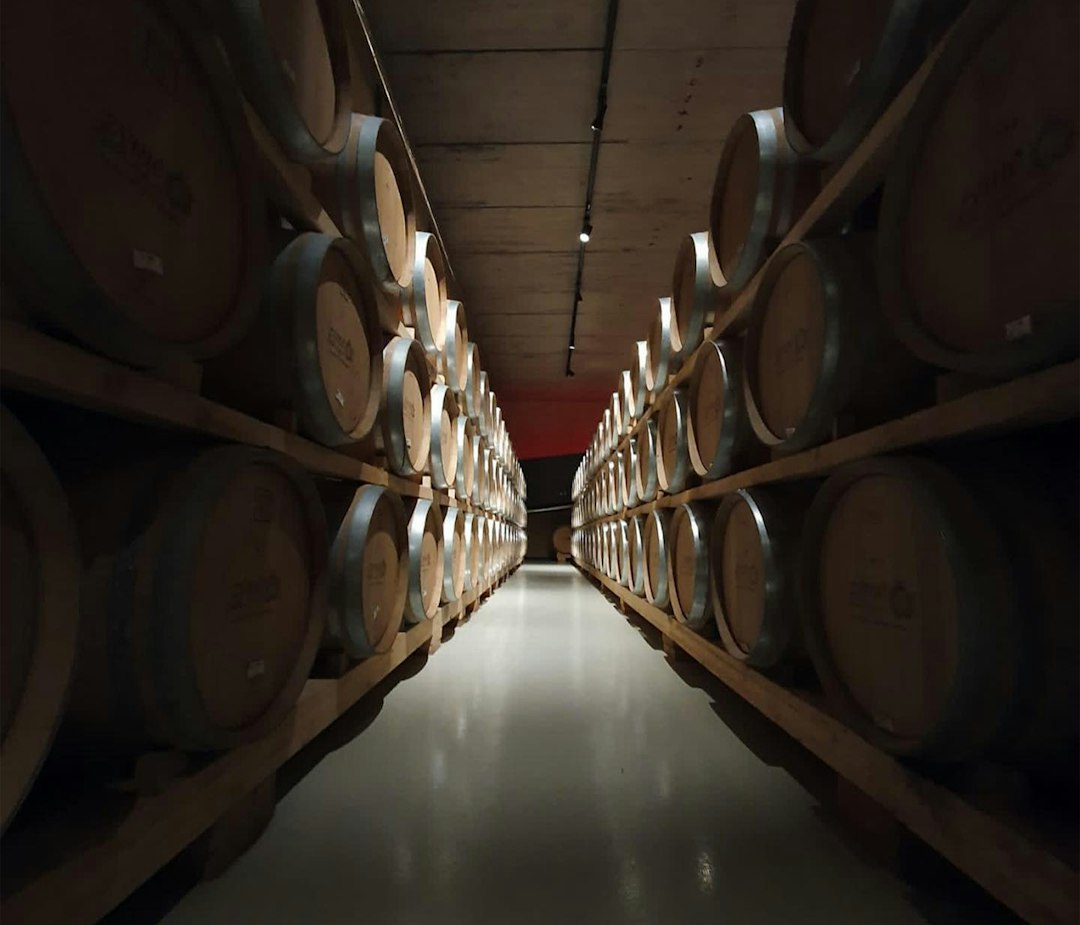
Fugaku Distillery (富嶽蒸溜所), a fire-heated, wooden-washback operation on the northern slopes of Mt. Fuji, is now aiming to release its first whisky in November 2028, according to an October 22, 2026 profile in the Japanese daily Nikkan Gendai (日刊ゲンダイ). The same week, the Tokyo-based Whisky Culture Institute (ウイスキー文化研究所) announced a December 5 tour that will take 30 members inside the distillery, which is normally closed to the public. Together the two items give the clearest picture yet of one of Japan’s most expensive-looking new craft projects, and of a business model built as much around cask owners and tourism as around bottles.
The distillery sits at roughly 1,000 meters in Fujiyoshida (富士吉田), Yamanashi Prefecture, about a 15-minute drive uphill from Kawaguchiko (河口湖) Station, one of the busiest stops on any foreign visitor’s Fuji itinerary. It is run by SASAKAWA WHISKY Co., Ltd., whose president, Shohei Sasakawa (笹川正平), 46, left the broadcaster Fuji Television in 2017 to start a whisky business. Local broadcaster UTY (テレビ山梨) reported in October 2025 that the distillery began distilling in 2023 and was targeting a commercial release in 2028 or later. The new profile narrows that to November 2028.
How Fugaku makes its spirit
Most of Japan’s new craft distilleries heat their pot stills with steam, which is easier to control. Fugaku instead uses direct fire for the first distillation, and it ferments in wooden washbacks rather than stainless steel. Both choices were pushed by the essayist and former magazine editor Katsuhiko Shimaji (島地勝彦), who serves as an unpaid honorary advisor. Shimaji told Nikkan Gendai that he wanted direct fire because the distillery that moved him most in Scotland, Glenfarclas, still uses it, and wooden washbacks because the mixed yeast and lactic bacteria they host add complexity. He also claims the three-year-old spirit is already tasting far better than he expected. We have not tasted it, and nothing has been released for independent review.
The process water is Fuji snowmelt that has filtered through layers of basalt, and the lifestyle magazine GOETHE reported in May 2026 that the first warehouse already held about 400 casks, each tracked by a QR code on the head. The glass-fronted building won a “Best Design Distillery” award at the Tokyo Whisky & Spirits Competition (TWSC) in 2024, according to the same report. GOETHE also reported that Sasakawa built the business without family money, with backing from Naoya Kinoshita (木下直哉) of the Kinoshita Group.
The project’s other pillar is a cask owner program. Membership of the Owners’ Cask Club costs 550,000 yen to join, and one cask costs 3.3 million yen. Each 180-liter cask matures for five years, with extensions available at 110,000 yen per year, and should yield around 200 bottles. Owners cannot resell the whisky without a Japanese liquor sales license. The main draw, the company says, is access to a members-only bar lounge built around single-slab Japanese mizunara oak counters made by a well-known bar woodworker, designed with Shimaji’s input.
Why this matters
Fugaku is a clean example of what GOETHE calls Japan’s “third generation” of craft distilleries: projects that started in the late 2010s, put terroir and distinctive equipment front and center, and are designed for visitors from day one. Sasakawa’s stated goal is to turn the northern foot of Mt. Fuji into a whisky destination on a par with the mountain itself, with accommodation and a restaurant considered for later phases. That puts Fugaku in direct conversation with Kirin’s long-established Fuji Gotemba distillery on the Shizuoka side of the mountain, the other stop on the December tour.
The release timing also matters. Japan’s industry labeling standard requires at least three years of aging in wood for a whisky to carry the “Japanese whisky” name (our guide to the Japanese whisky definition explains the rules). Spirit distilled in 2023 could legally have gone to market in 2026, as many peers have done with three-year-old debut bottlings. Choosing November 2028 means the oldest stock will be around five years old at launch, a sign that the company is prioritizing a first impression over early cash flow. The cask owner fees are what make that patience affordable. A similar logic sits behind the private-cask schemes at Nikka’s Yoichi Sawamachi project and at several other young distilleries.
Related guides
Single cask Japanese whisky, explained
The complete list of Japanese whisky distilleries
For readers outside Japan
There is nothing to buy yet. Fugaku has announced no export plans, no price for its first release, and no international distributor, so treat the November 2028 date as a target rather than a launch. If you want to follow the project, the most useful step is to watch for a confirmed release announcement in 2028 and for the outcome of its first competition entries, which Sasakawa has said are aimed at the major international awards.
Visiting is also harder than the location suggests. The distillery is not open to walk-in visitors, and the bar lounge is reserved for cask owners. The December 5 tour costs 35,000 yen, departs from JR Odawara Station, and is limited to members of the Whisky Culture Institute or its Whisky Connoisseur club. Applications close October 31, 2026 at 5 p.m. JST, with a lottery if oversubscribed. Membership is open to anyone aged 20 or older, but the tour is run in Japanese. The tastings planned for the day include new make plus three aged spirits: non-peated and peated malt from ex-bourbon casks, and a non-peated malt from sherry casks.
For travelers heading to Kawaguchiko now, the realistic whisky stops are elsewhere. Fuji Gotemba sits on the southern side of the mountain, and its whisky is the Fuji-area spirit you can actually buy abroad: Kirin’s Fuji 12 Years single grain is launching in the UK and France this month and in the US in November. Elsewhere in Yamanashi, Suntory’s Hakushu distillery is within a couple of hours’ drive, and the winery-turned-distiller Sainte Neige has just shown its first Japanese whisky. As for the cask program, it is priced and documented in Japanese for buyers inside Japan. Anyone abroad considering a cask should read our notes on Japanese whisky as an investment first, especially the parts on licensing and resale.
Source: Nikkan Gendai (Japanese); Whisky Culture Institute via PR TIMES (Japanese)