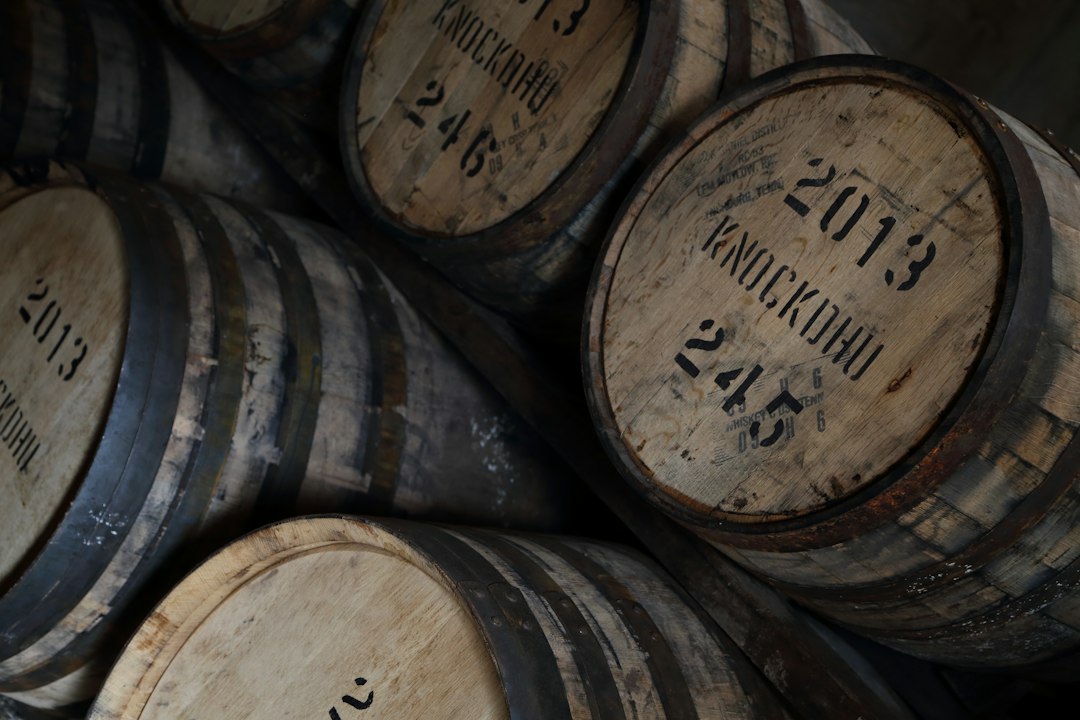
A new whisky distillery is coming to the Pacific coast of Ibaraki (茨城). Isonohama Distillery (磯の浜蒸溜所), a joint venture that includes Kiuchi Shuzo (木内酒造), the brewer behind the Hitachino Nest beer brand, announced on October 1, 2026, that it will start operating in spring 2027 inside the restored buildings of a former sake brewery in the port town of Oarai (大洗). The headline detail for whisky drinkers: instead of peat, the distillery plans to smoke its malt with seaweed, aiming for a briny, coastal spirit made from Ibaraki-grown barley.
The site is the old Furukawa Shuzoten (古川酒造店), a sake brewery founded in the Keio era (1865 to 1868) that was once billed as the sake brewery closest to the sea in Japan. It made sake in Oarai for more than 130 years, under labels such as Shorai (松籟) and Komon (黄門), before closing during the Heisei era. According to the distillery’s own website, the buildings have now stood idle for 28 years.
Who is behind Isonohama
The operating company, Furukawa Shuzo Isonohama Distillery, was set up in August 2024 and is led by Toshiyuki Kiuchi (木内敏之) as president. Three parties are investing: Kiuchi Shuzo, the Mexican drinks company Fraternity Spirits World SA, and a representative of the former Furukawa brewery family. The press release splits the roles plainly. Kiuchi brings production and distillery-management know-how built on Hitachino Nest beer and its Hinomaru Whisky (日の丸ウイスキー) project, while Fraternity Spirits brings what the release calls a global alcohol sales network. The stated goal is to sell the whisky both in Japan and abroad.
The production plan is specific for a project that has not yet distilled a drop. The barley will come from Ibaraki Prefecture. Kiuchi already runs its own malting, and that in-house capability is what makes the seaweed-smoking experiment possible: rather than buying ready-peated malt, the team can control how the grain is dried and smoked. Distillation will take place in copper pot stills designed for Isonohama, and the spirit will mature close to the sea in Oarai. The company also plans liqueurs and bottled cocktails, a nod to the brewery’s fourth-generation owner, who ran a sake cocktail bar and helped build a beachside bar culture in the town during the Showa era. The release adds that his study, still preserved in the brewery, contains notes showing he was already researching whisky making.
Visitors are part of the plan from day one. The restored brewery will house a production tour route, an exhibition on the Furukawa family’s history, a shop with distillery-only bottlings and merchandise, a tasting bar, and a food space. The official website gives early summer 2027 for the visitor center opening. Tour start dates and booking details have not been announced; the company says updates will come through its website and Instagram.
Why this matters
Isonohama is a small project, but it touches three trends that are reshaping Japanese whisky. The first is the conversion of old sake breweries into distilleries. Sake consumption in Japan has been declining for decades, and brewers with historic buildings and licenses are looking for a second life. We have seen the same move at Akashi Sake Brewery’s Kaikyo distillery and in Kobayashi Shuzo’s new Nikko distillery. What sets Isonohama apart is that the brewery had already closed; this is a revival rather than a diversification.
The second is foreign capital. Fraternity Spirits joins a short list of overseas investors putting money directly into Japanese distilling, alongside the Kentucky-based owners of Cedarfield in Hokkaido. For a craft distillery, a partner with an existing international sales network solves the hardest problem early: getting bottles onto shelves outside Japan once there is something to sell.
The third, and the most interesting for drinkers, is the attempt to build a regional flavor rather than imitate Scotch. Many Japanese craft distilleries that want smoke rely on peated malt bought from abroad, which produces familiar Islay-style results. Smoking malt with seaweed is a deliberate move away from that template, tying the flavor to Oarai’s shoreline. Whether it works is a question that cannot be answered for years, and the release makes no claims about the finished taste beyond the target of a briny, sea-influenced style.
For readers outside Japan
There is nothing to buy yet. Distillation starts in spring 2027, and under the industry’s Japanese whisky labeling standard, spirit must mature in Japan for at least three years before it can carry the “Japanese whisky” name. That points to spring 2030 at the earliest for a whisky bottling, and the company has not announced a release date. Liqueurs and bottled cocktails may arrive sooner, though no timing has been given for those either.
The most practical step for now is to plan a visit. Oarai sits on the coast of Ibaraki, reachable by train from Tokyo via Mito, and the town is already known for the Kamiiso no Torii (神磯の鳥居), a shrine gate standing on rocks in the surf. If you are traveling in Japan from summer 2027 onward, the visitor center is worth adding to a trip that might also take in Kiuchi’s brewery sites elsewhere in Ibaraki. Following the distillery’s official Instagram account is the simplest way to catch the tour and booking announcement.
Kiuchi’s existing whisky is made in small volumes, so availability outside Japan varies by market. In the meantime, check our guide to buying Japanese whisky in the US for stores that carry smaller producers. For a wider view of where Isonohama will fit, our full list of Japanese whisky distilleries maps the country’s distilleries by region.
Source: PR TIMES (Japanese); Isonohama Distillery official site (Japanese)