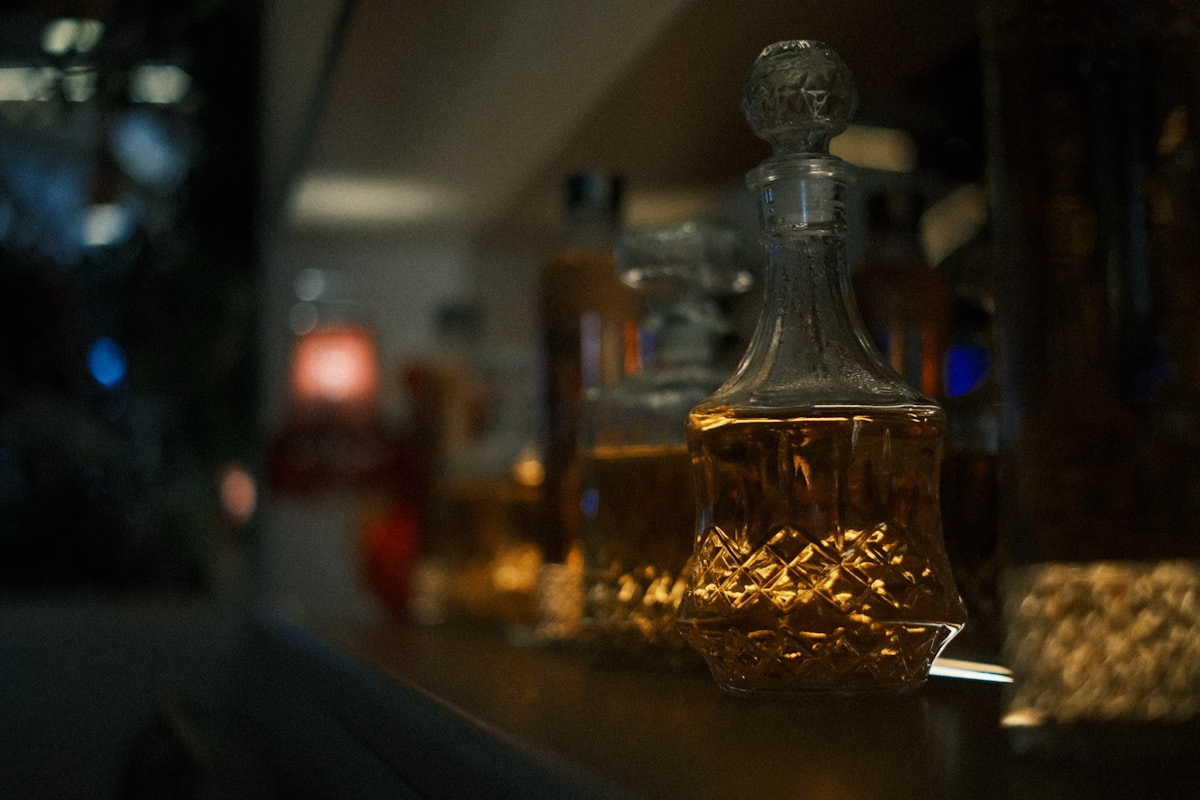
Honbo Shuzo (本坊酒造) will add a 200ml bottle to its Single Malt Komagatake (シングルモルト駒ヶ岳) line in mid-September 2026, giving the Nagano distillery’s core single malt its smallest format yet. The bottling is 45% ABV and carries a suggested price of 2,750 yen, roughly 19 US dollars, against 7,920 yen for the standard 700ml.
Single Malt Komagatake is a recent fixture rather than an old one. For years the distillery released a Komagatake single malt only once a year, in limited numbers. Honbo says stocks of several maturing vintages finally reached the point where it could supply a single malt year round, and it launched the current bottling as a permanent product in September 2025. The 200ml is aimed at gifts, travel and casual pours, and the whisky inside is the same as the 700ml.
The distillery describes the profile as clean and rich, with notes of apple tea, apricot and ripe persimmon, a smooth mouthfeel and a long finish. Those are Honbo’s own tasting notes; we have not tasted this bottling. It does not carry an age statement. The label uses traditional Japanese patterns to depict the forests of the Central Alps, with pale blue for the snowmelt and clear air.
One distillery, two names
The site sits in Miyada (宮田村), at 798 meters near the foot of Kiso-Komagatake in the Central Alps, and drew its first spirit in 1985, when Honbo moved its whisky equipment there from Yamanashi. Honbo paused malt distilling through the lean years for Japanese whisky and restarted in 2011, its first malt distillation there in 19 years. In March 2024 it renamed the plant from Mars Shinshu (マルス信州) to Mars Komagatake, to line the distillery up with the Komagatake brand. Overseas buyers will still see both names on older bottles and on secondary-market listings. Honbo also runs the younger Mars Tsunuki (津貫) distillery in Kagoshima and an aging cellar on Yakushima.
The company’s whisky history is older than the distillery. Honbo first made whisky in Kagoshima in 1949 under Kiichiro Iwai (岩井喜一郎), a leading distilling engineer of his day who became the company’s adviser in 1945. Iwai designed the stills for Honbo’s Yamanashi plant, which opened in 1960, and that equipment is what moved to Miyada. Our guide to Hombo Shuzo and Mars whisky covers the family story in detail.
The water explains much of the distillery’s case for the site. Honbo says it draws its brewing water from 120 meters underground, after rain and snowmelt from peaks near 3,000 meters filter through granite. It credits that water, the cool air and the forest for the clean but full style it wants from Komagatake.
Why this matters
The 200ml is a small product, but it rests on a big change. Until 2025, Komagatake single malt meant a yearly limited edition. That is the normal pattern for a Japanese distillery whose stocks are thin: release what can be spared, sell out quickly, and leave most drinkers with nothing to buy for the rest of the year. Honbo’s own explanation for ending that pattern is specific. Fourteen years after distilling restarted in 2011, it holds enough spirit across several ages to blend a consistent single malt all year.
A miniature only makes sense once that supply is secure. Small bottles cost more to fill per liter and tie up stock in a format that sells slowly, so a producer short of whisky does not make them. Honbo is now confident enough to sell a quarter-size bottle at 2,750 yen and pitch it at gifts, souvenirs and outdoor drinking rather than collectors.
That is the same direction several mid-size Japanese distilleries have taken lately, moving from limited drops to standing products. Yuza, for example, has just added a lower-priced Special Blend. For the market, it marks the slow end of the shortage years described in our explainer on the Japanese whisky shortage. Komagatake also shows the trade-off: consistency comes from blending many ages, so the core bottle carries no age statement. Our guide to Japanese whisky age statements explains why that has become common.
For readers outside Japan
The 200ml has not been announced for export, so treat it as a bottle to pick up in Japan. It is a good fit for travelers: at 2,750 yen it is an inexpensive way to try a Japanese craft single malt from a distillery that dates back decades, and the small size is easy to pack. Before you carry spirits home, check your own country’s duty-free allowance.
Outside Japan, Mars is one of the more reliably exported Japanese single malt names. Komagatake and Tsunuki bottlings turn up regularly at specialist retailers in the United Kingdom, the United States and Europe, usually in the 700ml size and often as limited releases such as the recent peated sherry cask edition. Our guides to buying Japanese whisky in the US and in the UK list the retailers that carry Mars. If a standing Komagatake reaches your market, expect a higher price than 7,920 yen once shipping, duty and distributor margins are added.
Miyada is also worth a stop. Honbo added a new still house and a visitor building when it renovated the site, and the distillery sits between Tokyo and the older distilleries of central Japan. Our Mars Komagatake distillery guide covers the visit, and our distilleries directory helps you plan a wider route.
Sources:
- Gourmet Press, carrying the Honbo Shuzo press release “New 200ml bottle for Single Malt Komagatake” (Japanese) — https://gourmetpress.net/1472497/
- Honbo Shuzo, official page on Mars whisky history and distillery visits (Japanese) — https://www.hombo.co.jp/quality/whisky/