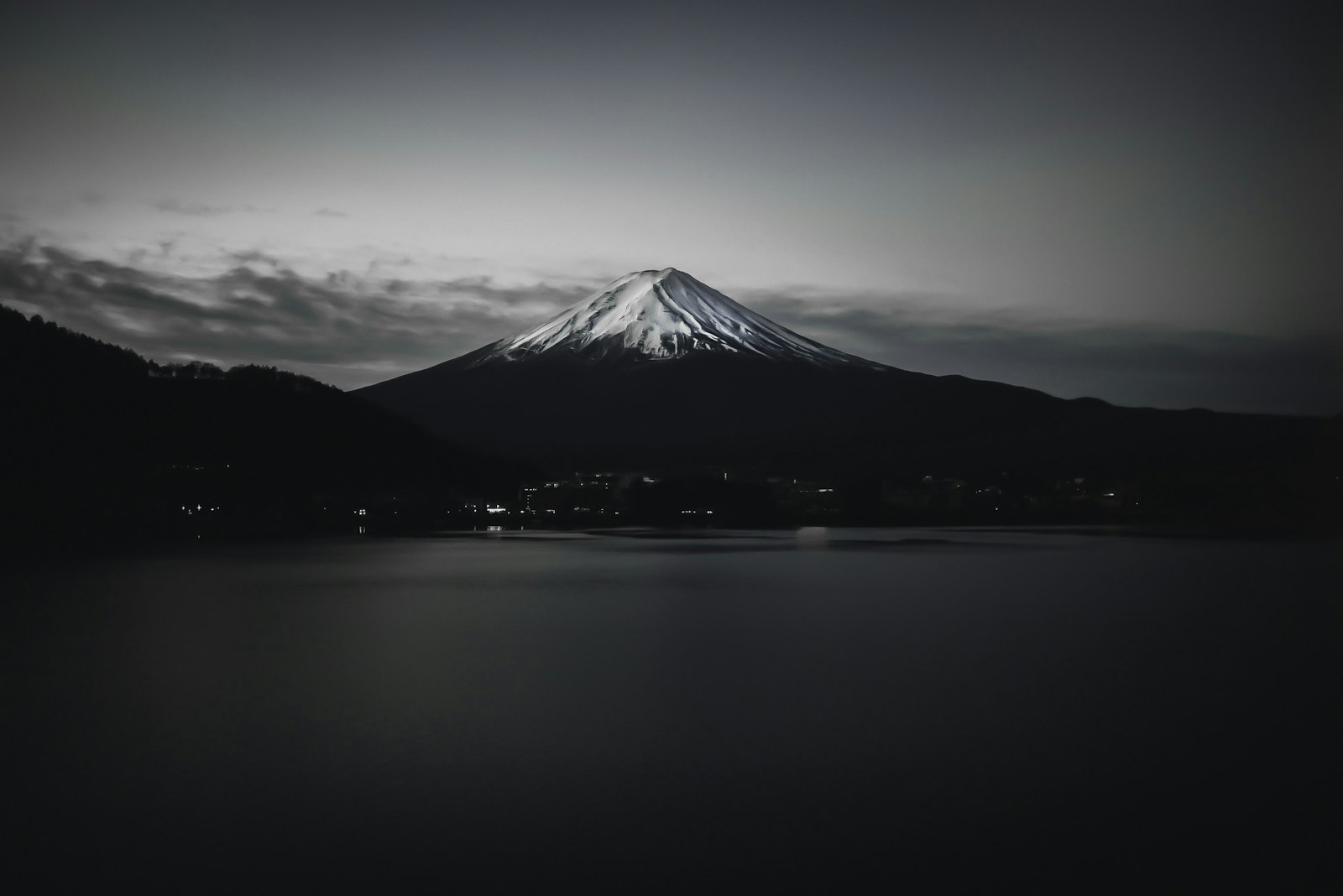
Yuza (遊佐) distillery is the only whisky producer in Yamagata Prefecture, built in 2017 by a sake maker looking for a new way to survive a shrinking local market. It sits at the foot of Mount Chokai, a volcano straddling the Yamagata-Akita border, and draws on snowmelt water that the Japanese government has ranked among the country’s finest. Barely a decade old, Yuza has already picked up international competition medals and built a small but devoted following among collectors hunting for lesser-known Japanese single malts.
What makes Yuza distillery different
Yuza is run by Kinryu Co., Ltd., a company with roots as a sake producer in Sakata, Yamagata, tracing back to 1950, when nine local sake makers in the Sakata-Akumi area pooled capital to found what was then called Yamagata Prefecture Fermentation Industry Co.; the company took the Kinryu name in 1966. Facing a declining local population and a shrinking sake market, Kinryu pivoted into whisky, opening the distillery in the town of Yuza in 2017 and beginning distillation the following year. It remains the prefecture’s first and, so far, only whisky distillery. For readers still getting oriented in the category, our guide to what counts as Japanese whisky explains the labelling rules that distilleries like Yuza now operate under.
Kinryu’s move into whisky was driven by demographic arithmetic as much as ambition. At the time of the decision, roughly 95 percent of the company’s sake and shochu sales were concentrated in Yamagata Prefecture, and the local population was projected to shrink significantly within a generation, a direct threat to a company that depended almost entirely on regional drinkers. President Masaharu Sasaki has explained the thinking behind the pivot in blunt terms: “If we don’t move now, it will eventually be too late. Rather than deal with it in 20 years, we should start moving while there is still time.” Rising highball demand, growing international recognition for Japanese whisky, and a global supply shortage driven partly by demand from China all pointed toward whisky as a category Kinryu could sell nationally and overseas in a way sake and shochu alone no longer could.
The distillery works under a self-defined philosophy called TLAS — Tiny, Lovely, Authentic, and Supreme — a deliberate statement that it has no interest in competing on volume with Japan’s larger producers. Each letter carries a specific meaning for Kinryu. Tiny refers to the physical footprint: the distillery building occupies only a fraction of the roughly 4,550-square-meter Yuza site. Authentic points to a decision to follow Scottish technique closely rather than improvise, down to using an old-style balance scale to weigh cask fills the way distilleries did generations ago. Supreme is the quality bar the small scale is meant to serve. Lovely is the least literal of the four: the distillery has described it as an aspiration to be a point of light for a region with long, dark winters, tying the brand’s identity to the same Shonai climate that shapes how the whisky matures. Instead of chasing volume, Yuza has leaned on outside expertise: Forsyths, the Scottish engineering firm that builds stills for many of Speyside’s best-known distilleries, was brought in to consult on the plant’s design and equipment.
That combination of a regional sake maker’s backing and imported Scottish still-house expertise is fairly common among the newer wave of Japanese craft distilleries that opened after Chichibu proved a small independent operation could compete internationally, but Yuza’s specific circumstances stand out. Yamagata had never had its own whisky distillery before Kinryu built one, and the company has been explicit that the project was as much a response to a shrinking regional economy as it was a bet on whisky itself, positioning Yuza as a piece of local economic strategy rather than a pure passion project.
Location and history
Kinryu tested ten candidate sites before settling on Yuza, a town wedged between Yamagata and Akita prefectures at the base of Mount Chokai. The site search took close to two years. The deciding factor was water: in 1996, groundwater from the area was named one of Japan’s top 100 water sources by the Ministry of Land, Infrastructure, Transport and Tourism, a designation the distillery still points to as central to its identity. Heavy winter snowfall off the Sea of Japan feeds that groundwater supply year-round. Quantity mattered as much as reputation: whisky production at the scale Kinryu planned required a reliable flow of roughly 22,000 liters of water per hour, and testing at the Chokai site showed the ground could supply around 50,000 liters an hour, more than double what was needed. That margin, on top of the water’s official recognition, is why the distillery treats Mount Chokai’s groundwater as more than a marketing line.
Construction finished and distillation began in 2018, making Yuza one of the newer names in the current wave of small Japanese whisky producers that followed Chichibu’s lead in the 2010s. The distillery released its first single malt, Yuza First Edition, in 2022, and it did not take long to attract outside attention: that release won a gold medal at the San Francisco World Spirits Competition the same year, a strong result for a distillery barely five years into production.
How Yuza whisky is made
Yuza’s still house was designed with direct reference to two well-regarded Speyside distilleries. According to the distillery, its wash still was modelled on the shape used at Macallan, while its spirit still follows the profile associated with GlenDronach — both built by Forsyths. Beyond the stills themselves, Yuza has not published detailed figures on cask inventory, annual output, or maturation warehouse capacity, so this guide does not attempt to estimate them.
One process detail the distillery does disclose is its choice of fermentation vessel: its washbacks are built from Douglas fir rather than the stainless steel common at larger Japanese plants. Wood washbacks host resident lactic bacteria that continue to act on the wash between batches, a slower and less predictable process than stainless steel but one the distillery credits with adding complexity to the spirit. It is a choice that favors character over consistency, in keeping with a small operation that is not trying to replicate an identical profile at scale.
Yuza has also been explicit about what it is choosing not to do. Despite operating in a region with its own oak forests and barley farms, the distillery has said that using local mizunara oak or Yamagata-grown barley is not currently part of its plans, a deliberate departure from distilleries such as Chichibu and Akkeshi that have built part of their identity around local ingredients. Kinryu instead sources barley from Scotland and holds closely to what it calls textbook Scottish technique, treating the Chokai water and climate as the site’s contribution to the whisky and leaving grain sourcing to Scotland. It is a narrower terroir claim than some of its Japanese peers make, and the distillery has been upfront about that trade-off rather than implying a local-ingredient story that is not there.
The production team behind these choices is small and, by the distillery’s own account, was largely new to whisky when Yuza opened. Among those who have spoken publicly about the work is Miho Saito, who studied plant genetics in university before joining Kinryu and was moved into the fledgling whisky division within her first year despite having no distilling background. “It sounded interesting, so I said yes without much hesitation,” she has said of taking on the role. She has described whisky’s inherent variability — the fact that the same process can yield different results batch to batch — as the part of the job she finds most engaging, and has recalled being surprised by how well Yuza’s first release turned out: “It came out tastier than I had imagined.”
What the distillery emphasizes publicly is water quality and a slow, small-batch approach consistent with its TLAS philosophy. The Mount Chokai water source, combined with a cold northern climate that favors gradual maturation, is central to how Yuza describes its own spirit character: clean, fruit-forward new-make intended to develop complexity over time in cask. Readers interested in how this compares with whisky made partly or wholly from imported spirit can see our explainer on what “World Blended” actually means on a Japanese label, since Yuza’s output is domestically distilled single malt rather than a blend of imported stock.
Main Yuza bottles to know
Yuza’s range so far consists of annual single malt editions, a seasonal series, and a more widely available blended-style bottling. The seasonal series in particular carries names the distillery has explained rather than left to guesswork. Spring in Japan, released in 2024, is described as capturing the moment a Shonai winter breaks: a sweet, floral aroma meant to echo spring arriving all at once after heavy snow. Fairy in Summer, released in 2026, takes its name from the Chokai fusuma, a small flower found on Mount Chokai in summer that the distillery calls the mountain’s own summer fairy, and aims for a delicate, balanced profile to match. The naming pattern ties each release to a specific season and a specific feature of the Chokai landscape rather than to a generic seasonal theme. The table below covers the releases most likely to come up in conversation or on a retailer’s shelf.
| Bottle | Style | Notes | International availability |
|---|---|---|---|
| Yuza First Edition (2022) | Single malt, limited annual release | Gold medal, San Francisco World Spirits Competition 2022 | Very limited; largely sold out at source |
| Yuza Second/Third Edition | Single malt, limited annual release | Follow-up batches in the same annual series | Limited; mostly specialist retailers and secondary market |
| Spring in Japan / Fairy in Summer | Single malt, seasonal limited series | Named for Shonai seasonal change and Mount Chokai flora | Very limited; mostly Japanese specialist retailers |
| Yuza Signature Blend | Blended whisky | More accessible entry point into the brand | Wider reach than the single malt editions |
Because Yuza is still a young distillery with modest output, single malt editions tend to sell out at the distillery and through Japanese retailers before much stock reaches export markets. Bottle numbering and edition names have also varied year to year, so it is worth checking a retailer’s listing carefully rather than assuming continuity between releases. Prospective buyers should also expect labelling and packaging to change slightly release to release, since a distillery this young is still settling into a fixed house style for both liquid and presentation.
Visiting Yuza distillery
Yuza sits well off the usual Japanese whisky tourist trail, in a small town in northern Yamagata that most international visitors would not otherwise pass through. Public tours have historically been limited, and for much of the distillery’s early history it was effectively closed to casual visitors, though recent visitor reports suggest guided tours are now sometimes available with advance reservation through the distillery. Even without a tour, the on-site shop has been open to visitors during the day, selling distillery-exclusive bottlings and merchandise not distributed through regular retail channels, though hours have been reported as limited, so confirming opening times directly with the distillery before travelling is worthwhile.
Because Yuza is roughly two and a half hours from Tokyo by train and a further local transfer from the nearest station, a visit generally makes most sense as part of a wider Tohoku itinerary rather than a standalone day trip. Travellers planning a longer swing through Japan’s newer whisky regions may want to pair Yuza with other emerging distilleries covered on this site, several of which are similarly small-scale and reservation-dependent.
Can you find Yuza whisky outside Japan?
Availability is limited but not zero. A small number of specialist whisky retailers in the UK and EU have stocked individual Yuza single malt editions, typically in small allocations that move quickly. The Signature Blend, being a larger-volume product, shows up more often through independent bottle shops that track newer Japanese distilleries. In the US, Yuza has essentially no established retail presence yet, and interested buyers are more likely to find bottles through specialist import shops or whisky auction platforms than through mainstream retailers. Our roundups on where to buy Japanese whisky in the UK and where to buy Japanese whisky in the US cover the retailers most likely to carry emerging distilleries like this one as new stock arrives.
Given how new and small-scale the distillery still is, buyers should treat any Yuza listing on a general marketplace with some caution and check seller reputation before paying a premium; our guide to spotting fake Japanese whisky is a useful reference for less-established brands that attract opportunistic resellers.
For a buyer, choosing a Yuza bottle over a larger-production Japanese single malt means opting for a distillery that has been unusually candid about the limits of its own scale and the narrowness of its ambition: no blended-heavy lineup, no local-ingredient origin story, just a small team following Scottish technique on a water source Kinryu spent two years finding. That transparency about what the distillery is and is not is, more than any single flavor claim, what Yuza is asking drinkers to buy into.
Frequently asked questions
Q: Where is Yuza distillery located?
A: Yuza distillery is in the town of Yuza, Yamagata Prefecture, at the foot of Mount Chokai on the border with Akita Prefecture. It is the only whisky distillery currently operating in Yamagata, and it draws its production water from local groundwater that was officially recognized as among Japan’s top 100 water sources in 1996.
Q: When was Yuza distillery founded?
A: The distillery was established in 2017 by Kinryu Co., Ltd., a sake producer based in Sakata, Yamagata, with distillation beginning in 2018. Its first single malt release, Yuza First Edition, followed in 2022 and won a gold medal at the San Francisco World Spirits Competition that year.
Q: What does “TLAS” mean for Yuza whisky?
A: TLAS is Yuza’s own shorthand for Tiny, Lovely, Authentic, and Supreme, a philosophy the distillery uses to describe its intentionally small-scale, quality-first approach rather than competing on production volume with Japan’s larger whisky makers. Lovely, the least literal of the four, refers to an aspiration to be a point of light for a region with long, dark winters.
Q: Can international buyers get Yuza whisky?
A: Yes, but supply is thin. A handful of specialist retailers in the UK and EU have carried limited allocations of Yuza single malt editions, while the more widely produced Yuza Signature Blend turns up more reliably through independent bottle shops. US availability remains minimal for now, so patience and a trusted retailer are essential.
Sources
- Yuza Distillery — official site (English)
- 遊佐蒸溜所「ウイスキー造りのこだわり」— Yuza Distillery official site (Japanese)
- 遊佐蒸溜所 — Japan Whisky Information Center (Japanese)
- 遊佐蒸溜所で山形初のウイスキーづくりが始動【前半】 — WHISKY Magazine Japan (Japanese)
- 遊佐蒸溜所で山形初のウイスキーづくりが始動【後半】 — WHISKY Magazine Japan (Japanese)
- 妥協許さぬウイスキー、世界へ 山形・遊佐蒸留所 — 河北新報オンライン (Japanese)
- 株式会社金龍 遊佐蒸溜所 齋藤美帆さんインタビュー — 庄内の食 (Japanese)
- Yuza Distillery (Kinryu Co., Ltd.) — Japanese Whisky Dictionary
- Yuza Distillery — Uisuki
- Yuza Distillery: Yamagata’s Rising Craft Whisky — Sip Japan
- Distillery profile: Yuza — Scotch Malt Whisky Society EU