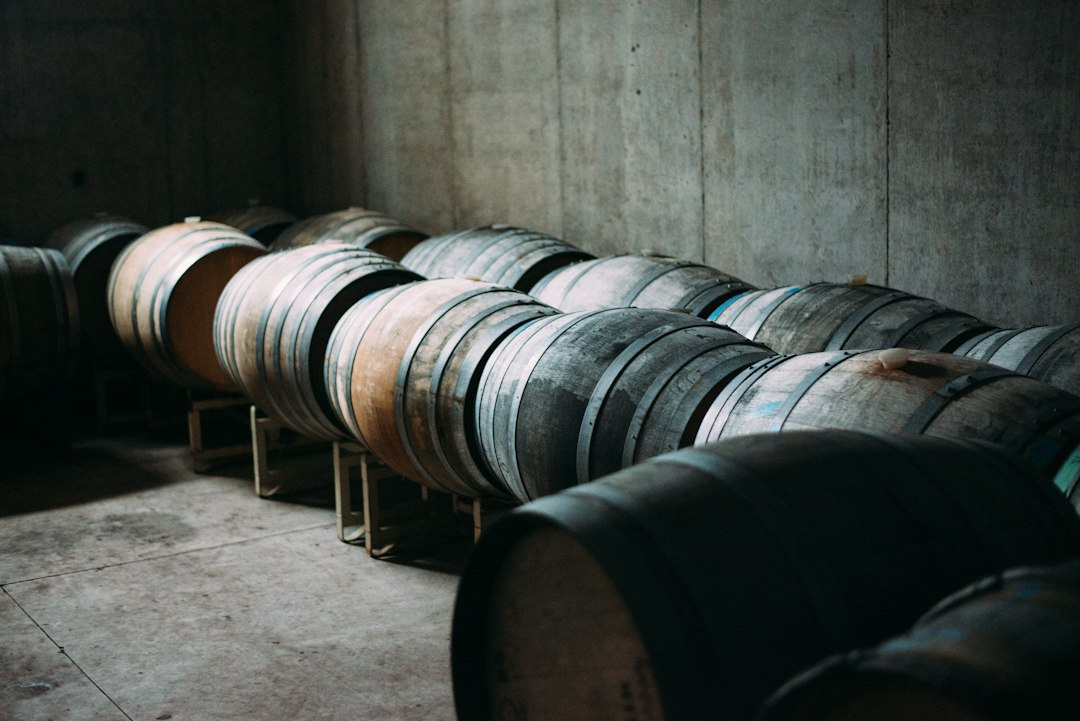
A single cask Japanese whisky is whisky drawn from one cask and bottled without being mixed with any other. That is the whole definition, and in Japan it is not a legal one. The Japan Spirits & Liqueurs Makers Association (日本洋酒酒造組合, JSLMA) describes the term in its glossary, but its labelling standard does not police it. So the words on the front of the bottle tell you less than the small print on the back: the cask number, the fill and bottling dates, the outturn, and who chose the cask.
This guide explains those details, why young Japanese distilleries sell whole casks, and what the price per bottle reflects, using the distilleries’ own Japanese-language announcements.
What “single cask” means in Japan, and who defines it
The industry glossary definition
The JSLMA’s Japanese-language glossary defines single cask whisky (シングルカスクウイスキー) in three short sentences. It is whisky matured in one cask and then bottled. It “directly reflects the individuality of the cask.” It is also called single barrel. The entry adds that every single cask is a limited release, “a premium bottle of at most a few hundred.”
That last line matters. A single cask is not a style but a physical limit: when the cask is empty, the whisky is gone, and the next cask in the row will not taste the same.
What the labelling standard does and does not cover
The JSLMA’s 2021 standard for labelling whisky as Japanese whisky sets requirements for raw materials, distillation in Japan, at least three years of aging in wooden casks in Japan, and bottling in Japan. We covered those rules in detail in what is Japanese whisky. The standard is voluntary, and it is about the words “Japanese whisky.” It does not set a separate test for “single cask,” “single barrel,” or “private cask.”
So the label is the producer’s claim, and it is only as strong as the detail printed. “Single cask” with no cask number asks for trust. A cask number, cask type, dates and bottle count give you something to check against the distillery’s own announcement. If the bottle also says “Japanese whisky,” check that the rest of the label supports it, as we explain in how to spot fake Japanese whisky.
Single cask is not the same as cask strength
Many single cask bottlings are also bottled at cask strength, so the two terms get blurred. They describe different things. Single cask is about how many casks went into the bottle. Cask strength is about whether water was added. The JSLMA glossary notes that strength changes from cask to cask during maturation, so even spirit distilled on the same day can come out at different strengths.
Shizuoka Distillery (静岡蒸溜所) shows the difference clearly. Under its 2026 Private Cask Archive, the buyer chooses the bottling strength printed on the label. The whisky is still from one cask, but it may not be at cask strength. If the number matters to you, read our explainer on cask strength Japanese whisky before you assume one term implies the other.
How to read a single cask label, line by line
Cask number
The cask number is the distillery’s inventory ID. It makes the bottle traceable. When the department store Isetan (伊勢丹) bought a cask from Kanosuke Distillery (嘉之助蒸溜所) in 2022, the cask number, 19163, became the product name. Cask numbers are often not sequential across years or cask types, so do not read a low number as “older” or a high one as “newer.”
Cask type
This is the single biggest influence you can read off the label. A single cask has no blending to soften the wood, so a bourbon barrel, a sherry butt and a wine cask will each come through more plainly than in a blended single malt. Shizuoka’s Archive offered bourbon barrels, wine casks and sherry butts. The distillery describes the wine and sherry options as types that are “difficult to mature.” Our guide to Japanese whisky cask types explains what each wood tends to contribute.
Distillation date, bottling date and age
Two dates let you work out the age yourself, and they are more precise than an age statement. Kanosuke’s HIOKI Pot Still Single Cask 2026 states a distillation date of May 2021 and an age of four years and seven months. In a climate as warm as Kagoshima’s, that matters more than it would in Scotland. Kanosuke says the wide temperature swings of Hioki (日置) speed up maturation, and it calls five years its “first maturity,” the point when, in the distillery’s words, the spirit shows its character “most vividly and most energetically.”
Outturn: the number of bottles
The bottle count tells you how much whisky survived maturation, and it is the most useful number for valuing the release. Kanosuke guarantees 198 bottles of 700ml from each five-year bourbon barrel in its Owner’s Cask 2026 program. Shizuoka’s Archive guarantees 120 to 240 bottles depending on the cask, and delivers the actual count if a cask yields more. A minimum committed before the cask is opened is a good sign of transparency.
Who selected the cask
“Selected by,” “bottled for,” or a retailer’s name tells you whose judgment you are buying: the distillery, a shop, a bar, a TV program or a private owner. The label rarely says why that cask beat its neighbors. Where the producer publishes the reason, read it.
Why Japanese craft distilleries sell whole casks
Shizuoka and the private cask model
Shizuoka Distillery received its whisky license on September 28, 2016. According to the company, it was the first in Japan to offer a private cask that anyone could reserve and buy whole, and it has received applications for more than 2,000 casks. The distillery also says the model was later adopted by many of the new distilleries that opened across Japan.
Founder Taikan Nakamura (中村大航) framed the 2026 Archive, which offers casks already aged six to nine years, as a way for buyers to “feel” a decade of trial and error through the spirit itself. He describes the purchase as an experience as much as a product: “to taste the maturation, and finish a cask you chose yourself as a single cask.”
The Archive also shows why individual casks are worth tasting. Shizuoka runs two stills with very different characters. Still W is fired directly by wood, a method the company says it revived from more than 200 years ago. Still K is a 1950s Japanese-made pot still moved from the former Karuizawa distillery, the plant we profile in our Karuizawa distillery guide. Owners receive three to five samples of the same type of whisky, matched for age, still, malt and cask type, and the distillery states plainly that “each cask differs in aroma and flavor.” Our Shizuoka distillery guide covers the stills and the Japanese barley program in more depth.
Kanosuke and the idea of a cask as a record
Kanosuke’s approach is less about choosing and more about marking a moment. The distillery was founded in 2017 by Yoshitsugu Komasa (小正芳嗣), fourth generation of a shochu family. It traces its roots to Mellow Kozuru (メローコヅル), a cask-aged rice shochu launched in 1957 by his grandfather, Kanosuke Komasa (小正嘉之助). The grandfather’s dream, as the company tells it, was to carry Kagoshima’s distilling culture to the world from “the place with the most beautiful sunset in Japan.”
The Owner’s Cask 2026 program offered 10 bourbon barrels, unpeated and peated, each aged five years or more. Applicants wrote Kanosuke a message about why they wanted a cask, and winners were drawn by lottery. The distillery pitched the casks for life milestones and anniversaries; labels can carry the owner’s name, and the barrel head stamped with the cask number ships with the bottles.
The HIOKI Pot Still Single Cask 2026 tells a second family story. It was distilled at Hioki Distillery (日置蒸溜蔵), the sister shochu house, from unmalted barley and malt, inspired by Irish pot still whiskey. It was matured in a recharred cask that once held Mellow Kozuru, inside a semi-underground racked warehouse built about 40 years ago by Kanosuke Komasa. A single cask is the clearest way to show that lineage, because nothing else in the bottle dilutes it. See our Kanosuke distillery guide for the full background.
What this means for the drinker
The common thread is that Japanese distilleries use single casks to make one choice visible: a still, a wood, a warehouse, an age they consider a peak. A standard single malt is built to taste the same every year; a single cask is one moment in a distillery’s life. To understand a young distillery, its single casks often reveal more than its core range. If you want consistency, they are the wrong bottle.
Comparing recent Japanese single cask releases
The table below uses figures published by the distilleries and the retailer. Per-bottle prices for whole casks are our own division of the cask price by the guaranteed bottle count.
| Release | Who chose the cask | Age and strength | Bottles and price |
|---|---|---|---|
| Kanosuke Owner’s Cask 2026 | Distillery offers the cask; owner chosen by lottery | 5 years or more, about 58 to 60% | 198 bottles; 4,356,000 to 4,554,000 yen per cask (about 22,000 to 23,000 yen a bottle) |
| Shizuoka Private Cask Archive | Owner tastes 3 to 5 samples and picks one | 6 to 9 years; owner sets bottling strength | 120 to 240 bottles minimum; 2,990,000 to 7,770,000 yen per cask |
| Kanosuke Isetan cask 19163 (2022) | Department store buyer, after tasting several casks | About 3.5 years, cask strength | 120 bottles; 26,400 yen each |
| Kanosuke HIOKI Pot Still Single Cask 2026 | Distillery, with a TV program tie-in | 4 years 7 months, 65% | Bottle count not published; 22,000 yen each |
Two things stand out. A whole Kanosuke cask works out close to the price of its retail single casks, so owners pay for the personal label and experience, not a discount. And Shizuoka’s prices climb with age and with sherry and wine casks, matching the distillery’s comment that those casks are harder to mature.
Store picks, private casks and the secondary market
Retailer and bar casks
The Isetan release is a good model of a store pick done well. Its buyer visited the distillery and tasted several unpeated spirits aged three and a half years in bourbon barrels. The store then published why it chose cask 19163: it wanted a cask that beginners and experienced drinkers could both enjoy, with a balance of vanilla and wood. That is the buyer’s description, not ours, and it is exactly the kind of reasoning a label should point you to. We have covered similar picks, including a Kanosuke cask bottled for one Gifu retailer and Cask & Forest’s single casks from Nagahama and Hishida.
Distillery series
Distillery-run numbered lines, such as the one we reported in Ontake launches its Kakejiku single cask series, are the easiest single casks to verify, because each one is announced.
Resale restrictions
Kanosuke’s terms bar buying an owner’s cask for resale, except by-the-glass pouring in bars. Private-cask bottles still reach auctions, where the private label is all a buyer has to go on. Read our auction buying guide before bidding on one.
Where to buy single cask Japanese whisky
In Japan. Most single casks sell by lottery or first-come online sales through distilleries, department stores and specialist shops, and many ship only within Japan, as Kanosuke’s Owner’s Cask terms state. Travelers do best at distillery shops and Tokyo specialists. Our Tokyo buying guide lists where to start.
In the US. Single casks reach the US mainly through importers’ allocations and retailer picks, in small numbers. Availability varies by state. Our US buying guide explains which shops tend to carry limited Japanese bottlings.
In the UK and EU. Specialists list Japanese single casks occasionally. Check that the listing gives the cask number and outturn, and compare the price with the Japanese launch price.
Ordering from Japan. If you are thinking of buying a Japan-only cask through a proxy service, read importing Japanese whisky from Japan first. Spirits shipping rules differ sharply by country.
FAQ
Q: Is single cask Japanese whisky better than a regular single malt?
A: Not automatically. A single cask shows one cask’s character with nothing blended in, so it can be more distinctive, but it can also be less balanced. A standard single malt is blended from many casks to be consistent. Choose a single cask when you want to see a specific still, wood or age, not when you want a guaranteed profile.
Q: Does “single cask” on a Japanese label have a legal definition?
A: No. The JSLMA glossary defines it as whisky matured in one cask and bottled, but the 2021 labelling standard regulates the words “Japanese whisky,” not “single cask.” Trust the bottles that print the cask number, cask type, dates and bottle count, because those details can be checked against the producer’s announcement.
Q: Why are single cask bottle counts so low?
A: One cask holds a fixed volume, and some of it evaporates during aging. Kanosuke guarantees 198 bottles from a five-year bourbon barrel, while Shizuoka guarantees 120 to 240 bottles depending on cask size and type. When the cask is empty, the release ends, which is why most single casks sell by lottery.
Q: Can I buy a whole cask from a Japanese distillery if I live abroad?
A: Usually it is difficult. Kanosuke’s Owner’s Cask 2026 terms state that delivery is within Japan only and that overseas shipping is not offered. Check each program’s terms before applying, and plan for local import rules and taxes if a distillery does agree to ship abroad through a partner.
Sources
- Japan Spirits & Liqueurs Makers Association, glossary entry “Single cask whisky” (Japanese) — https://www.yoshu.or.jp/pages/94/
- Japan Spirits & Liqueurs Makers Association, glossary entries “Cask strength” and “Marriage” (Japanese) — https://www.yoshu.or.jp/pages/93/
- Japan Spirits & Liqueurs Makers Association, “Standards for labeling whisky as Japanese whisky” (Japanese) — https://www.yoshu.or.jp/pages/151/
- Gaiaflow Shizuoka Distillery, “Private Cask Archive” 10th anniversary release, PR Times, September 16, 2026 (Japanese) — https://prtimes.jp/main/html/rd/p/000000008.000160191.html
- Komasa Kanosuke Distillery, “KANOSUKE OWNER’S CASK 2026,” Kyodo News PR Wire, February 9, 2026 (Japanese) — https://kyodonewsprwire.jp/release/202602093783
- Komasa Kanosuke Distillery, “KANOSUKE x Whiskypedia HIOKI POT STILL SINGLE CASK 2026,” Kyodo News PR Wire, May 7, 2026 (Japanese) — https://kyodonewsprwire.jp/release/202605018485
- Gourmet Watch (Impress), “Kanosuke x Isetan single cask whisky, 120 bottles,” October 26, 2022 (Japanese) — https://gourmet.watch.impress.co.jp/docs/news/1450643.html