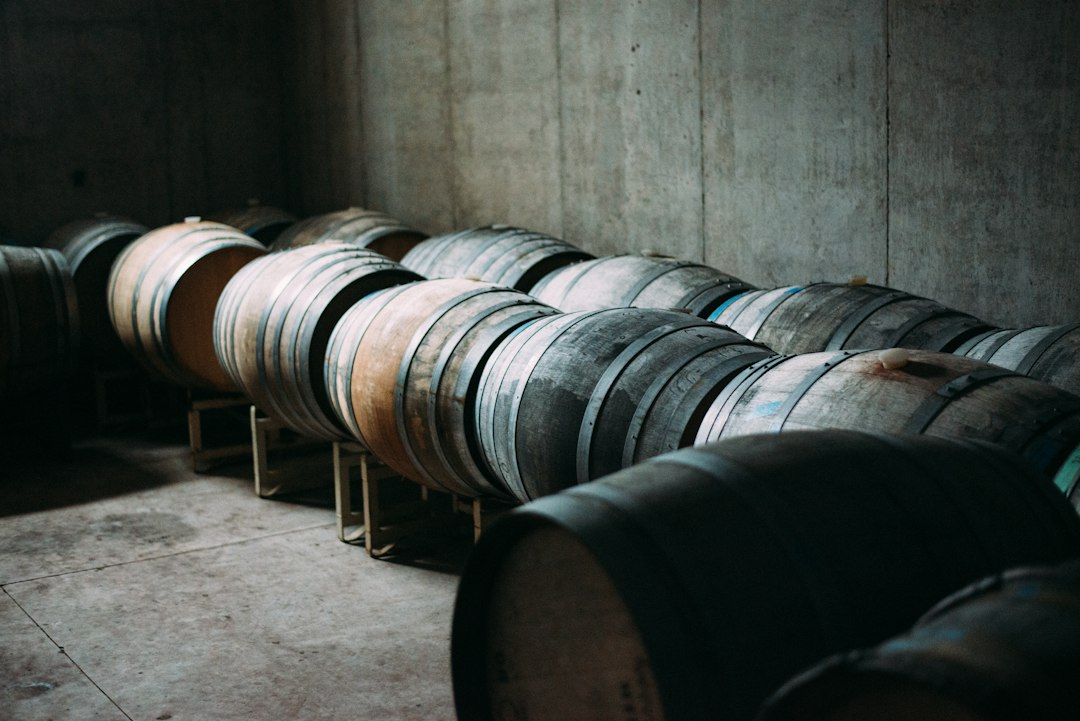
Yamaga Distillery (山鹿蒸溜所) in Kumamoto Prefecture has spent about 500 million yen on a new warehouse that more than doubles the amount of whisky it can mature, according to a report in the Nikkei (日本経済新聞) on October 2, 2026. The building, called the Kikuka (菊鹿) warehouse after the district of Yamaga city where it stands, was completed this summer. For a distillery that only released its first single malt in October 2025, the expansion is a clear bet on future volume. It also shows that Kyushu, Japan’s southernmost main island, is turning into a whisky region with real money behind it.
The Nikkei describes the investment as part of a broader cluster forming across Kyushu, with distillery projects also continuing in Oita (大分) and Kagoshima (鹿児島) prefectures. Japanese whisky has long been associated with Hokkaido, the Japanese Alps and the Kyoto–Osaka region. A growing share of the new money is now going south.
What the new warehouse holds
According to the Nikkei, the Kikuka warehouse has room for 3,360 casks of 200 liters and 840 casks of 500 liters. Added to Yamaga’s existing storage, that more than doubles the distillery’s maturation capacity, measured in 700ml bottle equivalents. The full Nikkei article is behind a paywall, and we have not been able to confirm the exact bottle figure, so we are not quoting one here.
The cask counts alone tell part of the story. Our own arithmetic puts the nominal volume of the new racks at roughly 1.09 million liters: 672,000 liters in the 200-liter size and 420,000 liters in the 500-liter size. That is gross cask capacity, not the amount of finished whisky the distillery will bottle. Spirit usually goes into cask at a higher strength than it is bottled at, and every cask loses some volume to evaporation each year. Still, it gives a sense of scale for a craft producer that opened its doors less than five years ago.
The mix of sizes matters too. A 200-liter cask is roughly the size of a standard American oak barrel, the most common cask in Japanese whisky. A 500-liter cask is a much larger vessel, typical of formats such as sherry butts and puncheons. Smaller casks put more spirit in contact with wood and tend to mature it faster; larger ones work more slowly and are often chosen for long aging. The Nikkei does not say which cask types Yamaga plans to fill, and we are not guessing. For background on how each format shapes flavor, see our guide to Japanese whisky cask types.
Where Yamaga stands today
Yamaga Distillery is Kumamoto’s only whisky distillery. Its building was completed on November 6, 2021, in the Kao (鹿央) district of Yamaga city, and its first single malt, Yamaga The First, went on sale in October 2025. That release won a Gold award at the Tokyo Whisky & Spirits Competition (TWSC) 2026, which the company announced in May. Since then the distillery has added a non-peated 2026 Edition (we covered the launch here) and a peated version. On November 21 it will hold its fifth distillery festival, where it plans to release BB232, its first heavily peated bottling. Our festival report has the details.
The house style the company describes is “elegant” and “fruity and creamy,” and it links that profile to the Yamaga Toro Odori (山鹿灯籠踊り), the city’s lantern dance. On its website the distillery says its goal is a single malt that captivates people around the world. Building a second warehouse is how a small producer makes room to work toward that goal.
Why this matters
For a young Japanese distillery, warehouse space is often the real limit on growth, more than stills or staff. Under the Japan Spirits & Liqueurs Makers Association’s labeling standard, a whisky sold as “Japanese whisky” must be aged for at least three years in wooden casks in Japan. (Our explainer on what counts as Japanese whisky covers the full rules.) Every cask filled today stays put for years before it earns any revenue. If there is no room to store new spirit, a distillery has to slow its stills, however strong demand is.
By doubling capacity, Yamaga is choosing to keep distilling at a higher rate now so it has more and older stock later. That matters for two reasons. First, it points to future releases with longer aging, possibly including age statements. These are still rare among Japan’s newer distilleries, and our guide to Japanese whisky age statements explains why. Second, it shows how the industry is responding to the stock shortages of the past 15 years. The big producers ran short of aged whisky because they cut production in the 2000s and could not rebuild inventory quickly. We explain that history in why Japanese whisky ran short. New entrants such as Yamaga are building stock early instead.
The regional angle is just as significant. Kyushu now has a dense map of whisky producers. Kagoshima alone has six distilleries that recently launched a joint whisky trail for visitors, including Kanosuke and Hombo Shuzo’s Mars Tsunuki. In Oita, the Kuju distillery has started building a local following with releases such as its prefecture-only highball whisky. Hombo Shuzo (本坊酒造), the company behind Mars Whisky, provided technical assistance when Yamaga brought out its first single malt. That gives Kyushu something like the shared know-how that made Speyside or Islay recognizable regions. Warm, humid summers in the south are generally associated with faster cask interaction and higher evaporation losses than in Hokkaido or the mountains of Nagano. Over time, more maturation capacity in Kyushu could give drinkers a clearer sense of what “southern Japanese” whisky tastes like.
For readers outside Japan
There is nothing new to buy as a result of this announcement. The casks going into the Kikuka warehouse now cannot be sold as Japanese whisky for at least three years, so the payoff is a story for the end of the decade. Yamaga’s current releases are mostly sold through domestic channels, and we are not aware of an official importer in the US, UK, Canada or Australia. If you see Yamaga bottles abroad, they have most likely come through grey-market resellers, so check the label and the seller carefully. Our guide to spotting fake Japanese whisky covers the warning signs.
If you want to taste Kyushu whisky now, Kanosuke and the Mars brands have wider international distribution than Yamaga. Specialist retailers are the place to look, and our country guides for the US and the UK list the shops we track. Travelers can visit Yamaga itself. It sits north of Kumamoto city, and the November 21 festival is the easiest time to go, with shuttle buses from central Kumamoto. Check the distillery’s website for visitor and shop schedules before you travel.
Source: Nikkei (Japanese); Yamaga Distillery via PR TIMES (Japanese); Yamaga Distillery (Japanese/English)