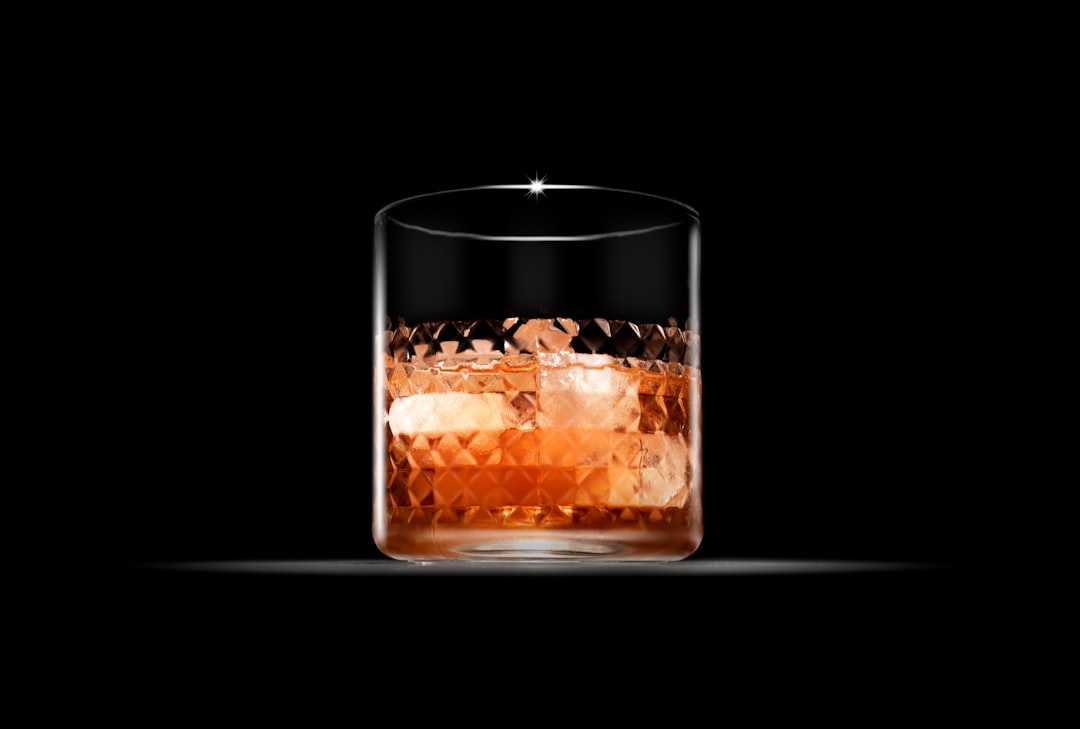
Nikka From the Barrel is a blended whisky sold in a stubby 500 ml square bottle at 51.4% ABV (102.8 proof) — a package and a proof point that both break from what most blended whisky looks like on a shelf. It is not a single malt, it carries no age statement, and it costs a fraction of what Nikka’s own single malts from Yoichi and Miyagikyo now sell for. It has also won more international awards, and drawn more praise from critics who usually reserve their attention for single malts, than most blends ever do. None of that is a taste claim. It is a set of facts about how this whisky is made, what it costs, and why a blend without a famous distillery name attached to it built the reputation it has — and that is what this guide covers.
What is actually in the bottle
From the Barrel blends malt whisky from both of Nikka’s malt distilleries, Yoichi (余市) in Hokkaido and Miyagikyo (宮城峡) near Sendai, with Coffey grain whisky distilled at Miyagikyo on Nikka’s continuous Coffey stills. According to accounts of the blend’s construction, Yoichi’s malt supplies the weight and power that forms the backbone of the blend, while Miyagikyo’s malt contributes a lighter, more floral character; the Coffey grain whisky rounds out the base. Rather than simply mixing these components and bottling the result, Nikka re-casks the finished blend and lets it rest for several more months in a process called marrying, before bottling with minimal dilution — a step most blended whisky skips once the malt and grain components are combined.
That minimal-dilution approach is the reason From the Barrel sits at 51.4% ABV instead of the 40–43% that most blended whisky is cut down to. It is not cask strength in the strict sense — the components are batched and married before bottling — but it is close enough to it that reviewers routinely compare it to cask-strength bourbon rather than to other blended Japanese whisky. Both source distilleries are worth understanding on their own, since the contrast between them is what the blend is built on: see our guides to Yoichi distillery and Miyagikyo distillery for how each site’s climate and stills shape its malt.
Why 51.4% is not an arbitrary number
The figure traces back to British proof, the old UK system for measuring spirit strength, in which 100 degrees proof equals 57.1% ABV. Ninety degrees of British proof — a strength associated with cask-strength and barrel-proof bottlings — works out to 51.4% ABV, which is the number Nikka landed on when it set out to bottle a whisky close to what a blender would taste straight from the cask, without cutting it down to a standard retail strength. The choice signals what the product is trying to be: not a smoothed-out, diluted blend built for wide appeal, but something closer to the concentrated, higher-proof whisky that blenders themselves work with before water is added for a conventional bottling.
The 500 ml bottle and the idea behind it
From the Barrel launched on October 1, 1985, an idea credited to Takeshi Taketsuru (竹鶴威), Nikka’s chief blender at the time and a nephew of company founder Masataka Taketsuru (竹鶴政孝). According to accounts of the brand’s history, Takeshi Taketsuru wanted ordinary drinkers to be able to taste something closer to what a blender tastes straight from the barrel in the lab, rather than a whisky diluted for general release. The bottle itself was designed by Taku Sato (佐藤卓), then a designer in his twenties who went on to a prominent career in Japanese product design. Sato’s brief was built around a specific idea: a squat, dense shape meant to look like a solid block even in a small 500 ml format, described in Japanese as “a small block of whisky” (ウイスキーの小さな塊) — a package that visually signals concentration and weight rather than the tall, slender profile typical of most whisky bottles.
How a blended whisky earned a reputation usually reserved for single malts
Single malts tend to dominate awards conversations and collector attention, in Japan and elsewhere, which makes From the Barrel’s record notable. Official results from the World Whiskies Awards list it as a category winner for blended Japanese whisky in multiple years, including 2017, and it has placed at other major spirits competitions in the years since its 1985 launch. Its highest-profile English-language recognition came from Whiskey Advocate, the US spirits publication, which named it the top whiskey of its 2018 annual ranking across all whiskey categories, not just Japanese or blended whisky — a rare result for a sub-$100 blend competing against far more expensive single malts.
The likeliest explanation is structural rather than mysterious: a whisky built from two malt distilleries with genuinely different characters, plus grain whisky, bottled close to cask strength with minimal dilution, gives blenders and critics more to evaluate than a whisky diluted down to a uniform 40% is generally expected to offer. Whether that adds up to better quality is not a claim this guide is making — but it is a specific, structural reason critics keep singling out a blend that costs less than most of Japan’s well-known single malts.
What actually happened to the price
From the Barrel sold for roughly ¥1,000–2,000 through the 2000s and early 2010s before demand for Japanese whisky began pushing prices up across the category. The most recent Japanese price move came in a revision Asahi Group’s beer and spirits division announced on December 19, 2023, effective for shipments from April 1, 2024: From the Barrel’s 500 ml suggested retail price rose from ¥2,800 to ¥3,200 (tax excluded), a roughly 14% increase, as part of a wider round of price rises covering 17 brands and 68 products across Nikka’s domestic whisky lineup. Nikka’s parent company cited rising costs for raw materials and logistics, plus continued investment in production capacity at the Yoichi and Miyagikyo distilleries, as its reasons — the same pattern of aged-stock investment driving price increases across the industry that we cover in our explainer on the Japanese whisky shortage. In the same revision, Nikka’s single malts Yoichi and Miyagikyo rose far more steeply, from ¥4,950 to ¥7,700 — meaning From the Barrel’s increase was proportionally smaller and left it costing well under half of what Nikka’s own single malts now list for domestically.
US retail pricing for a 750 ml bottle typically runs between $70 and $85 as of 2026, a price that has moved up over the past decade but remains well below the $150–$250 range that age-stated Japanese single malts like Yamazaki 12 now command. For the broader pattern behind that gap between blends and age-stated single malts, see our guide to why Japanese whisky costs what it does.
Availability at home versus overseas
From the Barrel’s position in the US and UK markets is unusual for a well-regarded Japanese whisky: it is one of the more consistently stockable bottles in the category, carried as a standing item by large chain retailers rather than sold through the lottery-style allocation systems that govern most age-stated Yamazaki, Hakushu, and Hibiki releases. That is a direct result of it never having carried an age statement to begin with — Nikka is not managing a fixed pool of aged stock against demand the way it is for single malts, so there is no structural reason to ration it the way allocated age-stated bottles are rationed.
Domestically in Japan, coverage of the brand describes it as harder to find at its posted retail price than the price list alone would suggest, with retailers often selling through allocations quickly even though it is not formally a limited release. That gap between a stable manufacturer price and inconsistent retail availability is common across Japanese whisky and is covered in more general terms in our guide to Japanese whisky worth buying under $100. For buyers outside Japan, the practical takeaway is that From the Barrel is comparatively easy to find at a stable price relative to its Suntory counterparts — a structural advantage of being a no-age-statement blend rather than evidence that Nikka has surplus stock to spare.
How Nikka From the Barrel compares with what else is on the shelf
Buyers deciding whether to spend $70–$85 on From the Barrel are usually also weighing it against Suntory’s Yamazaki 12, Hibiki Harmony, and Hakushu — three bottles built on different structural promises. We cover Yamazaki 12’s own price logic in a separate guide, and Hibiki Harmony’s in another.
| Bottle | Age statement | Typical US price | What it is built on |
|---|---|---|---|
| Nikka From the Barrel | No | $70–$85 | Yoichi + Miyagikyo malt, Miyagikyo Coffey grain, 51.4% ABV, minimal dilution |
| Hakushu (Distiller’s Reserve) | No | $70–$100 | Single distillery, no minimum-age stock commitment |
| Hibiki Harmony | No | $90–$130 | Malt (Yamazaki, Hakushu) + grain (Chita), no age commitment |
| Yamazaki 12 | Yes, 12 years | $150–$250 | Single distillery, 3 cask types, guaranteed minimum age |
From the Barrel is the least expensive bottle in that group and the only one bottled well above standard proof. That combination — lowest price, highest ABV, no age statement, two distilleries plus grain whisky rather than one — is a different value proposition from any of the other three rather than a cheaper version of them. Buyers who want more alcohol and flavor concentration per dollar, and who are not specifically shopping for a single-distillery pedigree or an age guarantee, are the audience the structural facts point toward.
What this means if you are deciding whether to buy it
Nikka From the Barrel is not priced low because it is a lesser product; it is priced low because it has never carried the age-statement commitment that drives Yamazaki 12’s cost, and because its manufacturer’s 2024 price increase was proportionally smaller than the increases applied to Nikka’s own single malts in the same announcement. What buyers are paying for is a specific construction: two distilleries with different characters, Coffey grain whisky, a marrying step, and bottling at close to cask strength rather than diluted down to a standard 40–43%. That combination has drawn award recognition, including a Whiskey Advocate top-whiskey ranking, that is unusual for a blend at this price. Buyers who want the reassurance of a minimum-age guarantee or a single-distillery pedigree are better served by Yamazaki 12 or a single malt from Yoichi or Miyagikyo directly. Buyers who want the highest proof and the most distinct construction for the money have a straightforward case for this bottle.
Q: Why is Nikka From the Barrel 51.4% ABV instead of the usual 40–43%?
A: The figure comes from British proof, where 90 degrees proof equals 51.4% ABV, close to cask-strength territory. Nikka bottles the blend with minimal dilution after re-casking and marrying the malt and grain components, aiming for something closer to what a blender tastes straight from the barrel than a whisky cut down to standard retail strength.
Q: Is Nikka From the Barrel a single malt?
A: No. It is a blended whisky combining malt whisky from both of Nikka’s malt distilleries, Yoichi and Miyagikyo, with Coffey grain whisky distilled at Miyagikyo. That two-distillery, malt-plus-grain construction is part of why reviewers treat it differently from a single malt despite its blended status and lower price.
Q: Why is Nikka From the Barrel easier to find than Yamazaki or Hibiki?
A: It carries no age statement, so Nikka is not managing a fixed, aging pool of stock against demand the way it does for age-stated single malts. That removes the structural reason to allocate or ration it, which is why large retail chains in the US and UK can stock it consistently rather than through lottery-style allocation systems.
Q: How much has Nikka From the Barrel’s price increased?
A: In Japan, Asahi Group’s December 2023 announcement raised the 500 ml suggested retail price from ¥2,800 to ¥3,200 (tax excluded) for shipments from April 2024, a roughly 14% increase, smaller proportionally than the increases applied to Nikka’s Yoichi and Miyagikyo single malts in the same announcement. US retail prices for a 750 ml bottle typically run $70–$85 as of 2026.
Sources
- Nissyoku Shimbun (日本食糧新聞), report on Asahi Group’s December 2023 price revision announcement for Nikka whisky, effective April 2024 (Japanese) — news.nissyoku.co.jp/news/oka20231219052919073
- Nikka Whisky, official product page for From the Barrel (Japanese) — nikka.com/products/blended/fromthebarrel/
- Nikka Whisky, official English brand page for From the Barrel — nikka.com/en/brands/fromthebarrel/
- Nikka Whisky, official awards page — nikka.com/en/story/awards/
- World Whiskies Awards, official 2017 category winner listing for Nikka From the Barrel, Blended Japanese Whisky — worldwhiskiesawards.com/winner-whisky/category-winner-10-world-whiskies-awards-2017
- Tanoshii Osake (たのしいお酒.jp), feature on From the Barrel’s cask-strength blending approach (Japanese) — tanoshiiosake.jp/6777