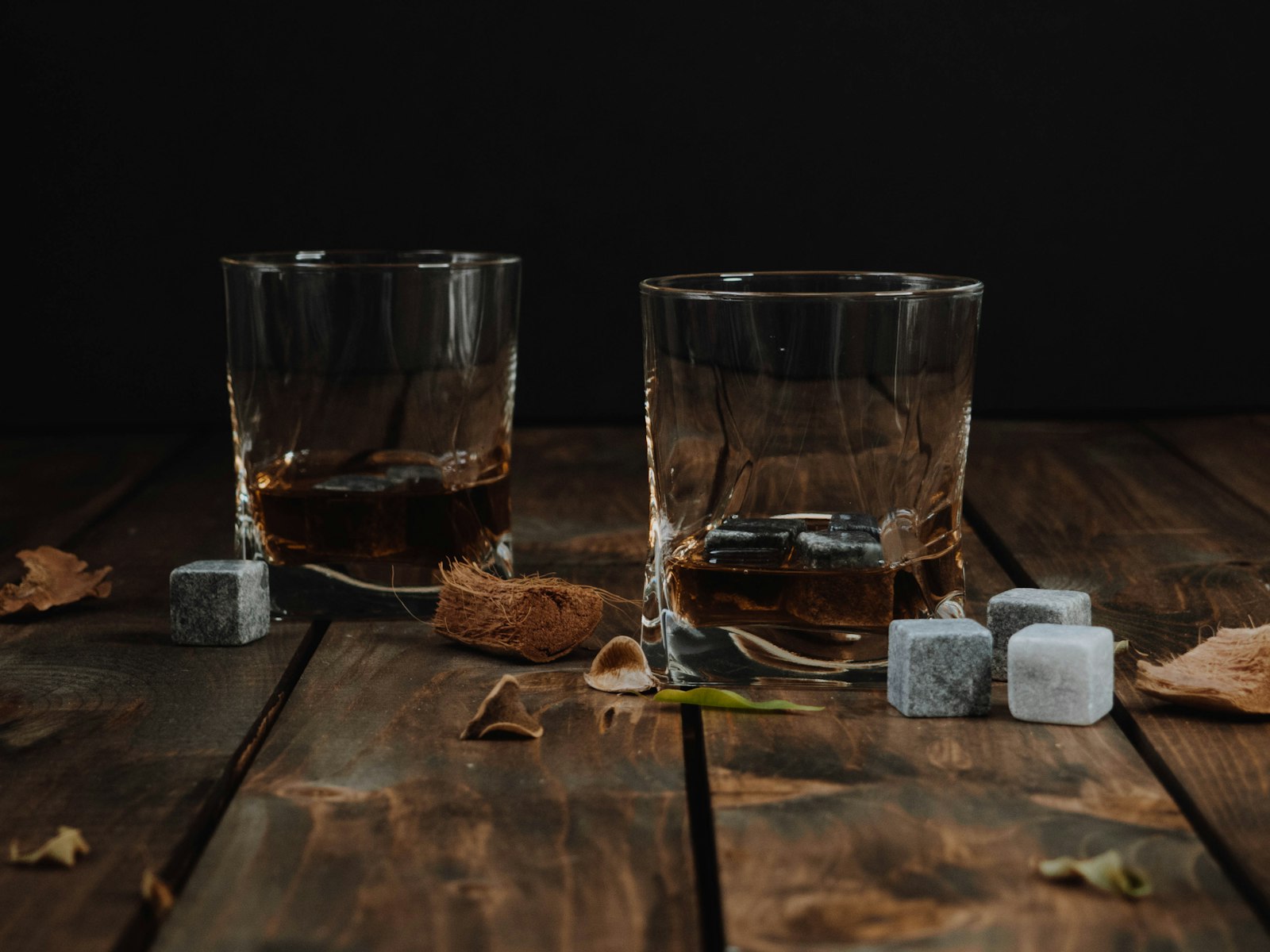
Yamazaki 18 Year Old is the bottle that sits between Suntory’s best-known single malt and its rarest. In Japan, its suggested retail price is now ¥67,100 including tax, about $430 or £315. In the US it usually sells for far more than that, and in Japan itself most people cannot buy it at list price at all. This guide does not score the whisky. It explains what Suntory says is in the bottle, why the company made it, and what the price buys.
Most English-language reviews of Yamazaki 18 lead with tasting notes and a score. That is useful, but it skips two questions buyers actually have. What does Suntory itself say this whisky is built from, beyond the “80% sherry” line repeated on retail pages? And why is the gap between the Japanese list price and the price on a US or UK shelf so wide? The answers come mostly from Suntory’s Japanese-language pages, which is where we went.
What Suntory says is in the bottle
Suntory’s Japanese product page describes Yamazaki 18 in one sentence: a full-bodied whisky built around malt aged at least 18 years in Spanish oak casks, then given a long, slow marrying period after blending (じっくりと後熟). The tagline is 奥行きのある、圧倒的な熟成感, which translates roughly as “depth, and an overwhelming sense of maturity.” It is bottled at 43% ABV in a 700ml bottle in Japan; export markets such as the US receive a 750ml bottle.
The same page says mizunara (ミズナラ), Japanese oak, is present too, but in the background. Suntory’s wording is that long-aged mizunara malt “lies hidden” in the blend, adding to its depth. Spanish oak leads; mizunara supports. That is a different emphasis from the way many English reviews frame the bottle, as a showcase for Japanese oak.
The 80% sherry figure
Many retailers state that around 80% of Yamazaki 18 comes from sherry casks, with the rest from American oak and mizunara. We could not find that number in Suntory’s own Japanese material. The official description names Spanish oak as the core and mizunara as a supporting component, and gives no percentage. Treat the 80% figure as trade lore rather than a published recipe. The direction is consistent with Suntory’s description; the exact share is unconfirmed.
What Suntory’s tasting note says
We have not tasted this bottle for this guide, so the sensory description here is Suntory’s, not ours. The company lists the color as reddish amber. For aroma it names raisin, apricot and chocolate. On the palate it lists honey-like sweetness, a sweet-and-sour quality and spice, and for the finish ripe fruit, sweet-and-sour and a long, deep finish. It attributes the dried-fruit and roasted-chocolate character to Spanish oak. Independent reviewers in English broadly agree on dried fruit and dark chocolate, and most score it in the low 90s out of 100.
For background on how sherry-seasoned Spanish oak differs from American oak, see our guide to Japanese whisky cask types. For the Japanese oak side of the story, our explainer on mizunara oak covers why so few casks exist.
Why Suntory made an 18-year-old single malt
Yamazaki 18 only makes sense as part of a longer story, and Suntory tells that story in some detail in Japanese. The distillery itself dates to 1923, when founder Shinjiro Torii (鳥井信治郎) began building Japan’s first malt whisky distillery. On Suntory’s distillery blog, his belief is summed up as “good malt comes from good water, and good maturation is impossible without a good natural environment.” That conviction is why he surveyed sites around Japan before settling on Yamazaki (山崎), between Kyoto and Osaka. Our Yamazaki distillery guide covers the site in detail.
For six decades, Suntory made blends. The single malt came later, and it was a deliberate bet. According to Suntory’s Yamazaki Club history page, Keizo Saji (佐治敬三), Torii’s son and the company’s second master blender, decided in the early 1980s to create a single malt that could represent Japan. His reasoning, as Suntory records it, was that “as values diversify, single malts with strong character will be in demand.” He worked with chief blender Ken Sato (佐藤乾) for about two years. The result, launched on March 14, 1984, was the original Yamazaki, which later became Yamazaki 12.
One goal, three ages
Saji’s brief matters for the 18. Suntory says he wanted “a Japanese taste, different from a Scotch single malt,” and that the answer was a flavor in which “no single character stands out, and many malts blend and lift each other.” The 12-year-old was the first expression of that idea. The 18-year-old followed in 1992, and the 25-year-old in 1998, according to the same Suntory history.
Read that way, the 18 is not a separate concept. It is the same principle, a balanced blend of many Yamazaki malts, pushed further with older stock and with Spanish oak placed at the center. The 12 leans on American white oak for vanilla and ripe fruit, according to Suntory. The 18 shifts the weight to Spanish oak. The 25 adds a much larger share of very old mizunara. Each step changes which cask leads, not the underlying idea.
Spanish oak as a house tradition
Suntory treats Spanish oak as part of Yamazaki’s identity rather than a finish. On the page for its limited Yamazaki Refill Spanish Oak, released in Japan on November 24, 2026, the company describes Spanish oak casks as having “long supported the flavor of the whole Yamazaki brand.” That release uses only refilled Spanish oak to get a gentler result. The 18, by contrast, is where the company puts its long-aged Spanish oak stock in front. Our report on the Refill Spanish Oak release has the details.
What the price actually buys
Yamazaki 18’s list price in Japan is ¥61,000 before tax, or ¥67,100 with tax, as reported by Impress Gourmet Watch in October 2026. Suntory raised prices on Yamazaki, Hakushu and Hibiki from April 2026, citing packaging and procurement costs. Its April 2024 increase, the larger one that more than doubled the price of Yamazaki 25, did not list the 18 among its main items. A further round takes effect on April 1, 2027; Suntory’s release names the Yamazaki brand but does not give a new price for the 18, so we cannot confirm one. Our report on the April 2027 price rise has the full picture.
Here is how the 18 sits within the current Yamazaki range, using Suntory’s own descriptions and Japanese prices.
| Bottle | Age and strength | Lead cask, per Suntory | Japan list price (incl. tax) |
|---|---|---|---|
| Yamazaki 12 | 12 years, 43% | American white oak, with Spanish oak and mizunara | ¥17,600 |
| Yamazaki Refill Spanish Oak | No age statement, 48% | Refilled Spanish oak only | ¥29,700 |
| Yamazaki 18 | 18 years, 43% | Spanish oak, with long-aged mizunara | ¥67,100 |
| Yamazaki 25 | 25 years, 43% | Mizunara, Spanish oak and American oak | ¥456,500 |
Two things stand out. First, the jump from 12 to 18 is close to fourfold, for six extra years. Second, the 18 costs the same in Japan as Hibiki 21, Suntory’s blended flagship at a higher age; Impress lists both at ¥67,100. If you are choosing between the two, our Hibiki 21 guide explains how a blend of malt and grain differs from a single malt.
Why the price climbs with age
An 18-year age statement means the youngest whisky in the blend spent at least 18 years in wood. Suntory had to fill those casks in 2008 or earlier, long before the global boom in demand, and it cannot make more of them now. Every year in the warehouse also costs volume to evaporation, and the share lost compounds over time. That is the basic economics behind the price of every aged Japanese whisky, explained further in why Japanese whisky is so expensive and our guide to age statements.
List price and real price in Japan
In Japan, the list price is mostly theoretical. Retailers sell Yamazaki 18 through lotteries. In October 2026, Amazon Japan ran an invitation-only lottery at the full list price of ¥67,100, while third-party sellers on the same page listed it from ¥118,000 with shipping, according to Impress. Drugstore and supermarket chains run similar draws. Winning one is the only realistic route to the official price.
Where to buy Yamazaki 18
Outside Japan, Suntory’s list price does not set the shelf price. Importers, duty, currency and retail margins do, and allocation keeps supply thin.
United States
Major US retailers listed Yamazaki 18 at roughly $700 to $750 for a 750ml bottle when we checked in November 2026, often with limits per customer. That is well above a straight conversion of the Japanese price. Our guide to buying Japanese whisky in the US covers which retailers carry allocated Suntory bottles and how to get on their lists.
United Kingdom and Europe
In the UK, specialist shops such as The Whisky Exchange and Master of Malt stock Yamazaki 18 intermittently, typically in a 70cl bottle. Prices move with each shipment, so compare several shops before buying. Our UK buying guide lists the main specialists, most of which also ship within much of the EU.
In Japan
Visitors can try store lotteries, though most require a Japanese address or membership. Duty-free shops are worth checking, but they are not guaranteed to have stock. Our guides to buying whisky in Tokyo and Narita duty free explain the options. Do not plan on shipping a bottle home from a Japanese shop: many countries, including the US, restrict whisky sent by forwarding services, as our import guide explains.
Avoid fakes and scam sites
At this price, counterfeits and fraud follow. Suntory’s Japanese Yamazaki site currently carries a warning about fake websites that use its group names and product images, often promoted on social media with offers to sell whisky or invest in casks. Suntory says it has no connection to them. If a deal looks far below the market, assume it is not genuine. Our guide on how to spot fake Japanese whisky lists what to check.
Is Yamazaki 18 worth it?
It depends on what you are paying for. At the Japanese list price, Yamazaki 18 is a fairly priced, well-made aged single malt from Japan’s oldest malt distillery. It has the awards to match: Suntory notes that it won a trophy, the top prize in its category, at the International Spirits Challenge in 2012. At three times that price, you are paying mostly for scarcity.
The whisky is the same either way. Suntory’s description points to a Spanish oak-led, full-bodied malt with mizunara in support. If that profile appeals to you and the budget is there, the 18 delivers a style the 12 does not. If you mainly want to understand the Yamazaki house style, the 12 shows the house idea at a quarter of the price. For a bottle that leans on Spanish oak without the age premium, Suntory’s Refill Spanish Oak release, at ¥29,700 in Japan, is the closest alternative. Readers working to a budget can also start with our list of Japanese whisky under $200.
One more point for collectors: Suntory also releases a separate limited Yamazaki 18 Mizunara, bottled at 48%, which is matured only in Japanese oak. It is a different product from the standard 18 at 43%. Check the label strength before comparing prices, and see our auction guide if you are buying either bottle on the secondary market.
FAQ
Q: What casks is Yamazaki 18 aged in?
A: Suntory describes Yamazaki 18 as built around malt aged at least 18 years in Spanish oak casks, with long-aged mizunara malt in the background, then married further after blending. Retailers often say it is about 80% sherry cask, but Suntory’s Japanese product page does not publish a percentage.
Q: How much does Yamazaki 18 cost in Japan?
A: The suggested retail price is ¥61,000 before tax, or ¥67,100 including tax, for a 700ml bottle. In practice it is sold through lotteries at that price, while open-market listings in October 2026 started at around ¥118,000. A further Suntory price increase takes effect in April 2027.
Q: When was Yamazaki 18 first released?
A: Suntory released Yamazaki 18 in 1992, eight years after the original Yamazaki single malt launched in 1984. The 25-year-old followed in 1998. Suntory’s own history presents all three as expressions of one idea, a balanced single malt in which many different Yamazaki malts support each other.
Q: Is Yamazaki 18 better value than Hibiki 21?
A: In Japan both carry the same list price of ¥67,100, so the choice is about style rather than value. Yamazaki 18 is a single malt from one distillery, led by Spanish oak. Hibiki 21 is a blend of malt and grain whiskies from several Suntory distilleries, and its age statement is three years higher.
Sources
- Suntory, “ラインナップ|シングルモルトウイスキー山崎” (Japanese) — https://www.suntory.co.jp/whisky/yamazaki/product/index.html
- Suntory Whisky Distillery Blog, “シングルモルトウイスキー「山崎」の誕生と歩み” (Japanese) — https://www.suntory.co.jp/factory/blog-d/000127.html
- Suntory Yamazaki Club, “シングルモルトウイスキー「山崎」が生まれた日” (Japanese) — https://www.suntory.co.jp/whisky/yamazaki/yamazaki_club/012/
- Suntory, “山崎 リフィルスパニッシュオーク” (Japanese) — https://www.suntory.co.jp/whisky/yamazaki/limitedrs/
- Suntory, Yamazaki brand site, including the fake-website warning (Japanese) — https://www.suntory.co.jp/whisky/yamazaki/
- Suntory Holdings news release No.14499, April 2024 price revision (Japanese) — https://www.suntory.co.jp/news/article/14499.html
- Suntory Holdings news release No.14932, April 2026 price revision (Japanese) — https://www.suntory.co.jp/news/article/14932.html
- Impress Gourmet Watch, “シングルモルトウイスキー山崎18年、Amazonは”6万7100円”で抽選販売” (Japanese) — https://gourmet.watch.impress.co.jp/docs/news/2151301.html