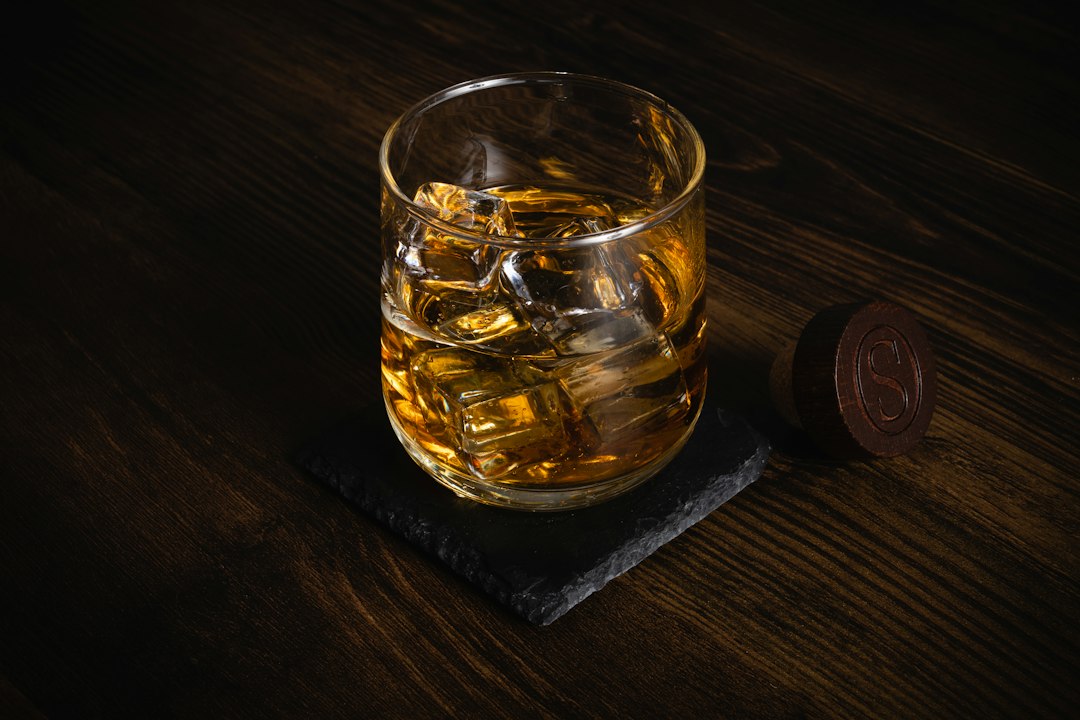
Under $50, Japanese whisky means blends. Suntory Toki, Nikka Days and Mars Iwai are the bottles that reliably sit at that price in the US and UK, while Suntory Kakubin and Black Nikka are the two blends Japan itself drinks every day. None of them is a single malt, and none was designed as a cut-price version of something grander. Each was built by its maker for a specific job, usually the highball.
This guide covers two things most “best under $50” lists skip. First, how to check whether a cheap bottle with Japanese branding was actually made in Japan. Second, what each of these whiskies was built to do, taken from the producers’ own Japanese-language accounts. We have not tasted these bottles for this guide, so it makes no flavor claims of its own.
What $50 buys in 2026
Age-stated single malts from Yamazaki (山崎) and Hakushu (白州) left this bracket years ago. Our breakdown of why Japanese whisky costs what it does covers the reasons: aged stock is scarce, and the makers price it accordingly. What remains under $50 is the blended tier from three long-established makers: Suntory, Nikka and Hombo Shuzo’s Mars Whisky.
That tier splits in two. Toki, Nikka Days and the Iwai range are exported and stocked by mainstream retailers abroad. Kakubin and Black Nikka are domestic staples. They appear abroad only through specialist importers, and their availability varies by market.
| Bottle | Maker and type | What it was built for | Typical price outside Japan |
|---|---|---|---|
| Suntory Toki | Suntory, blended (Hakushu, Yamazaki, Chita) | Highballs, launched for the US first | $35–45 / £30–38 |
| Nikka Days | Nikka, blended | An entry blend for Western shelves | $35–45 / £28–35 |
| Mars Iwai Tradition | Hombo Shuzo, blended | A tribute to engineer Kiichiro Iwai | $30–45 / £35–45 |
| Suntory Kakubin | Suntory, blended | Japan’s everyday whisky since 1937 | Limited export; easiest to buy in Japan |
| Black Nikka Clear | Nikka, blended, non-peated malt | Drinkers who avoid smoky whisky | Limited export; easiest to buy in Japan |
Prices are rounded ranges from our August 2026 check of US and UK retailer listings, and they move. Treat them as a guide, not a quote. Our under-$100 guide covers the next tier up, including Nikka Coffey Grain.
Check the label before the price
The cheapest corner of any whisky category attracts brands that borrow its look. Japanese whisky had a specific version of this problem: spirit distilled elsewhere, bottled in Japan and sold under Japanese names. We cover the history in our explainer on what counts as Japanese whisky. Under $50 is where that matters most, because it is where most sourced bottles compete.
Look for the JW logo
The Japan Spirits & Liqueurs Makers Association (JSLMA, 日本洋酒酒造組合) published its labeling standard in February 2021. According to the association’s own press release, the standard came fully into force in April 2024. On March 27, 2025, JSLMA added a logo: a barrel head with “JW” in the center, ringed by the words “JAPANESE WHISKY” and “JSLMA.” Member companies can put it on products that meet the standard.
The same release says JSLMA had 104 member companies at the time. It also says the association will seek a geographical indication (GI) designation to give the standard legal force, and will work on production labeling rules with the National Tax Agency. Until then, the standard binds members voluntarily. A missing logo is not proof a bottle fails, since packaging changes take time. A present logo is the clearest signal available on the shelf.
Read the back label, not the front
The words matter. “Japanese whisky” claims the standard. “Blended whisky” or plain “whisky” makes no claim about origin either way. “World blended whisky” openly tells you that some of the liquid came from outside Japan.
Hombo Shuzo’s own Japanese product listing shows the difference in practice. Its Single Malt Komagatake is tagged “Japanese whisky” (ジャパニーズウイスキー). Iwai Tradition is described simply as a “blended whisky.” That wording does not tell you what is in the blend. It does tell you which claim the maker is choosing to make, and that is worth knowing before you pay.
No distillery named is the real warning sign
Every bottle in our table names its maker, and every maker runs its own distilleries in Japan. A bottle with Japanese script, a mountain or a samurai on the front and no producer on the back deserves more scrutiny. Our label-reading guide walks through the checks step by step.
Kakubin: Shinjiro Torii’s answer to Scotch
Kakubin (角瓶, “square bottle”) went on sale on October 8, 1937. Suntory’s own Yamazaki distillery blog tells the story behind it. Founder Shinjiro Torii (鳥井信治郎) set out to make a Japanese whisky that would not lose to Scotch. He began building Yamazaki in 1923 and released Shirofuda (白札, “White Label”) in 1929, Japan’s first full-scale domestic whisky.
It flopped. Drinkers called it smoky, and it sat on shelves. Suntory’s account says Torii did not give up. He devoted himself to improving the spirit and the blend around one conviction: whisky made for the delicate Japanese palate. Kakubin was the result of that trial and error, and it sold from the day it launched.
A bottle that names itself
The tortoiseshell pattern on the glass took its cue from Satsuma kiriko (薩摩切子), the cut glass of southern Kyushu. It was a deliberate way to make a Scottish spirit look Japanese. The label has never actually said “Kakubin.” Since launch it has read only “Suntory Whisky.” Drinkers named it after the shape of the bottle, and the nickname became the product name. In 2016 Suntory moved to a more angular bottle closer to the 1937 original, with Torii’s signature in the center.
What it means for you
Suntory pitches the Kaku highball (角ハイボール) as a drink for food, especially fried dishes, with soda bringing out a sweet aroma and a dry finish. That is the clearest statement of what Japan’s everyday whisky is for. It is a mealtime drink, poured long. If you are in Japan, Kakubin is the bottle to try in its home setting. Our Tokyo buying guide covers where to find it.
Black Nikka: a non-peated blend from a founder who loved smoke
Black Nikka’s history is a story of a company deliberately softening its own founder’s signature. In a 2024 interview with Kodansha’s Gendai Business, Nikka marketing manager Junichi Ohashi of Asahi Breweries traced the brand’s line. Masataka Taketsuru (竹鶴政孝) created the first Black Nikka in 1956. In 1965 a new Black Nikka used Coffey grain whisky from Nikka’s continuous stills, and it became a major hit.
The Japanese whisky market grew until 1983, Ohashi said, then struggled from the late 1980s after tax changes. Nikka’s response came in 1997 with Black Nikka Clear Blend. Its defining choice was non-peated malt.
Why remove the smoke
Ohashi’s explanation is the most useful thing a budget buyer can know about this bottle. Nikka found that many people avoided whisky because of the smoky aroma peat gives. Taketsuru himself was particular about smoky flavor. He also, in Ohashi’s words, held a strong wish for as many Japanese people as possible to drink good whisky. The company chose the second commitment over the first.
The range then widened. Black Nikka Clear took its current name in 2011. Rich Blend, using sherry-cask malt, followed in 2013. Deep Blend, which brings back peat and adds new-cask influence, arrived in 2015.
The brand at 70
2026 marks Black Nikka’s 70th year. Japanese trade site Gourmet Watch reported that Asahi launched a canned Black Nikka Clear Highball on April 7, 2026, at 7% ABV. Black Nikka Special also moved to 700ml bottles and 1.8-liter PET bottles from April 14. If you want to understand the Coffey grain behind the 1965 relaunch, our Nikka Coffey Grain guide explains the still.
Toki and Nikka Days: the export-first blends
Toki is the bottle most US buyers meet first. Suntory launched it in the US in June 2016, before any formal domestic release. It blends malt from Hakushu and Yamazaki with grain whisky from Chita (知多). Chief Blender Shinji Fukuyo built it for the highball, giving the Chita grain equal weight with the malts rather than using it as filler. Our Toki review covers the launch and the price history in detail.
Toki’s price has barely moved from its $39.99 launch suggestion, which is unusual in this category. Without an age statement, Suntory can blend from whatever Hakushu, Yamazaki and Chita stock is available each year. That flexibility is why the bottle stays under $50 while age-stated Yamazaki has multiplied in price.
Nikka Days
Nikka Days fills the same slot for Nikka on Western shelves. We could not find a Japanese-language product page from Nikka for Days. We do not fill in brand philosophy we cannot read. What we can say is structural: it is a Nikka blend, it names its maker, and it competes on price directly with Toki.
Mars Iwai: a blend named after the engineer
The Iwai label honors a person, not a place. Hombo Shuzo’s Japanese history page explains who. Kiichiro Iwai (岩井喜一郎) was a leading authority on alcohol refining and a lecturer at Osaka Imperial University. Kurakichi Hombo, youngest of the brothers who built the family shochu business, studied stills under him. He later married Iwai’s daughter.
Iwai became an adviser to Hombo Shuzo in 1945. In 1949 the company started making whisky in Kagoshima under his guidance. In 1960 it moved whisky to a new Yamanashi plant with a still designed by Iwai, and launched the Mars name, chosen from public entries.
From a silent distillery
The timeline explains the blend. Hombo opened its Shinshu distillery at 798 meters in Nagano’s Central Alps in 1985. It stopped distilling in 1992 as demand collapsed and focused on bottling its stored stock. The highball boom of 2008 brought demand back. In 2010, Hombo released Iwai Tradition “with gratitude to Kiichiro Iwai.” Distilling resumed in 2011, after 19 years.
So Iwai Tradition was born before the stills restarted, built from what the company had kept. The first Iwai-type still ran until 2014 and is now on display at the distillery, renamed Mars Komagatake in 2024. In Japan, Hombo now lists Iwai Tradition as limited to its “Iwai no Kai” retailer group. For the distillery itself, see our Mars Shinshu guide and our profile of Hombo Shuzo.
Where to buy under $50 in the US, UK and EU
US: Toki and the Iwai range are the easiest to find at national chains and large independents. Nikka Days is stocked less consistently. Kakubin and Black Nikka are not core US releases. Ordering from Japan is not a workaround: shipping whisky into the US from Japanese retailers is largely blocked. See where to buy Japanese whisky in the US for the routes that work.
UK: Specialist online retailers carry Toki and Nikka Days, usually within the £28–38 band in our table. Our UK guide lists the main shops.
EU: Toki and Nikka Days are the widely stocked entry bottles. Excise duty differs by country, which moves the shelf price. Our Germany guide works through one market in detail.
Japan: Kakubin and Black Nikka are everyday supermarket bottles, sold in sizes up to multi-liter formats. If you are flying home, check our analysis of Narita duty free before assuming the airport is cheaper.
Which one should you pick
Start from how you will drink it, because that is how these bottles were designed. For highballs at home, Toki is the export bottle built for exactly that, and Kakubin is the original if you can find it. If smoky whisky has put you off before, Black Nikka Clear was created for you: Nikka removed the peat on purpose.
If you want a smaller family producer, Iwai carries Mars’s history in its name. If label certainty matters most, look for the JW logo or the words “Japanese whisky” on the back label, and make sure the bottle names a maker you can look up.
FAQ
Q: Is there any Japanese single malt under $50?
A: Not at standard 700ml or 750ml sizes from established distilleries in 2026. Age-stated malts from Yamazaki and Hakushu sell far above that. Smaller formats, such as the 200ml bottles some distilleries now release, lower the entry price, but you pay more per liter than for the blends in this guide.
Q: Does a cheap price mean a bottle is not really Japanese whisky?
A: No. Price alone tells you little. Kakubin and Black Nikka are inexpensive blends from long-established Japanese makers. What matters is the back label: whether it names a producer, whether it says “Japanese whisky,” and whether it carries the JSLMA’s JW logo, introduced in March 2025 for products that meet the standard.
Q: What is the difference between Kakubin and Toki?
A: Both are Suntory blends aimed at the highball. Kakubin dates to 1937 and is Japan’s domestic everyday whisky, sold mainly at home. Toki launched in the US in 2016 as an export-first bottle, blending Hakushu and Yamazaki malt with Chita grain. Toki is far easier to buy outside Japan.
Q: Why is Black Nikka Clear made without peat?
A: According to Nikka’s marketing team, the company found that many people avoided whisky because of the smoky aroma peat gives. When it launched Clear Blend in 1997, it chose non-peated malt so that more Japanese drinkers would try whisky, in line with founder Masataka Taketsuru’s wish to reach as many people as possible.
Sources
- Suntory, Yamazaki Distillery blog, “1937年10月8日” (Japanese) — https://www.suntory.co.jp/factory/blog-d/000069.html
- Hombo Shuzo, Mars Whisky history and product listing (Japanese) — https://www.hombo.co.jp/whisky/
- Japan Spirits & Liqueurs Makers Association, press release on the Japanese whisky logo, March 27, 2025 (Japanese) — https://kyodonewsprwire.jp/prwfile/release/M108620/202503266314/_prw_OR1fl_yK309yxx.pdf
- Gendai Business (Kodansha), “ニッカウヰスキーの「ブラックニッカ」には竹鶴政孝の哲学が散りばめられている!”, August 3, 2024 (Japanese) — https://gendai.media/articles/-/134325
- Gourmet Watch (Impress), “ブラックニッカ70周年、「ブラックニッカ クリアハイボール」4月7日発売”, February 25, 2026 (Japanese) — https://gourmet.watch.impress.co.jp/docs/news/2088183.html