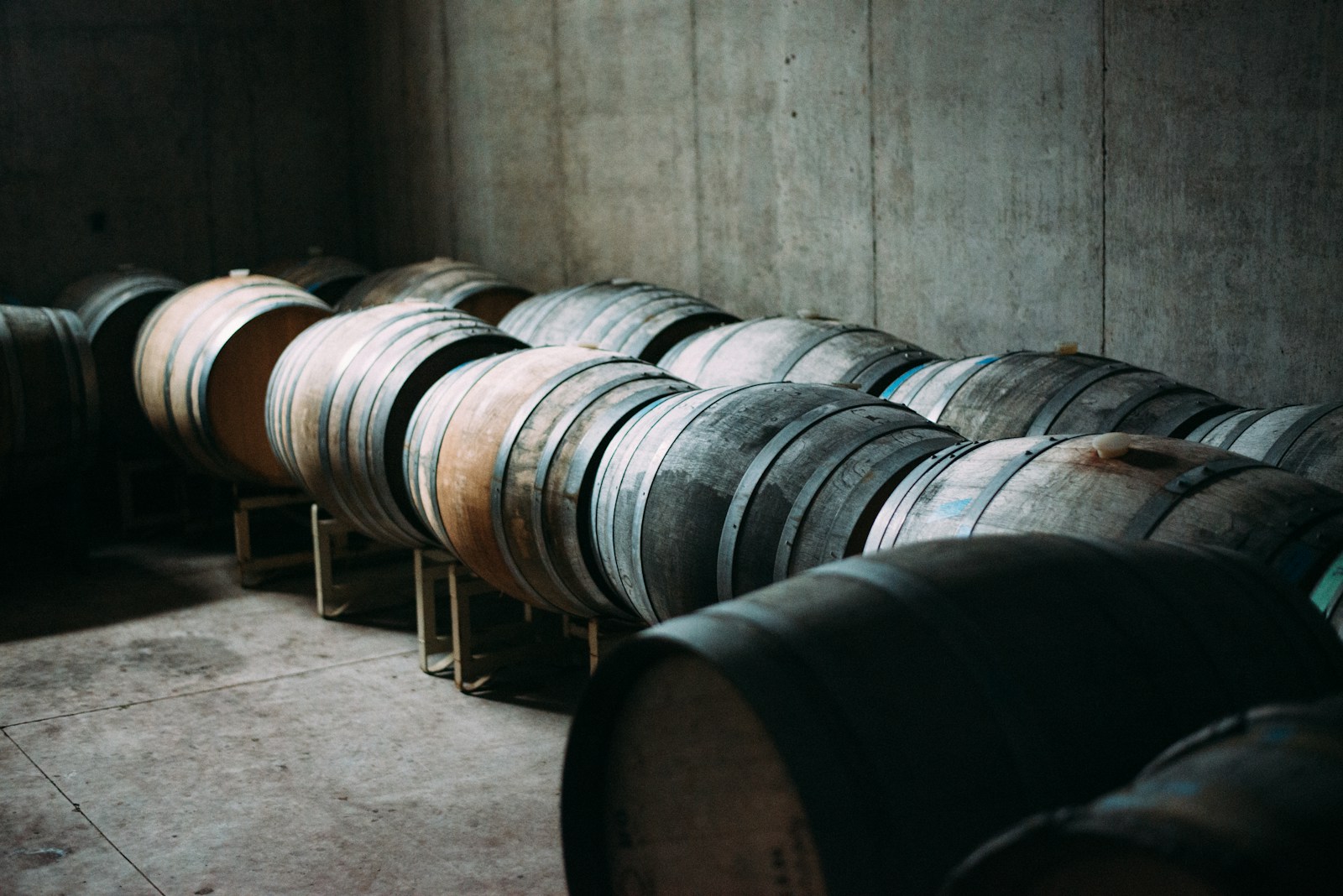
Cedarfield (シダーフィールド合同会社), the Tokyo-based Japanese arm of the Kentucky bourbon company IJW Whiskey, is building one of Japan’s largest whisky distilleries at the Chitose Rinku Industrial Park in Izumisawa (泉沢), Chitose (千歳), on the northern island of Hokkaido (北海道). The Hokkaido business outlet Real Economy reported on August 31, 2026 that large structures are now standing on the site and that distillation equipment is being delivered from the United States and elsewhere. Construction began in February 2025 and the building contract runs to the end of June 2027, so the opening itself will come after that date.
| Item | Detail (as reported) |
|---|---|
| Operator | Cedarfield LLC (Minato, Tokyo), an IJW Whiskey group company |
| Site | Chitose Rinku Industrial Park, Izumisawa, Chitose, Hokkaido |
| Plot | 164,145.5 m² (about 50,000 tsubo, roughly 40 acres) |
| Planned output | Up to 20 million liters a year |
| Construction | February 2025 to end of June 2027 |
| Basic design | Kengo Kuma & Associates |
| Builder | Ito-gumi Doken (Sapporo) |
| Cask storage | Automated warehouse by Murata Machinery |
| First release | Not announced |
The scale is unusual for a new Japanese distillery. The plot covers 164,145.5 square meters, about 40 acres, on an estate whose other tenants include Denso Hokkaido, Hokkaido Kikkoman and Mitsumi Electric. Cedarfield is planning annual output of up to 20 million liters, which Real Economy describes as among the largest in the country. When the project was first reported by Nikkei in spring 2023, coverage compared its planned scale to Kirin’s Fuji Gotemba (富士御殿場) distillery, Japan’s best-known industrial grain whisky site. That first plan aimed to start production as early as 2024; the timetable has since moved to a 2027 completion.
The design pairing is notable. Kengo Kuma & Associates (隈研吾建築都市設計事務所) handled the basic design and design supervision, while the Sapporo firm Ito-gumi Doken (伊藤組土建) is the builder and its architects’ office is responsible for detailed design and site supervision. Maturing casks will be held in an automated warehouse system supplied by Murata Machinery (村田機械) of Kyoto. IJW Whiskey, based in Danville, Kentucky, began filling barrels in 2016 and, according to Whisky Advocate, built a stock of around 100,000 barrels of bourbon and rye in its Danville warehouses. Hokkaido is its first distillery outside the United States.
Cedarfield plans to mash with Japanese water and mature its spirit for at least three years, so the output is designed to meet the Japanese whisky standard that the industry adopted in 2021. The company has not published its still configuration, the split between malt and grain whisky, or a brand name. Nothing will reach shelves soon: distilling cannot begin until the plant opens after June 2027, and whisky sold as Japanese needs at least three years in cask, which puts the earliest possible release in the early 2030s.
Why this matters beyond Japan
Most of the distilleries that have opened in Japan over the past decade are small, craft-scale operations, listed in our distilleries directory. Cedarfield is one of the few built for industrial volume from the start, and it is backed by American money and American distilling experience rather than a Japanese drinks group. That revives a familiar question for overseas drinkers: a distillery owned in Kentucky can still make whisky that is legally Japanese under the 2021 standard, as long as the mashing, fermenting, distilling, maturing and bottling all happen in Japan with Japanese water. Ownership is not part of the definition.
The location also fits a pattern. Hokkaido already hosts Nikka’s Yoichi, founded in 1934, and a growing group of newer producers such as Akkeshi on the east coast and the young Maoi distillery. Chitose itself sits beside New Chitose Airport, Hokkaido’s main international gateway, on flat industrial land with room for warehouses. A plant of 20 million liters a year would dwarf the island’s craft sites, and an automated cask warehouse of the kind Murata is supplying is closer to the logistics of a large Kentucky operation than to a typical Japanese craft distillery. What is worth watching is whether a distillery this large, aimed from day one at the export demand that made Japanese whisky expensive, eventually helps ease the supply shortage that has shaped the category for years.
For readers outside Japan
There is nothing to buy yet, and there will not be for several years. If you see a bottle described as Cedarfield or “IJW Japanese whisky” before the early 2030s, treat it with suspicion: under the industry standard, spirit distilled in Chitose cannot be sold as Japanese whisky until it has spent three years in cask in Japan, and the stills cannot run before the building is finished in mid-2027. Our guide on how to spot misleading Japanese whisky labels explains what to check on the back label.
Cedarfield has not announced a visitor center, tours, export markets or prices, and we will not guess at them. Because the parent company is American and already sells through the US market, a US launch would be a natural assumption, but no plan has been published. Until then, the practical way to drink Hokkaido whisky abroad is through established producers such as Nikka, whose Yoichi single malt we have reviewed, and our US buying guide and UK buying guide cover where those bottles turn up. We will update this story when Cedarfield announces an opening date or a first product.
Sources: Real Economy, August 31, 2026 (Japanese); Cailian Press, April 27, 2023, citing Nikkei (Chinese); Whisky Advocate (English)
Updated November 1, 2026: expanded with a specification table, the February 2025 construction start, and context for overseas readers. Unverified details from the first version (a construction-progress percentage and a sales start year) were removed.