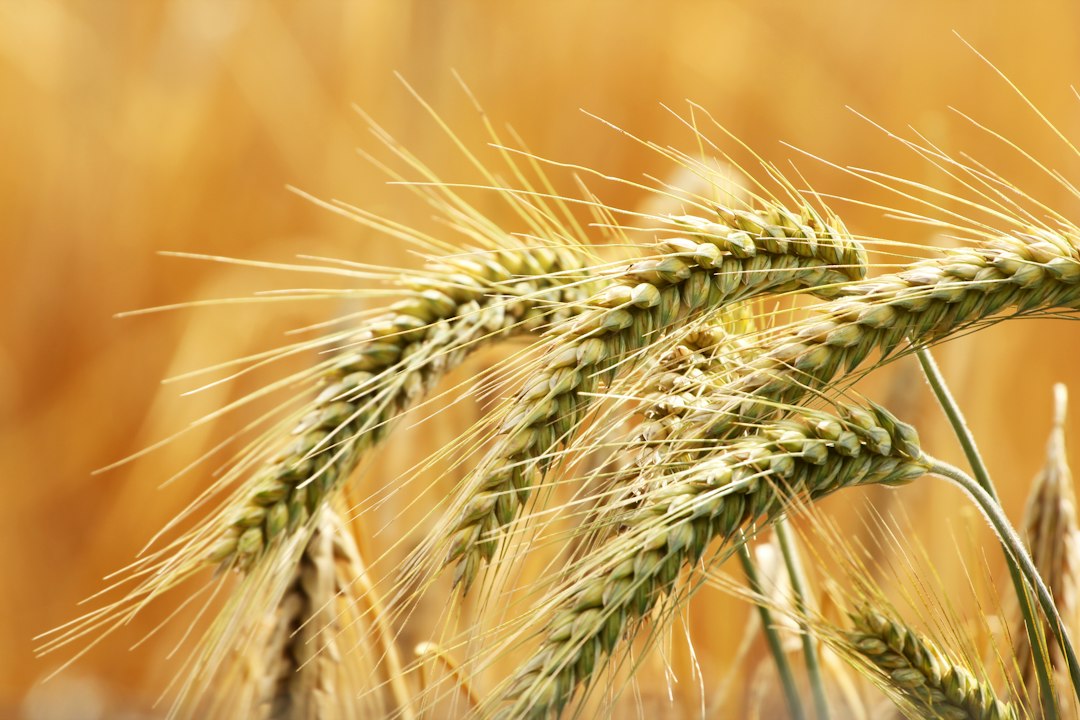
Most Japanese whisky is made from barley grown somewhere else, usually in Britain or another large malting market. The water, the stills, the casks and the warehouses are Japanese. The grain usually is not. A handful of distilleries are trying to change that, and the reasons they give say a lot about what “Japanese” whisky is supposed to mean.
This guide explains why domestic barley is rare, what the labeling rules require, and which producers use Japanese-grown grain. We draw on Japanese-language statements from the distilleries, their farm partners and local government, most of which has never been reported in English.
Why Japanese distilleries import their barley
The short answer is supply. Malt whisky needs malted barley in volume, and Japan grows very little barley suited to distilling. Small producers in particular struggle to secure enough domestic grain for a full season of mashing.
The climate works against the crop
Malting barley likes a cool, dry finish before harvest. Much of Japan offers the opposite. In Hokkaido, the Hokkaido Shimbun described the Akkeshi (厚岸) area as cool and humid, conditions in which barley is considered difficult to grow. Further south, barley harvests fall in early summer, close to the rainy season. A grain that lodges in the wind or gets wet at harvest is hard to malt well.
When Akkeshi distillery’s farm partners brought in their first trial crop in 2019, strong winds had flattened much of it and the yield came in below plan. That is the practical problem in one sentence: the farmer carries the weather risk, and the distiller needs a reliable tonnage.
Malting is a separate industry
Barley must be steeped, germinated and kilned before it can be mashed. Imported malt arrives ready to use. A small distillery that grows its own barley still needs someone to malt a small, unusual lot.
Kiuchi Shuzo (木内酒造), the Ibaraki brewer behind Hitachino Nest beer and Hinomaru whisky, described this gap plainly in its 2023 announcement. It had been growing domestic barley since 2009, but had to send it to an outside maltster. That changed only when it built its own malting plant.
Domestic malt costs more
Kiuchi’s release is unusually candid on cost. The company states that its own malt is more expensive than imported malt, and that it accepts the premium because a taste of place and tighter quality control are central to what it wants to make. That is the trade-off every producer on this list has chosen to absorb. If you have wondered why Japanese whisky costs what it does, domestic grain is one more line on that bill.
What the labeling standard says about barley
Many English-language readers assume a bottle labeled “Japanese whisky” must use Japanese grain. It does not. The industry standard introduced by the Japan Spirits & Liqueurs Makers Association (JSLMA) in 2021 requires malted grain, fermentation, distillation and at least three years of aging in Japan, plus water drawn in Japan. It does not require the barley itself to be grown in Japan.
We cover the full rule set in our guide to what counts as Japanese whisky. For this topic, the key point is simple. The standard defines where the whisky is made, not where its grain comes from. A whisky made entirely from Scottish malt can be fully compliant Japanese whisky.
So how do you know when the barley is Japanese?
Only the producer’s own label or release notes will tell you. Distilleries that use domestic barley tend to say so loudly, because it is expensive and rare. Look for terms such as “Japanese barley,” “100% Japanese barley” or a named prefecture. The Japanese phrases to watch for are 国産大麦 (domestic barley) and a place name followed by 産大麦, for example 静岡産大麦 (Shizuoka-grown barley).
If a label says nothing about grain origin, assume it is imported. That is not a mark against the whisky.
The producers growing barley at home
The projects below are the clearest examples we could confirm from Japanese primary sources. Each started small, and each frames local barley as part of a larger idea about the distillery’s identity rather than as a marketing extra.
Shizuoka: “a whisky that tastes of Shizuoka”
Gaiaflow’s Shizuoka (静岡) distillery has kept separate mashes by barley origin since it opened in 2016. Its founder, Taiko Nakamura (中村大航), has said the aim from the planning stage was to make “a whisky like Shizuoka.” The problem was that almost no barley was grown in the prefecture.
According to the company, the first trial crop came from the Katsurayama area of the Tamagawa district near the distillery and from Fujinomiya in 2016. From 2019 it worked with three farms in neighboring Yaizu, JA Oigawa and the prefectural government to grow barley at scale. By late 2023 the company said Shizuoka-grown barley covered a little over 10% of the distillery’s total production.
The 2016 harvest was enough for a single mash of about one tonne of malt, distilled in 2018. That cask became a five-year-old single cask sold in late 2023 under the label “100% Shizuoka barley,” at a suggested price of ¥22,011 for 500ml. The company was careful not to claim it as Japan’s first. It said it simply could not find another whisky made only from local barley, and did not have evidence to call itself first.
Nakamura’s comment at launch is worth paraphrasing because it shows the motive. He said that growing barley in a prefecture where the crop barely existed took years of work by people in both the public and private sectors who wanted to “make our own drink,” and that the farmers knew little at the start but can now watch the barley turn gold each May. The barley project sits inside a wider “All Shizuoka Whisky” plan that also uses local water, a yeast strain developed at a prefectural research center, cedar washbacks and firewood from nearby forests. Our Shizuoka distillery guide covers the stills and the Karuizawa equipment in detail, and our news report on a recent Japanese-barley release shows the program continuing.
Chichibu: reviving a Meiji-era variety
In Saitama, Venture Whisky, the company behind Chichibu (秩父) and Ichiro’s Malt, has taken a different route. Rather than grow a modern malting variety, its farm partner revived an old one.
The Saitama prefectural government’s Chichibu agricultural office reported in June 2018 that the farm cooperative Ota Einou (大田営農) had harvested a two-row barley called Golden Melon Sai No. 1 (ゴールデンメロン埼1号). The office describes it as one of the old lines brought into Japan in the 1880s, when two-row barley first arrived from abroad, and says the prefecture had kept its seed in storage.
The cooperative began growing it around 2016. It shipped about 1.5 tonnes in 2017 and harvested about 4.5 tonnes in 2018, all supplied to Venture Whisky. The office said the distillery planned to use it for a special Ichiro’s Malt meant to recreate an old-fashioned style. Choosing a heritage variety ties the whisky to the history of barley in Japan, not only to the local soil. For the wider story, see our Chichibu distillery guide.
Akkeshi: building toward an all-local whisky
On Hokkaido’s Pacific coast, Kenten Jitsugyo’s Akkeshi distillery has stated a goal of making whisky entirely from Akkeshi materials. In August 2020 the Hokkaido Shimbun reported that the distillery’s contracted growers, including the local farm cooperative, had harvested two-row barley with no problems in yield or quality, and that it was due to be mashed the following summer.
The same report noted that the distillery still relied mostly on British barley and had been trialing local barley since 2017. The paper has also reported trial peat cutting in Akkeshi and the felling of local mizunara oak for casks. Barley is one part of a long project to source grain, peat and wood from the same town. That ambition is the context for the distillery’s 24 solar terms series, and it links to the question of where Japanese distillers find their smoke, covered in our guide to peated Japanese whisky.
Kiuchi Shuzo: owning the maltings
Kiuchi is the only producer here that has solved the malting problem with its own plant. Since 2009 it has grown a domestic barley called Kaneko Golden (金子ゴールデン) on abandoned farmland in Ibaraki. In 2023 it opened a malting facility at its Ishioka site, with a drum system that handles five tonnes per batch and a traditional floor malting that handles 500kg.
The company put the plant’s capacity at about 500 tonnes of malt a year and planned to make about 96 tonnes in its first year, including wheat malt and germinated rice. It said the main reason for malting in-house was to control malt quality for its own beer and whisky, and that working with local farmers helps keep regional agriculture alive. Kiuchi’s whisky story, including its earlier history with Nukada distillery, shows a brewer that treats grain as the starting point rather than a commodity.
How the projects compare
The table summarizes what each producer has said publicly. We have left out figures that the companies have not published, such as the share of domestic barley in every release.
| Producer | Barley grown | Who malts it | Stated aim |
|---|---|---|---|
| Shizuoka (Gaiaflow) | Shizuoka-grown barley, trials from 2016, scaled up from 2019 | Not specified in the sources we read | A whisky that expresses Shizuoka, part of an all-local plan |
| Chichibu (Venture Whisky) | Golden Melon Sai No. 1, an 1880s-era line revived from stored seed | Not specified in the sources we read | A special Ichiro’s Malt in an old-fashioned style |
| Akkeshi (Kenten Jitsugyo) | Two-row barley trialed locally since 2017 | Not specified in the sources we read | Whisky made entirely from Akkeshi materials |
| Kiuchi Shuzo | Kaneko Golden, grown on abandoned Ibaraki farmland since 2009 | Own maltings at Ishioka from 2023 | Quality control and a taste of place |
Every project began with single-digit tonnage, and each producer treats local barley as one piece of a wider identity alongside water, wood, yeast or peat.
Does Japanese barley change the whisky?
This is the question the English-language coverage tends to skip, and the honest answer is that nobody can isolate it yet. Barley variety and growing site can affect malt character, which is why distillers in Scotland and Ireland have run single-farm and single-variety experiments. But in a finished whisky, barley sits alongside yeast, fermentation time, still shape, cask type and years of aging.
Shizuoka’s approach is the closest thing to a controlled comparison in Japan. By mashing barley of different origins separately from day one, and releasing domestic-barley and imported-barley whiskies under separate labels, it lets drinkers compare like with like from the same distillery. We have not compared these side by side, so we will not describe how they differ. Treat any published claim about “terroir” as one taster’s view.
What we can say is what the distilleries themselves claim. Shizuoka describes its goal as Shizuoka character. Chichibu’s partner framed the old variety as a way to recreate an old-fashioned style. Kiuchi talks about a taste of place. None of them claim that Japanese barley is objectively better. They argue that it makes the whisky more specifically theirs.
What it means for you as a buyer
If you want a bottle that is Japanese from field to glass, these releases are the only route, and you will pay for it. Production is small, much of it sells first in Japan, and some is released through cask-owner programs or lotteries. If your interest is flavor rather than provenance, a whisky made from imported malt is not a lesser product. It is how almost all Japanese whisky, including the famous names, is made.
Where to find Japanese-barley whisky
Domestic-barley releases are small and irregular, so there is no reliable standing stock in any market. The best approach is to follow the distilleries directly.
- In Japan: Distillery shops, official online stores and specialist liquor retailers get most of the volume. Shizuoka and Chichibu releases often sell out quickly or go to lottery. Our guide to buying whisky in Tokyo lists the kind of shops to check.
- In the US: Imports of small Japanese craft releases are limited. Check specialist retailers that carry Shizuoka or Chichibu, and read the label or product notes for barley origin.
- In the UK and EU: Specialist whisky retailers stock more Japanese craft whisky than US shops, but domestic-barley bottlings remain rare. Search by distillery and check the product description for “Japanese barley.”
Whichever market you buy in, the producer’s label is the only proof. Our guide on reading Japanese whisky labels covers the wider checks.
Frequently asked questions
Q: Does Japanese whisky have to be made from Japanese barley?
A: No. The JSLMA standard introduced in 2021 requires malted grain, mashing, fermentation, distillation and at least three years of aging in Japan, along with water drawn in Japan. It does not require the grain to be grown in Japan, so most compliant Japanese whisky uses imported malt.
Q: Why don’t more Japanese distilleries use local barley?
A: Japan grows little barley suited to distilling, and its cool, humid or rainy conditions at harvest make the crop risky. Grain also has to be malted, which most small distilleries cannot do themselves. Kiuchi Shuzo states openly that its own domestic malt costs more than imported malt.
Q: Which Japanese distilleries have used Japanese-grown barley?
A: Shizuoka has used Shizuoka-grown barley since a 2016 trial crop, Chichibu has received a revived heritage variety from a local farm cooperative, Akkeshi has trialed local barley since 2017, and Kiuchi Shuzo grows its own barley in Ibaraki and malts it at its own plant.
Q: How can I tell if a bottle uses Japanese barley?
A: Look for an explicit statement on the label or in the producer’s release notes, such as “100% Japanese barley” or a named prefecture. In Japanese, 国産大麦 means domestic barley. If the label says nothing about grain origin, it is safest to assume the malt was imported, which is normal practice.
Sources
- Walkerplus, interview with Gaiaflow on its 100% Shizuoka barley release (Japanese) — https://www.walkerplus.com/article/1166469/
- Kiuchi Shuzo press release, “Domestic malt made in-house: malting plant starts at Ishioka” via Mynavi Agri (Japanese) — https://agri.mynavi.jp/prtimes/2023_07_14_232914/
- Saitama Prefecture, Chichibu Agriculture and Forestry Promotion Center, “Two-row barley Golden Melon Sai No. 1 harvested” (Japanese) — https://www.pref.saitama.lg.jp/soshiki/b0904/chiki-wadai/2018060501.html
- Hokkaido Shimbun, “Toward all-Akkeshi whisky: barley harvested with good quality and yield” (Japanese) — https://www.hokkaido-np.co.jp/movies/detail/6185349552001/
- Hokkaido Shimbun, “First harvest of whisky barley in Akkeshi” (Japanese) — https://www.hokkaido-np.co.jp/movies/detail/6078373224001/