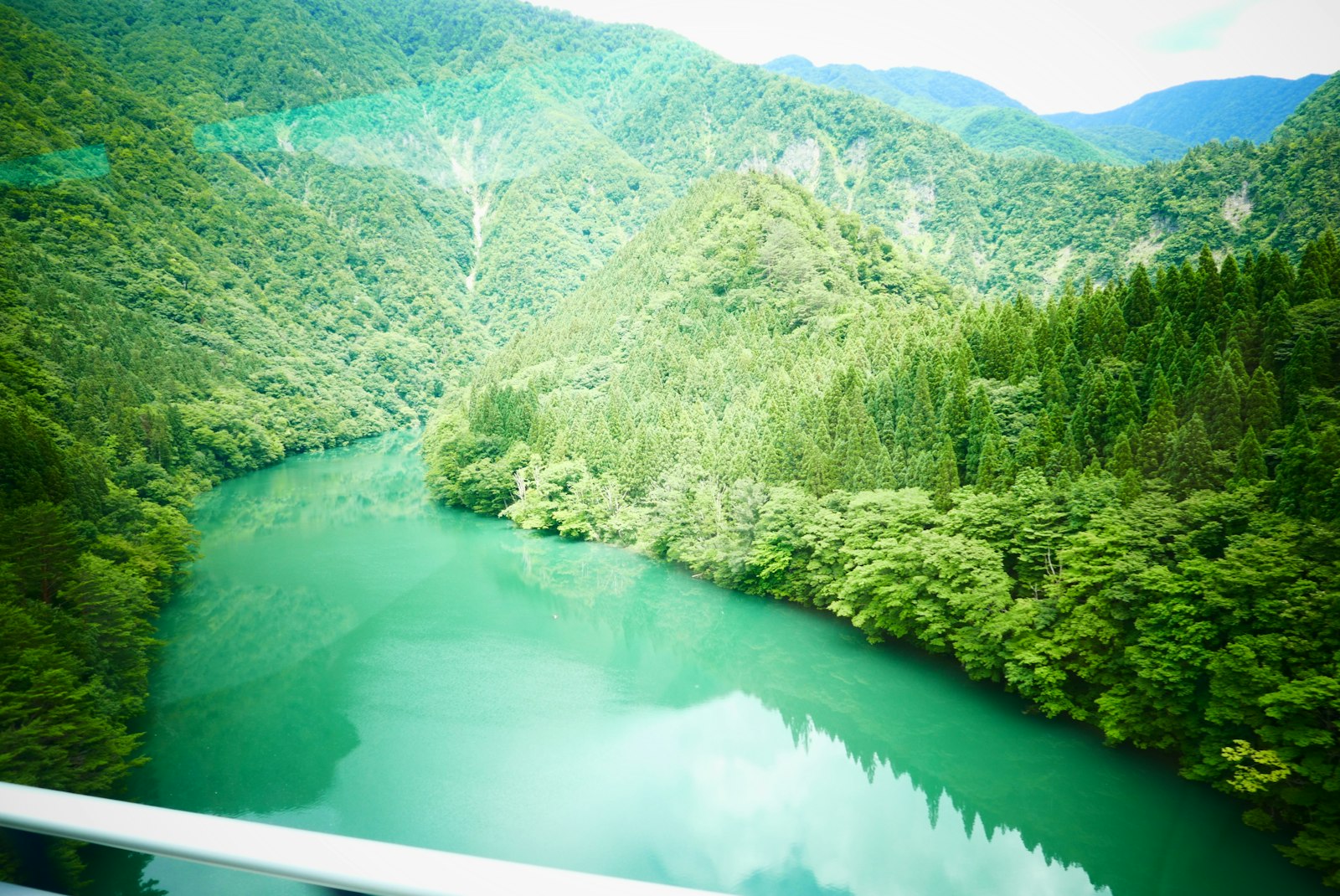
Miyagikyo distillery (宮城峡蒸溜所) is Nikka’s second malt whisky site, built in a wooded valley west of Sendai and completed in 1969. The story most often told about its founding is that Masataka Taketsuru, already in his late sixties and running Yoichi on Hokkaido, tasted the local river water once and decided on the spot. That anecdote is worth repeating, but it is worth repeating carefully, as a story the company tells rather than a documented transaction, because the more useful history is what Taketsuru was actually trying to build: a second malt whisky, engineered to be everything Yoichi was not.
What is Miyagikyo distillery
Miyagikyo is Nikka Whisky’s second distillery, located in a valley between the Hirose and Nikkawa rivers on the western edge of Sendai, in Miyagi Prefecture. Construction began in 1968 and the distillery was completed in May 1969, roughly 35 years after Taketsuru founded Yoichi, Nikka’s first distillery, on Hokkaido. Where Yoichi sits on the coast, exposed to sea air, Miyagikyo sits inland in a forested gorge that Nikka’s own materials describe using the older regional nickname “Mori no Miyako,” the city of trees. Readers unfamiliar with how Japan’s whisky makers use multiple distilleries to build a single house style may want our explainer on what “World Blended” actually means on a Japanese whisky label, since Miyagikyo’s entire reason for existing is blending capacity.
The story of the Nikkawa river, told as the company tells it
The most repeated account of Miyagikyo’s founding goes like this: while scouting locations for a second distillery in 1967, Taketsuru visited the Sakunami area west of Sendai and tried the local river water by mixing it with Black Nikka on the spot. Satisfied with the result, he is said to have declared the site settled immediately, reportedly with words to the effect of “this is genuinely excellent water, this is the place.” When he then asked locals the river’s name, the answer was Nikkawa (新川), a near-homophone of Nikka, the company he had founded. It is a tidy, almost too-tidy coincidence, and that is exactly why we are flagging it as a story that is told about the founding rather than treating it as an independently verified fact. What is better documented is more mundane and, in a way, more telling: the Nikkawa’s spring-fed water has notably low hardness, with very little of the mineral content that can interfere with fermentation and distillation, which made it a genuinely sound technical choice regardless of how dramatically the decision is said to have been made.
Why Taketsuru wanted a second malt at all
By the mid-1960s, Taketsuru had spent decades building Nikka’s whisky around Yoichi’s single, powerful malt character. A second distillery was not about producing more of the same whisky faster; it was about giving Nikka’s blends access to a structurally different malt, since blending relies on combining whiskies that do not taste alike. Nikka’s own account of the project also emphasizes a working principle attributed to Taketsuru: that whisky is made by nature, and that a distillery should work with a site’s existing terrain rather than reshape it. Construction at Miyagikyo is described as having minimized tree-cutting and left the valley’s natural contours largely intact, a design choice consistent with that stated philosophy, even if it also happened to suit a coffee shop of a site distillers were already inclined to view favorably.
Designed to be Yoichi’s opposite
The clearest evidence that Miyagikyo was built with intent, not convenience, is in the equipment itself. Yoichi is known for coal-fired direct heating of its pot stills, a labor-intensive, old-fashioned method that Nikka has kept in place specifically because it contributes to Yoichi’s robust, smoky, full-bodied malt. Miyagikyo does the opposite on purpose: it uses steam-based indirect heating, a gentler and more controllable method, paired with bulge-shaped pot stills that have an upward-angled line arm, a shape associated with more reflux, meaning more of the heavier vapor condenses and falls back into the pot rather than carrying through to the spirit. The practical effect is a lighter, more fragrant new-make spirit than Yoichi produces. Sendai’s inland climate reinforces the same goal: it runs warmer and more humid than Yoichi’s coastal, maritime conditions, a gentler maturation environment that fits a malt built for elegance over power. None of this happened by accident; a company already running one powerful, smoky distillery had no reason to build a second one just like it.
What the name itself tells you
Miyagikyo’s name is descriptive rather than invented: it combines Miyagi, the prefecture, with kyo (峡), meaning gorge or ravine, a narrow valley with steep sides on both banks. That is a literal description of the site, which sits where the Hirose and Nikkawa rivers meet in a wooded ravine on Sendai’s western edge, near the Sakunami hot spring area long known locally as the “inner sanctuary of Sendai.” Nikka’s own materials lean on the older regional nickname Mori no Miyako, the city of trees, when introducing the site, tying the distillery’s identity to the same forested terrain that shaped the production choices above rather than to any invented brand story. Unlike a distillery name built for export marketing, Miyagikyo simply tells a visitor, correctly, what kind of place it is standing in.
What the result is used for
Where Yoichi malt is often described, based on widely published tasting notes rather than any judgment of our own, as robust, peaty, and full-bodied, Miyagikyo’s new-make and matured malt is generally described as fragrant, fruity, and comparatively delicate. That contrast is the entire point of having built a second distillery: Nikka blends, including its core Nikka From The Barrel and Taketsuru pure malt lines, draw on both malts specifically because they do not resemble each other, giving blenders a wider range to work with than either distillery could offer alone. Miyagikyo also bottles its own single malt line, sold under the Miyagikyo name, for readers who want to taste that lighter, more fragrant profile in isolation rather than folded into a blend.
Miyagikyo next to Yoichi and one independent peated distillery
The clearest way to see what Miyagikyo was built to do is to put it directly next to the distillery it was designed to contrast with, plus one independent producer working in a similarly deliberate, contrast-driven way.
| Distillery | Setting | Still heating | General character |
|---|---|---|---|
| Miyagikyo | Inland forested valley, Sendai, Miyagi | Steam indirect heating, bulge-type stills | Fragrant, fruity, comparatively delicate |
| Yoichi | Coastal, maritime climate, Hokkaido | Coal-fired direct heating | Robust, smoky, full-bodied |
| Akkeshi | Coastal, marshland peat, Hokkaido | Direct-fired, Scotland-trained production | Peated, deliberately Islay-influenced |
Seen this way, Miyagikyo is less a competitor to Yoichi than its designed counterpart, built specifically to not taste like it. That is a different relationship than the one between, say, Yoichi and a coastal peated producer like Akkeshi, which arrived at a smoky, maritime style independently rather than as a deliberate internal contrast within one company’s range.
What this means for a bottle in your glass
We have not tasted Miyagikyo ourselves, and any flavor claims here reflect widely published tasting notes rather than our own assessment. What the founding history does explain, reliably, is why Miyagikyo exists at all and why it tastes nothing like its older sibling: it was built as an engineered opposite to Yoichi, using a different heating method, a different still shape, a gentler climate, and softer water, specifically so Nikka’s blends would not be limited to one powerful malt character. Whether the water-tasting story is told exactly as it happened, the technical decision behind it holds up on its own, and that is the more durable reason to reach for a bottle of Miyagikyo: not because a river was named Nikkawa, but because Taketsuru wanted a genuinely different whisky, and built the equipment to get one.
Frequently asked questions
Q: Is the story about Taketsuru choosing the site after tasting the water true?
A: It is the story Nikka tells about the 1967 site search, and the river’s name, Nikkawa, does closely resemble the company name Nikka. We present it here as a widely repeated company anecdote rather than an independently documented event, since we could not verify the exact circumstances beyond how the story is told in company and press accounts.
Q: How is Miyagikyo different from Yoichi?
A: Miyagikyo uses steam-based indirect still heating and bulge-shaped pot stills in an inland, comparatively warm and humid valley, producing a fragrant, fruity malt. Yoichi uses old-fashioned coal-fired direct heating in a coastal, maritime climate, producing a robust, smoky, full-bodied malt. The two were built to be structurally different so Nikka’s blends could draw on contrasting malt profiles.
Q: Why did Nikka need a second distillery if Yoichi already worked well?
A: Blended whisky depends on combining malts that do not taste alike. By the mid-1960s, Nikka’s blends had access to only Yoichi’s single, powerful house style, and Taketsuru wanted a second, contrasting malt to widen what his blenders could work with, which is why Miyagikyo was engineered rather than built as a copy of Yoichi elsewhere.
Q: Can I buy Miyagikyo single malt outside Japan?
A: Availability varies by market and has tightened in recent years as demand for Nikka’s single malts has grown internationally, with some editions periodically hard to find at fixed retail prices. Specialist Japanese whisky retailers in the US, UK, and EU carry it when stock allows, and checking current listings is more reliable than assuming standing availability.