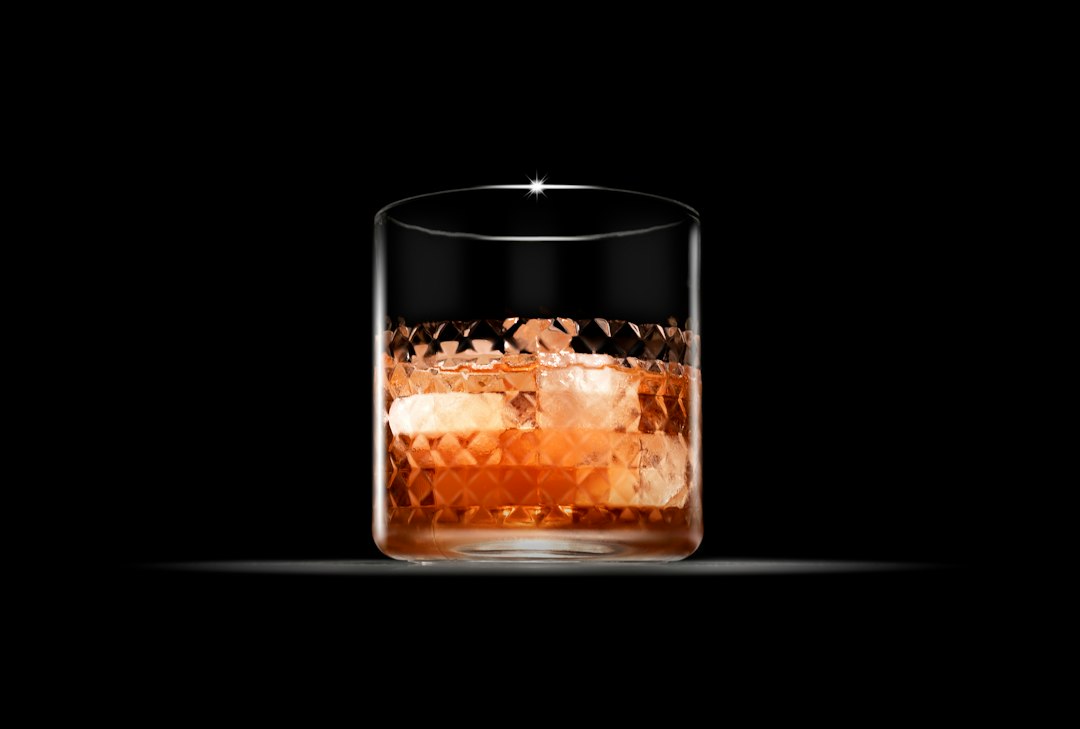
Hakushu Distiller’s Reserve is the bottle most people actually mean when they say “Hakushu” today. It carries no age statement and costs roughly half of what Hakushu 12 does. We have not tasted it, so we will not tell you how it tastes. Instead, this guide explains what Suntory says is in the bottle, why it stopped printing an age, and what the distillery’s Japanese-language material reveals about the choices behind it.
The short answer: Hakushu Distiller’s Reserve is a 43% ABV no-age-statement single malt from Suntory’s Hakushu (白州) distillery in the Southern Japan Alps. At its 2014 European launch, Suntory described it as a vatting of lightly peated malt, heavily peated malt and American oak-matured whisky of around 18 years. In Japan the same no-age-statement Hakushu is sold simply as “Hakushu,” and its list price rose 56% in April 2024, from ¥4,500 to ¥7,000 before tax. UK retailers list it at roughly £65 to £82. It is worth buying if you want Hakushu’s style for highballs and everyday drinking; it is not a cheaper route to the 12-year-old’s age guarantee.
What is actually in the bottle
Suntory does not publish a recipe, so any description of the contents depends on what the company has chosen to say, and when. The clearest public account comes from the launch. In March 2014, The Spirits Business reported that Suntory would release Hakushu Distiller’s Reserve and Yamazaki Distiller’s Reserve in the UK and France that April, with a recommended price of £42 per 700ml. The report described the Hakushu as a blend of lightly peated malt, heavily peated malt and whisky matured in American oak for around 18 years, and said both whiskies drew on stock aged from around eight to 20 years.
Suntory’s current Japanese product page describes the bottle differently. It says blenders choose “the ideal malts” from the many types of spirit the Hakushu distillery produces. It then names two roles. One is a malt that is fresh “like young forest leaves” (森の若葉) with a faint smoky flavor. The other is spirit that “gives complexity and depth.” The page does not mention heavily peated malt or an 18-year component. That does not prove the recipe changed, since a product page is not a spec sheet. But it does tell you how Suntory now wants the bottle understood: a light, fresh base with a supporting layer, rather than a list of cask types.
Suntory’s own tasting note on the Japanese page lists sudachi (a small Japanese citrus) and mint on the nose, a light, crisp palate with gentle acidity, and a faint smoky, lightly sweet finish. Those are the company’s words, not ours. The page also states that the whisky meets the Japan Spirits & Liqueurs Makers Association (JSLMA) labeling standard for “Japanese whisky.” Our guide to what counts as Japanese whisky explains what that standard requires, including at least three years of aging in Japan.
Distiller’s Reserve, or just “Hakushu”?
The name “Distiller’s Reserve” is an export label. In Japan, Suntory’s lineup page lists the bottle as “白州 / THE HAKUSHU,” with no subtitle, next to the 12, 18 and 25-year-olds. Both are 43% ABV and both are the no-age-statement Hakushu. Suntory does not say in public whether the export and domestic bottlings are identical batch for batch, so we will not claim they are. If you see a bottle in Japan labeled only “Hakushu,” it is the same product line, not a different, cheaper whisky.
Why Suntory dropped the age statement
The usual English explanation is that Suntory ran low on aged stock. That is part of the story. Our explainer on the Japanese whisky shortage covers how severe that squeeze became, and Hakushu 12 itself was pulled from sale in 2018 for exactly that reason. But Suntory gave a second reason at launch, and it says more about how the company thinks.
Suntory Europe’s senior brand manager at the time, Keita Minari, told The Spirits Business that “taking out the age statement gives us the flexibility to achieve the taste we want.” Suntory also argued that age should not be the only measure of quality. That fits a principle the company repeats in its Japanese brand material. Suntory’s brand story page says blenders taste through the maturing stock, sometimes hundreds of samples in a day, to judge when each cask has reached its peak. Maturation, the page says, still does not behave exactly as people expect. An age statement locks the blender out of any whisky younger than the number on the label. Without one, a lively younger cask that fits the house style can go into the vatting.
The same page adds a duty that rarely appears in English coverage. Suntory says a blender’s job includes predicting what spirit future blenders will need, and laying it down now. Fourth-generation chief blender Shinji Fukuyo (福與伸二), who blended the original Distiller’s Reserve releases according to the 2014 report, appears on the page in that context. For a no-age-statement bottle, that planning matters. Its quality depends on having enough of the right kinds of spirit every year, rather than enough 12-year-old casks.
What you give up
The trade-off is real. A 12-year age statement is a legal floor. Under the JSLMA standard, the stated age must reflect the youngest whisky in the bottle. A no-age-statement bottle makes no such promise, and Suntory does not disclose the current age range. The 2014 figure of “around eight to 20 years” was a launch description, not a guarantee for every batch since. That gap matters most when the price climbs.
The forest behind the bottle
Suntory’s Japanese pages put most of the weight on place, and the decisions there are specific. The distillery was not chosen for scenery. According to Suntory’s brand story, second master blender Keizo Saji (佐治敬三) wanted a whisky with a different character from Yamazaki, and he gave the site search to Tameo Onishi (大西為雄), a former Yamazaki plant manager known inside the company as the “water hunter.” Onishi spent several years surveying Japan. Suntory’s account says that when he tasted the granite-filtered water at what is now Hakushu-cho in Hokuto, Yamanashi, he was shaken that such water still existed in Japan. The distillery opened in 1973, inside about 820,000 square meters of forest at roughly 700 meters above sea level. The first Hakushu single malt followed in 1994, 21 years later.
Three production choices follow from that setting, and Suntory names all three as essential. First, the water: soft, with what Suntory calls a good mineral balance, which it credits for the whisky’s clean, aromatic profile. Second, fermentation: Hakushu uses traditional wooden washbacks and runs fermentation “a little longer” to encourage the forest’s lactic acid bacteria, which Suntory says gives depth to an otherwise fresh spirit. Third, maturation: casks rest in warehouses surrounded by forest air. A Hakushu staff member told Suntory’s distillery blog that the site has 18 warehouses spread over enough height that sleet at the lower ones can turn to snow further up the slope. Our Hakushu distillery guide covers the history and site in more depth.
Making whisky and keeping a forest
Suntory treats the forest as a raw material, not a backdrop. Its pages say the distillery was the first private factory in Japan to set up a bird sanctuary on its grounds, using wild birds as a gauge of the forest’s health. It runs water-conservation forestry on about 180 hectares around Hokuto. A Hakushu engineer interviewed on the company blog in June 2025 described his main job as cleaning the water the distillery uses before it returns to nature, because nearby farmers use it for their fields. The logic is consistent from source to drain: healthy forest makes good water, and good water makes the whisky.
Floor malting, and what it does not mean yet
Hakushu began floor malting some of its own barley in 2024, according to Suntory’s distillery blog, which says the aim is to raise the quality of the spirit made on site. The staff member in charge described checking the malt by sight, smell, taste and the feel underfoot while turning it, and said the malting room was built with windows on purpose, so the team can see the forest. None of that whisky can be in today’s Distiller’s Reserve. Japanese whisky must age for at least three years, so 2024 spirit cannot be bottled before 2027. Suntory has not said which bottles it will go into.
Distiller’s Reserve against the rest of the shelf
The cleanest comparison uses Suntory’s own Japanese list prices, since overseas retail prices add tax, freight and margin that vary by country. These are the figures from Suntory’s April 2024 price revision, before tax, for a 700ml bottle.
| Bottle | Age statement | Japan list price from April 2024 (before tax) | Change in that revision |
|---|---|---|---|
| Hakushu (Distiller’s Reserve) | None | ¥7,000 (was ¥4,500) | +56% |
| Hakushu 12 | 12 years | ¥15,000 (was ¥10,000) | +50% |
| Yamazaki (Distiller’s Reserve) | None | ¥7,000 (was ¥4,500) | +56% |
| Hibiki Japanese Harmony | None | ¥7,500 (was ¥5,500) | +36% |
First, Suntory prices the no-age-statement Hakushu and Yamazaki identically, so in Japan the choice between them is about style, not budget. Second, the no-age-statement Hakushu took a bigger percentage rise than Hakushu 12 in that round. Suntory has since announced another increase covering Hakushu, effective on shipments from April 1, 2027, which we covered in our report on Suntory’s April 2027 price rise.
Against Hakushu 12, the question is what the extra money buys. Our Hakushu 12 review explains why its price reflects a guaranteed minimum age and a limited release, not a separate quality tier. Against Yamazaki, the difference is where the character comes from. Yamazaki leans on cask variety. Hakushu leans on peated malt, wooden-washback fermentation and its mountain site.
How Suntory says to drink it
Suntory’s Japanese site is unusually direct about this. Its recommended serve for the no-age-statement Hakushu is the “forest-scented highball” (森香るハイボール): one part Hakushu to three or four parts soda, a glass packed with ice, chilled soda poured so it does not hit the ice, one vertical stir to keep the bubbles, and a single mint leaf, slapped first, as an optional garnish. The page says the soda lifts the “young leaf” aroma. The 2014 launch description made the same point, saying the whisky suited mizuwari and highballs. Our guide to the Japanese whisky highball covers the method in detail.
The people who make it drink it in similar ways. In Suntory’s distillery blog, the floor-malting lead said his everyday drink is Hakushu with water, paired with simple food such as grilled eggplant with ponzu or marinated mackerel with lemon. These are personal picks, not official pairings, but they frame the bottle as an everyday whisky for diluting and eating with. If you prefer water to soda, see our guide to mizuwari.
Where to buy Hakushu Distiller’s Reserve
UK: This is the easiest market. Suntory launched the bottle in the UK in 2014, and specialist retailers list it regularly. Listings we found ranged from about £65 to £82 for 70cl, against a launch price of £42. Our guide to buying Japanese whisky in the UK lists the main retailers.
US: Availability is patchier. We could not find a current listing for the no-age-statement Hakushu at Total Wine, although the chain lists Hakushu 12 and Yamazaki Distiller’s Reserve. Check state-by-state specialists, and see our guide to buying Japanese whisky in the US before paying a large markup.
EU: The bottle reached further European markets from June 2014 and is still listed by retailers in Germany and elsewhere. Our Germany buying guide covers the main shops.
Japan: Supply in Japan is allocated, and shelf prices can sit well above Suntory’s list price. If you are visiting, our guides to buying whisky in Tokyo and Narita duty free explain where to look.
Our verdict on the price
Hakushu Distiller’s Reserve is easy to underrate because it has no number on the label. Suntory’s own material makes a better case for it than most reviews do. It carries the distillery’s water, forest and long wooden-washback fermentation in their simplest form, it is built to be diluted, and its blenders choose casks by readiness rather than age. If you want Hakushu’s style for highballs at around half the price of Hakushu 12, it makes sense. If you want a guaranteed minimum age, it does not.
Q: Is Hakushu Distiller’s Reserve the same as the Hakushu sold in Japan?
A: It is the same product line. In Japan, Suntory sells the no-age-statement bottle as “Hakushu” (白州) with no subtitle, at 43% ABV, alongside the 12, 18 and 25-year-olds. “Distiller’s Reserve” is the name Suntory used when it launched the bottle in Europe in 2014. Suntory does not say whether every batch is identical across markets.
Q: How old is the whisky in Hakushu Distiller’s Reserve?
A: Suntory does not state a current age range. At the 2014 launch, it was reported to use stock aged from around eight to 20 years, including American oak-matured whisky of around 18 years. That was a launch description, not a guarantee for later batches. As Japanese whisky, every component must be at least three years old.
Q: Is Hakushu Distiller’s Reserve peated?
A: Partly. The 2014 launch description named both lightly and heavily peated malt in the vatting. Suntory’s current Japanese page describes a fresh malt with a faint smoky flavor, plus spirit that adds complexity. Suntory presents it as gently smoky, nothing like a heavily peated Islay Scotch, and does not publish peat levels.
Q: Should I buy Hakushu Distiller’s Reserve or Hakushu 12?
A: Buy the Distiller’s Reserve if you want Hakushu’s style for highballs and everyday drinking at about half the price. Buy Hakushu 12 if a guaranteed minimum age matters to you. In Japan, Hakushu 12’s list price is more than double the no-age-statement bottle’s after the April 2024 revision.
Sources
- Suntory, Hakushu product lineup page (Japanese) — https://www.suntory.co.jp/whisky/hakushu/lineup/
- Suntory, Hakushu brand story (Japanese) — https://www.suntory.co.jp/whisky/hakushu/story/
- Suntory, “The forest distillery” (Japanese) — https://www.suntory.co.jp/whisky/hakushu/distillation/
- Suntory, “How to enjoy Hakushu” and the forest-scented highball (Japanese) — https://www.suntory.co.jp/whisky/hakushu/whisky/
- Suntory distillery blog, interview with Hakushu’s floor-malting lead, November 26, 2025 (Japanese) — https://www.suntory.co.jp/factory/blog-d/008432.html
- Suntory distillery blog, interview with a Hakushu engineering staff member, June 24, 2025 (Japanese) — https://www.suntory.co.jp/factory/blog-d/000242.html
- Suntory news release No. 14499, premium whisky price revision from April 2024 (Japanese) — https://www.suntory.co.jp/news/article/14499.html
- Suntory news release No. 15167, price revision from April 2027 (Japanese) — https://www.suntory.co.jp/news/article/2026/15167.html
- The Spirits Business, “Suntory releases NAS Yamazaki and Hakushu whiskies,” March 7, 2014 — https://www.thespiritsbusiness.com/2014/03/suntory-releases-nas-yamazaki-and-hakushu-whiskies/