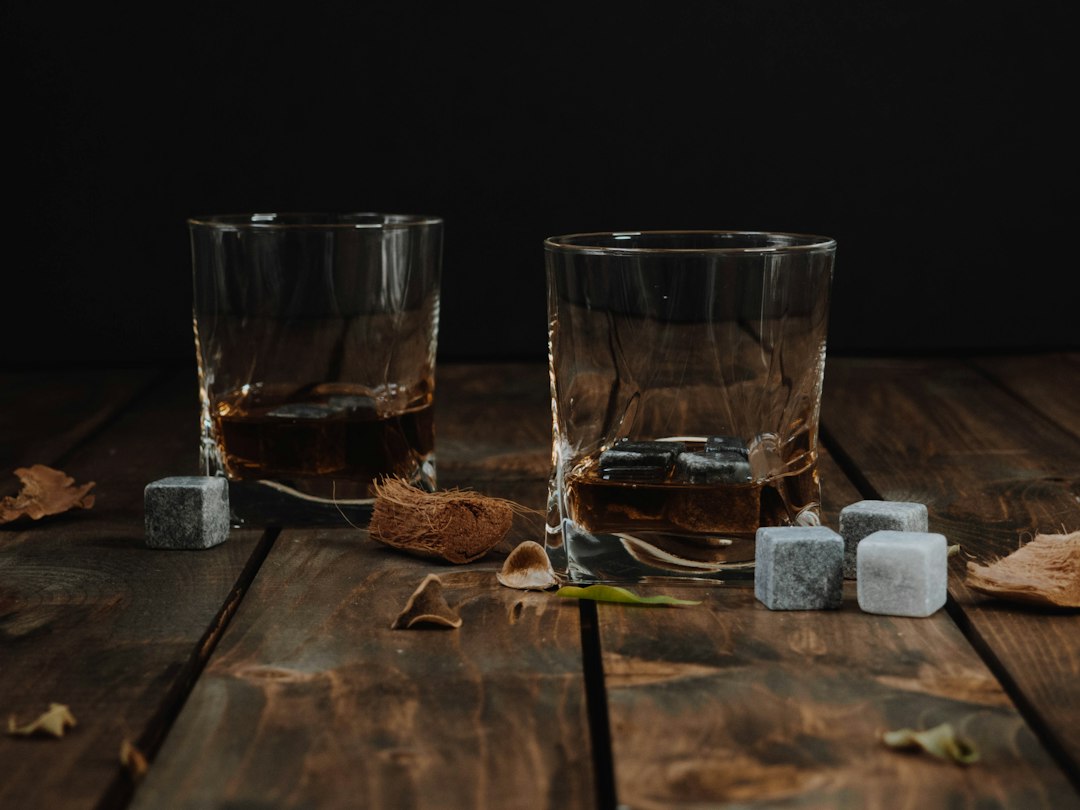
Miyagikyo Single Malt is the everyday bottle from Nikka’s second malt distillery, in a wooded gorge west of Sendai. It carries no age statement, and many English-language reviews treat it as the lighter, cheaper sibling of Yoichi. That framing misses what the bottle is for. Nikka built Miyagikyo (宮城峡) to make the malt that Yoichi could not, and the no-age-statement bottle is the purest everyday expression of that plan. We have not tasted it for this article, so you will not find our own tasting notes here. Where we describe flavor, we quote Nikka and say so.
The short answer: Miyagikyo Single Malt is a 45% ABV single malt made entirely at Nikka’s Miyagikyo distillery, sold in Japan at a reference price of 7,700 yen including tax since April 2024. Nikka’s official note describes vanilla from the cask with apple and pear, a dried-fruit sweetness and a soft finish. In the UK it lists at roughly £68 to £80, and in the US at roughly $75 to $140 depending on the store. It is worth buying if you want to understand the soft, fruit-led side of Nikka’s house style; it is not a substitute for the age-stated Miyagikyo 10 Year Old, which costs 13,200 yen in Japan.
What Miyagikyo Single Malt actually is
The bottle is a single malt: all of the whisky inside was distilled from malted barley at one distillery, Miyagikyo, in Sendai’s Aoba ward. It is bottled at 45% ABV, in a 700ml bottle in Japan and a 750ml bottle in the US. There is no age statement, which means Nikka does not disclose the age of the youngest whisky in the vatting. Our guide to Japanese whisky age statements explains why that matters: when an age is printed, it is a floor; when it is absent, the blenders are free to use young and old stock in whatever proportion the house style needs.
Why there is no number on the label
Until 2015, Miyagikyo was sold with ages on the label, including 10, 12 and 15 year old bottlings. Nikka withdrew that range in 2015 and replaced it with the single no-age-statement bottle you see today. The reason was stock: demand outran the aged malt laid down years earlier. Our explainer on the Japanese whisky shortage covers how severe that squeeze became. The Japanese trade press described the Miyagikyo 10 Year Old announced in September 2025 as the first age-stated Miyagikyo “in ten years, since 2015,” which confirms that for a full decade the NAS bottle was the only regular way to buy this malt.
What Nikka says about the flavor
Nikka’s official tasting note, as published by the Japanese food-news site Gourmet Watch in September 2026, reads in translation: a sweet, floral aroma recalling apple and pear, with vanilla from the cask; a palate sweet like dried fruit, with a smooth texture; and a soft finish in which malt sweetness and cask aroma spread gently. Those are the producer’s words. Community reviewers in English largely agree on fruit and florals, though some find the palate quieter than the nose.
“This land made it”: the idea behind the bottle
Nikka’s Japanese brand site never presents Miyagikyo Single Malt on its own. It presents it as half of a pair. The Yoichi section is titled, in translation, “a masterpiece born of fire and sea breeze.” The Miyagikyo section answers it: “a masterpiece born of water and green valleys.” The copy says Masataka Taketsuru (竹鶴政孝) found Yoichi “in the prime of his life” and reached Miyagikyo “in his later years,” and it states the purpose plainly: the site was chosen to grow a malt with a character that forms a pair with Yoichi’s.
A Lowland-style malt, by design
The Japanese edition of Whisky Magazine marked the distillery’s 50th anniversary in 2019 with a two-part feature, and it adds the detail English coverage usually leaves out. By the mid-1960s Taketsuru was past 70 and had already added grain whisky to Nikka’s toolkit. The last big project he set himself was a malt “of the Lowland type,” different from Yoichi’s heavy Highland-inspired spirit. According to the feature, it was his son Takeshi (威) who pushed him to realize the dream of running more than one malt distillery in Japan.
The site requirements were specific. The new location had to be cool, but warmer than Yoichi. It needed a humid climate, clean air and, above all, good water. And because Taketsuru believed nature makes whisky, he would not choose a site that meant filling in rice paddies or clearing forest. The search narrowed to the south of the Tohoku region and ended at Sakunami (作並), where the Hirose (広瀬) and Nikkawa (新川) rivers meet. The magazine recounts that he mixed Black Nikka with Nikkawa water, took one sip and said, “Truly wonderful water. This is the place.” Our Miyagikyo distillery guide treats that anecdote as a story the company tells, and we keep that caution here.
The first drop, poured back into the river
The most revealing story in the Japanese record is about the first spirit. After the test distillation in 1969, Taketsuru gathered every employee to taste the new make. Whisky Magazine Japan reports that he tasted it and muttered, “It’s different.” The staff assumed he was disappointed. He then added, in the magazine’s account: “This is right. It’s good because it’s different from Hokkaido. I didn’t make this. This land made it. Pour some of it into the Nikkawa as thanks.”
That line explains the bottle better than any tasting note. Miyagikyo was not meant to be a better Yoichi or a cheaper one. It was meant to be the whisky this valley produces when you stop trying to make it taste like somewhere else. Nikka’s chief blender Tadashi Sakuma (佐久間正) told the magazine in 2019 that the true first drop was a trial run in March 1969, before the May 10 completion, and that a cask of that spirit was still resting in the distillery’s No. 6 dunnage warehouse fifty years later.
How the valley and the stills shape the spirit
Nikka’s brand page describes Miyagikyo’s distillation in two sentences that carry most of the explanation. The stills are heated indirectly with steam held at around 130°C, which the company says gives the spirit smoothness. And the stills are bulge-type pot stills with upward lyne arms, which let vapor and aromatic compounds circulate before they leave the still, refining aroma and flavor. Compare that with Yoichi, where coal fires heat the still base above 1,000°C and straight-head stills let heavier compounds carry over. Our Yoichi distillery guide covers that side of the pair.
Built for decades ahead, with as few trees cut as possible
Construction began in March 1968 on about 170,000 square meters of land. Whisky Magazine Japan reports that tree felling was kept to a minimum, the slope of the land was left as it was, and the buildings were finished in a red-brick color chosen to sit well against the green. The distillery adopted gas-fired steam indirect distillation, still unusual in Japan at the time, and computer control of parts of the process, with the stated aim of looking decades ahead. Taketsuru, who came from a sake-brewing family, had the stills wrapped in shimenawa (しめ縄), the sacred straw ropes of Shinto shrines.
Malt and grain under one roof
In 1999, after Taketsuru’s death, Nikka moved its Coffey grain stills from Nishinomiya to Miyagikyo, and they began full operation that September. Miyagikyo became one of very few sites anywhere producing both malt and grain whisky. The single malt contains none of that grain, but the context matters if you buy Nikka. Taketsuru’s line about grain, as the magazine reports it, was that if malt is a showy flower, Coffey grain is baby’s breath, the filler that turns flowers into a bouquet. Our Nikka Coffey Grain guide covers that whisky in its own right.
Nikka does not publish a cask recipe for the NAS bottle, a peating level, still count or production volume for this specific product, and we will not invent them. What the company does say is enough to set expectations: soft water, a cool but humid valley, gentle steam heat and reflux-friendly stills, all chosen to push the spirit toward fruit and smoothness. For background on what different casks contribute, see our guide to Japanese whisky cask types.
Price and value: NAS against the 10 Year Old
In Japan, Miyagikyo Single Malt’s reference price rose from 4,950 yen to 7,700 yen including tax for shipments from April 1, 2024, an increase of about 56%. Yoichi Single Malt and Taketsuru Pure Malt rose by the same amount. Asahi Breweries, which sells Nikka in Japan, cited higher costs for raw materials, packaging, energy and logistics, and said it needed to keep investing in production equipment at Yoichi and Miyagikyo to secure stable supply and quality. As of September 2026, Gourmet Watch still listed the maker’s suggested price at 7,700 yen, with some Amazon Japan sellers around 6,500 yen.
Here is the comparison most English reviews skip. In September 2025 Asahi announced Single Malt Miyagikyo 10 Year Old at 13,200 yen, limited to 9,000 bottles for Japan and 9,000 for overseas markets. Its official description adds citrus to the apple and a riper fruit and bittersweet finish, and its washi-paper label uses a deep green to evoke what Nikka calls the “hushed valley.” The release was set for October 7, 2025, then postponed after a cyberattack disrupted Asahi Group’s systems. We could not confirm a rescheduled release date from Japanese sources.
| Bottle | Production style (per producer) | ABV | Japan reference price |
|---|---|---|---|
| Miyagikyo Single Malt (NAS) | Steam-heated bulge stills, soft and fruity | 45% | 7,700 yen incl. tax (from April 2024) |
| Miyagikyo Single Malt 10 Year Old | Same distillery, malt aged 10+ years, limited | 45% | 13,200 yen (announced 2025) |
| Yoichi Single Malt (NAS) | Coal-fired straight-head stills, heavy and peaty | 45% | 7,700 yen incl. tax (from April 2024) |
| Hakushu (NAS) | Suntory forest distillery, light and fresh | 43% | 7,000 yen before tax (from April 2024) |
Is it worth it?
If you want to taste the half of Nikka’s house style that sits under the smoke, this is the bottle that does that job at a steady price. It also makes the most sense next to its partner: drink it alongside our Yoichi single malt guide pick and you see the “pair of whiskies” idea directly. If you want the depth people remember from the old 12 and 15 year old bottles, the NAS bottle does not claim to replace them. If you plan to mix it, our Japanese whisky highball guide covers the serve. For a comparison with Suntory’s lighter single malt, see our Hakushu Distiller’s Reserve guide.
Where to buy Miyagikyo Single Malt
As an Asahi Group brand, Miyagikyo Single Malt is distributed in North America, Europe and Australia, though supply arrives in waves.
United States
The 750ml bottle is distributed in the US. Recent listings we found ranged from about $75 at K&L Wines to $97 at Total Wine and as high as $140 at some independents, so shopping around matters. Our guide to where to buy Japanese whisky in the US explains how state shipping rules affect who can send it to you. If your budget is firm, our list of Japanese whisky under $100 covers the alternatives.
United Kingdom
UK specialists stock the 70cl bottle fairly consistently. The Whisky Exchange lists it at £79.50, and other retailers have listed it between roughly £68 and £75. See where to buy Japanese whisky in the UK for our retailer overview.
European Union
Germany has the deepest pool of Japanese whisky specialists in the EU, and many ship to neighboring countries; our guide to buying Japanese whisky in Germany covers the main options. In every market, be careful with listings that present the old Miyagikyo 10, 12 or 15 Year Old as current stock. Those bottles were withdrawn in 2015 and now trade as secondary-market items, often at several times their original price.
Frequently asked questions
Q: How old is the whisky in Miyagikyo Single Malt?
A: Nikka does not disclose it. The bottle carries no age statement, so the blenders can combine stock of different ages without printing the youngest one on the label. The only age-stated Miyagikyo announced since 2015 is the limited 10 Year Old, priced at 13,200 yen in Japan, so the NAS bottle remains the everyday option.
Q: Is Miyagikyo Single Malt peated?
A: Nikka’s official tasting note for the NAS bottle does not mention peat or smoke; it describes vanilla, apple, pear and dried fruit. Nikka has made peated Miyagikyo for limited releases, including a peated Discovery Series bottling in 2021, which shows that smoke is an exception at this distillery rather than part of the standard profile.
Q: Does Miyagikyo Single Malt contain Coffey grain whisky?
A: No. A single malt contains only malt whisky from one distillery. Miyagikyo also houses Nikka’s Coffey stills, moved there from Nishinomiya in 1999, but that grain whisky goes into blends such as Nikka From The Barrel and into Nikka Coffey Grain, not into the single malt bottle.
Q: What is the difference between Miyagikyo and Yoichi single malts?
A: Nikka designs them as a pair of opposites. Yoichi uses coal-fired straight-head stills on the Hokkaido coast and aims for a heavy, smoky malt. Miyagikyo, in an inland valley near Sendai, uses steam-heated bulge stills to make a soft, fruity malt. Both are bottled at 45% and cost 7,700 yen in Japan.
Sources
- Nikka Whisky, “シングルモルト 余市・宮城峡” brand page (Japanese) — https://nikka.com/brands/yoichi_miyagikyo/
- WHISKY Magazine Japan, “ニッカウヰスキー宮城峡蒸溜所の50年【前半/全2回】” March 4, 2019 (Japanese) — https://whiskymag.jp/miyagikyo50_1/
- WHISKY Magazine Japan, “ニッカウヰスキー宮城峡蒸溜所の50年【後半/全2回】” March 6, 2019 (Japanese) — https://whiskymag.jp/miyagikyo50_2/
- Gourmet Watch (Impress), “ウイスキー「竹鶴」「余市」「宮城峡」56%値上げへ” December 20, 2023 (Japanese) — https://gourmet.watch.impress.co.jp/docs/news/1556170.html
- Gourmet Watch (Impress), “ニッカウヰスキー「シングルモルト宮城峡10年」の発売を発表” September 10, 2025 (Japanese) — https://gourmet.watch.impress.co.jp/docs/news/2046125.html
- Gourmet Watch (Impress), “ニッカウヰスキー「シングルモルト宮城峡10年」の発売延期を発表” October 6, 2025 (Japanese) — https://gourmet.watch.impress.co.jp/docs/news/2052921.html
- Gourmet Watch (Impress), “ニッカウヰスキー「シングルモルト宮城峡」が“6475円”で販売中” September 24, 2026, includes Nikka’s official tasting note (Japanese) — https://gourmet.watch.impress.co.jp/docs/news/2142826.html